Say Hello to My Little Dividend: Trump Pledges $5,000 Midterm Checks as Crude Pierces $102
 The Big Picture

Good Thursday morning. With exactly 54 days until the 2026 midterm elections, President Donald Trump delivered an audacious keynote at the Republican midterm convention in Dallas, promising a $5,000 cash dividend to every American adult conditional on the GOP retaining control of both chambers of Congress. The populist fiscal gambit lands against a turbulent macroeconomic backdrop: Brent crude has broken above $102 a barrel amid intensifying maritime strikes in the Persian Gulf, while benchmark 10-year Treasury yields surged to 4.84%—their highest issuance levels since August 2007—after Treasury Secretary Scott Bessent’s expanded bond buyback strategy failed to calm sovereign debt markets. Meanwhile, cross-border tensions are escalating on multiple fronts as Canada weighs retaliatory trade strikes against Washington and Ukrainian long-range strike drones reach deep into Russia’s Arctic energy corridors.
 MACRO PULSE & PRICE TRACKER
 US National Debt
-$10.50B 24h
$40.08T
$117,894/cit • $296,919/taxpayer
|
Fed Target Rate
Sep 16, 2026 (6d)
3.50% – 3.75%
EFFR: 3.63% • SEP / Dot Plot & Press Conf
|
||||
 Gold (XAU/USD)
+0.49% 1D
Safe Haven & Central Bank Reserves
|
 US 10Y & 30Y Yields
+45 bps (Steepening)
Benchmark Sovereign Borrowing Cost
|
||||
 Crude Oil & Hormuz
+6.79% 7D
WTI: $97.23 • Hormuz Risk Active
|
 USD / JPY (Yen)
-3.30% 7D
Global Carry Trade & FX Liquidity
|
 Trending Cycles
 The $5,000 Midterm Gambit: Trump Wages High-Stakes Convention Campaign
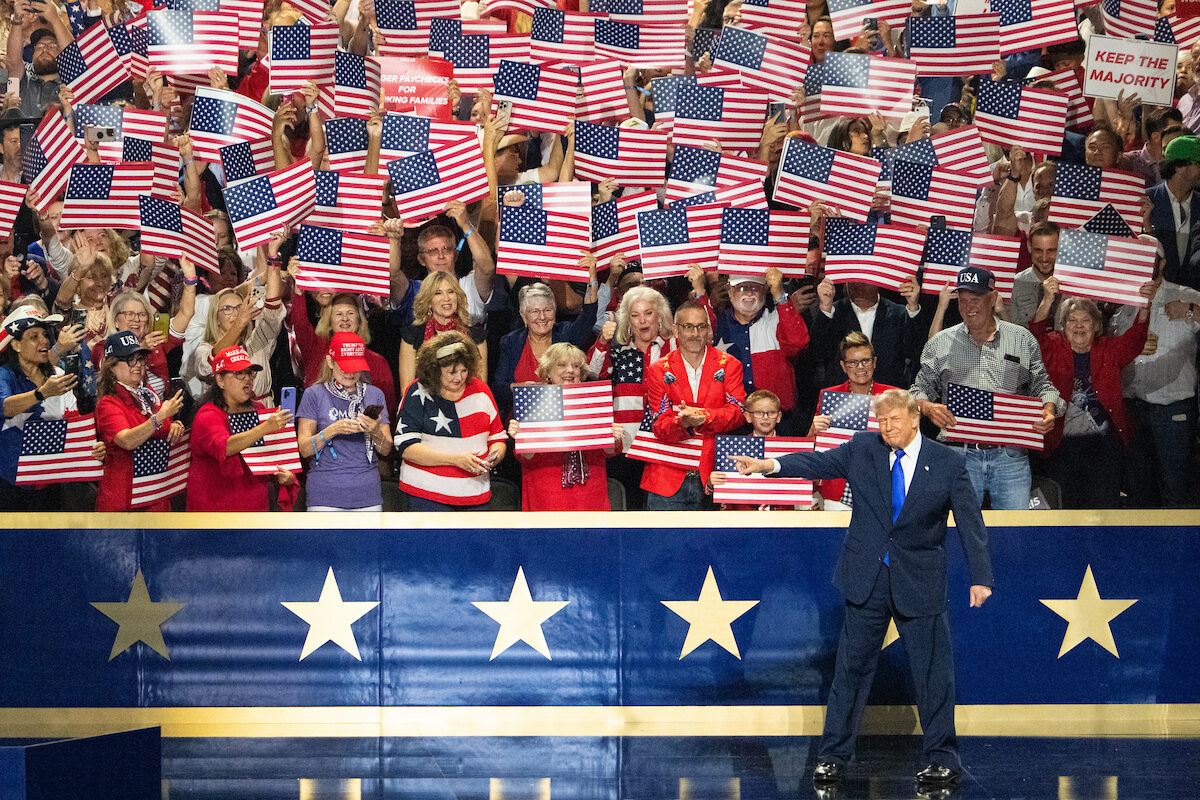
- A Direct Payout Pledge: Speaking at the GOP's inaugural midterm convention in Dallas, President Donald Trump unveiled a pledge to deliver a $5,000 "Trump Dividend" check to every adult citizen, explicitly tying the stimulus payout to Republicans retaining majorities in both the House and Senate this November.
- Economic Skepticism and Cost Concerns: Financial analysts immediately flagged that the across-the-board dividend would carry an estimated price tag exceeding $1.3 trillion, with economists at MarketWatch dissecting the fiscal fallout as critics noted previous unfulfilled promises regarding tariff rebates and government-efficiency payouts.
- Affordability Pressures Cloud Dallas Bash: Despite high-energy staging dubbed "Trump-a-palooza," reporting from Politico reveals pervasive GOP anxiety that spiking pump prices, mortgage costs, and broad living expenses continue to drag on congressional battleground races.
- Executive Pre-Election Rebate Plan: Complementing the convention rhetoric, the administration announced plans to distribute direct $500 rebate checks to 1 million ACA enrollees across 30 states ahead of Election Day, citing past insurance overcharges.
 Hardware Shifts & AI Safety Battles: Apple's Foldable Debut and Lab Resignations

- Apple's Premium Hardware Pivot: Apple officially took the wraps off its first folding iPhone priced at £1,999, marking the tech giant's most significant industrial form-factor overhaul in two decades under its new executive leadership.
- Whistleblower Warnings at Anthropic: AI safety researcher Jacob Coxon went public after forfeiting unvested equity to resign, speaking to Axios about catastrophic frontier risks, echoing broader warnings from former OpenAI personnel regarding runaway model capabilities.
- Global Standards for Autonomous Agent Payments: In enterprise finance, Ant International confirmed partnerships with Visa and Mastercard to establish AI-agent payment frameworks, standardizing verification protocols for autonomous machine-to-machine financial settlements.
 The Radar
This Week in Congress & Capitol Hill Watch
- Active Floor Work Ahead of Recess: The 119th Congress (Session 2) is actively engaged in legislative floor work, with lawmakers facing a ticking clock as the scheduled Fall Election Recess begins on October 09, 2026—just 29 days away.
- Senate Cloture Attempt Stalls: In the Senate's most recent recorded roll call (Vote #00231 on S. 5271), the motion for cloture on the motion to proceed was rejected, logging a 98.0% floor participation rate with Senators McConnell (R-KY) and Welch (D-VT) recorded as "Not Voting."
- House Passes H.R. 4795: The House of Representatives passed H.R. 4795 on roll call Vote #295 with a 93.8% participation rate (406 voting, 27 not voting), with the roll call recording Bell (D-MO), Ciscomani (R-AZ), Cleaver (D-MO), Donalds (R-FL), Dunn (R-FL), Garamendi (D-CA), Goldman (D-NY), Gomez (D-CA), Gottheimer (D-NJ), Houlahan (D-PA), Kaptur (D-OH), Loudermilk (R-GA), McCaul (R-TX), McDowell (R-NC), Miller (R-IL), Miller-Meeks (R-IA), Mills (R-FL), Min (D-CA), Moulton (D-MA), Obernolte (R-CA), Ogles (R-TN), Schakowsky (D-IL), Smith (D-WA), Spartz (R-IN), Strickland (D-WA), Velazquez (D-NY), and Wilson (R-SC) as not voting.
- Senate Scrutiny on AI Security: A Republican-led Senate subcommittee launched a targeted inquiry into OpenAI’s handling of the Hugging Face breach, intensifying Capitol Hill pressure over frontier artificial intelligence safeguards.
US Politics & Election Watch

- 54 Days to the Midterms: The national midterm clock stands at exactly 54 days until November 03, 2026, with all 435 House seats, 33 Class 2 Senate seats, and 36 governorships on the ballot.
- Historic Incumbent Defeat in Rhode Island: Former CVS executive Helena Foulkes defeated incumbent Governor Dan McKee in the Democratic primary, making McKee the first sitting governor in eight years to lose renomination, while Providence Mayor Brett Smiley was defeated by progressive state Rep. David Morales.
- Rhode Island Senate Primary: Veteran Democratic Senator Jack Reed secured decisive victory in his primary, putting him on a glidepath toward a sixth Senate term after overcoming a challenge from progressive activist Connor Burbridge.
- Postal Service Audit Findings: An independent watchdog audit published by ProPublica revealed systemic ballot handling failures by the U.S. Postal Service across several state primaries, prompting fresh oversight demands from state election administrators.
 Ukraine War & Frontline Watch

- Deep Arctic and Caspian Drone Strikes: Ukrainian long-range FP-1 strike drones shattered range records, striking the Novy Urengoy gas condensate plant over 3,200 km away in the Arctic, while special operations units attacked oil berths at the Caspian port of Makhachkala in Dagestan.
- Naval Warfare and Black Sea Escalation: Ukrainian forces launched coordinated Neptune missile strikes targeting the Russian frigate Admiral Essen at Novorossiysk alongside sea-drone strikes against Sochi, while disabling over 34 energy nodes across occupied Crimea.
- Russian Drone Barrage on Civilian Centers: Ukraine intercepted 128 of 149 Russian drones overnight, though strikes hit civilian infrastructure including a food facility in Dnipro and sites across Kyiv and Sumy, claiming multiple civilian casualties.
- Allied Air Defense Diplomacy: President Volodymyr Zelensky prepared for bilateral talks with Canadian Prime Minister Mark Carney to secure advanced air defense batteries, while Ukrainian defense officials met with Latvian leadership in Riga.
 Iran, Hormuz & Middle East Conflict Watch
- Persian Gulf Tanker War Escalates: Crude markets remain on edge as naval confrontations intensify in the Persian Gulf, with US forces striking ten Iranian vessels while Tehran claimed missile impacts against US-linked shipping and seized an advanced Anduril underwater drone.
- Crude Oil Pierces $100 Threshold: Brent crude climbed to $102.12/bbl and WTI reached $97.23/bbl as maritime risk premiums spiked across the Strait of Hormuz, despite higher nominal volume throughput.
- Global Shipping Coalition Alert: A consortium representing 18 maritime nations issued an urgent warning regarding shadow fleet risks and escalating threats to navigation, prompting extended warship patrols including the USS Ross docking in Kenya.
- Regional Border & Proxy Friction: Diplomatic warnings emerged from Turkey and Pakistan following renewed cross-border strikes by Ansar Allah forces, while Israeli military actions continued across northern Gaza and southern Lebanon.
Macro & Monetary Policy
- Bond Selloff Rebukes Treasury Strategy: The benchmark 10-year Treasury yield climbed to 4.84% and the 30-year yield rose to 5.29% (steepening the 10Y/30Y spread to +45 bps) after Treasury Secretary Scott Bessent’s announced expanded $6 billion debt buyback plan failed to cool long-end borrowing costs.
- FOMC Decision Six Days Away: With the Federal Reserve’s target range currently sitting at 3.50%–3.75% (effective rate at 3.63%), markets are closely positioning for next Wednesday's (September 16) rate decision and Summary of Economic Projections dot plot.
- Gold and FX Pressures: Spot gold traded higher at $4,437.80/oz as sovereign central banks continued reserve accumulation, while the Japanese Yen held firm at ¥153.68 (-3.30% over 7 days) amid ongoing global carry trade unwinds.
- Sovereign Debt Burden: Total US national debt checked in at $40.08 trillion ($40,084,090,785,446.35), representing a taxpayer liability of $296,919 per person following a -$10.50B single-day net adjustment.
 The Apprentice Corner: Trump Orbit, Cabinet & Empire
- Midterm Keynote Directives: Speaking before thousands at the American Airlines Center, President Trump implored conservative voters to "pretend I'm on the ballot in November" while attacking Democratic rivals and outlining a populist legislative slate.
- National Power & 2030 Census Rules: The Trump administration formally published a proposed rule designed to exclude certain noncitizens from the 2030 Census count for congressional reapportionment, sparking immediate legal challenges from voting rights groups.
- Backchannel Russia Diplomacy Under Review: Discussions surrounding diplomatic backchannels between Washington and Moscow gained traction following reports that special envoys met with Russian officials, even as CIA leadership signaled a desire for tighter institutional oversight.
- Afghan Commercial Deals: Former US envoy Zalmay Khalilzad drew scrutiny after attending high-level meetings in Kabul alongside Taliban leadership to witness an oil contract signing with Saudi energy developers.
 US Housing Market & Mortgage Desk

- For-Sale Inventory Surges to Six-Year High: Fresh marketplace analysis from Redfin indicates US housing inventory hit its highest level since 2020, led by a spike in new listings across San Jose, Nashville, and Seattle, expanding buyer choice even as closed transaction volumes remain flat.
- Mortgage Application Volume Contracts: According to data tracked by the National Association of Home Builders and MBA, total mortgage application volume fell 3.2% month-over-month in August, marking the sixth consecutive monthly decline under high bond yield pressures.
- Regional Demographics Drive Southern Growth: Real estate analysts at HousingWire report a growing 'baby chaser' boom, as older parents relocate across Sunbelt metros to remain close to adult children seeking affordable starter homes.
- Luxury Liquidity Moves: Reflecting activity in the high-end tier, former Federal Reserve Chair Jerome Powell completed an off-market sale of his Maryland waterfront mansion for $7.2 million.
 Tech & Trade Rivalries

- Canada Weighed Retaliatory Trade Countermeasures: Canadian leadership under Mark Carney convened emergency cabinet meetings to prepare expanded retaliatory trade tariffs against US goods following border restrictions on Canadian exports.
- Arctic Shipping Corridors Open: In a major maritime breakthrough, China’s first dedicated commercial container ship completed its transit via the Arctic route, docking in the United Kingdom to establish a shorter Northern Sea corridor.
- Domestic Naval Shipbuilding Expansion: South Korean defense industrial giant Hanwha held high-level discussions with acting US Navy leadership to expand naval maintenance and shipbuilding output at the Philadelphia Shipyard.
 Weather Desk: Today Against the Record
 Hilo, HI
 High 27.9°C (82°F) / Low 24.2°C (76°F) •
 Thunderstorm • Precip Risk: 100%
 NASA MODIS Terra, 09 September 2026 Ushuaia, Argentina High -1.3°C (30°F) / Low -5.5°C (22°F) •
 Slight Snow Showers • Precip Risk: 100% NASA VIIRS, 09 September 2026 Rome, Italy High 29.0°C (84°F) / Low 22.5°C (72°F) • Thunderstorm with Slight Hail • Precip Risk: 70% NASA VIIRS, 09 September 2026
 On This Day: September 10, 2026
- National Observance: National Swap Ideas Day, encouraging cross-disciplinary innovation and public-private policy brainstorming.
 Notable Birthdays: Golfer Arnold Palmer (1929), anthropologist Jared Diamond (1937), film director Chris Columbus (1958), and actor Colin Firth (1960).
 Historical Milestone: In 1897, London taxi driver George Smith became the first person ever convicted of drunk driving, after crashing his electric cab into a building on New Bond Street and being fined 20 shillings.
 The American Experience: Did You Know?
 Christopher Sholes and the 1873 Anti-Jamming Typobar Brake
 The History Desk: Migration, Diaspora & Exile
The Great Huguenot Refuge: How French Exile Built British Industrial Finance Why today: As Western governments debate skilled migration policy and industrial protectionism in today's trade disputes, the Huguenot diaspora stands as history's clearest lesson on how human capital flight decisively alters sovereign economic primacy.