Scylla and Charybdis: Houthi Offensive Seizes Red Sea Coast as Crude Spikes
 The Big Picture

A compounding security and economic crisis in the Middle East has sent energy markets into overdrive after Iran-backed Houthi forces seized key Red Sea coastline positions and an overnight drone attack launched from  Iraq forced
 Saudi Arabia to shut down its vital East-West oil pipeline. Domestic economic pressure is simultaneously intensifying across the United States, where August consumer price data showed inflation rising to 3.4% while traded diesel costs reached all-time highs above $6 per gallon. Meanwhile, President Trump is spending the weekend in
 Dublin breaking diplomatic precedent by voicing support for a unified Ireland while defending his proposed $5,000 midterm voter dividend back home.
 MACRO PULSE & PRICE TRACKER |
$40.05T
$117,787 per citizen • $296,650 per taxpayer
|
3.50% – 3.75%
EFFR: 3.63% • SEP / Dot Plot & Press Conf
|
||||||||
Safe Haven & Central Bank Reserves
|
Benchmark Sovereign Borrowing Cost
|
||||||||
WTI: $100.05 • Hormuz Risk Active
|
Global Carry Trade & FX Liquidity
|
 Gold (XAU/USD)
 Crude Oil & Hormuz
 USD / JPY (Yen)
 Trending Cycles
Escalation in the Gulf: Drone Attack Forces Saudi Pipeline Shutdown
A coordinated drone strike originating near the Iraqi- Iranian border shut down Saudi Arabia’s primary East-West oil pipeline, escalating market anxiety as carried by four separate news outlets this morning after zero reported yesterday.

- Pipeline Offline: State energy infrastructure was hit by multiple projectiles, prompting emergency shutoffs on the 4-million-barrel-per-day pipeline that bypasses the blockaded Strait of Hormuz, according to defense reports from The Bulwark.
- Iraqi Investigation: Baghdad removed a regional military commander and launched an immediate probe into border launching sites in Maysan province, as noted by the BBC.
- White House Reaction: President Trump publicly attributed the pipeline strike to Iran, telling reporters that "Iran is probably behind it" as reported by Al Jazeera.
- Refinery Strain: With U.S. refineries already operating at 98% capacity, energy officials are actively weighing whether to invoke the Defense Production Act, according to analysis at OilPrice.com.
 BRICS Bloc Calls for Multilateral Peacemaking in Middle East War
Leaders gathered at the BRICS Summit in  New Delhi unanimously adopted a joint declaration urging maximum restraint and backing a
 Gaza ceasefire, establishing a distinct breakout cycle across three major global outlets today.
- Modi's Opening Charge: Indian Prime Minister Narendra Modi opened the summit by demanding a structural overhaul of global governance to better empower the Global South, reported by Al Jazeera.
 Beijing's Peace Pitch: Chinese President Xi Jinping formally offered Beijing’s services to help mediate peace between the U.S. and Iran, stating the conflict fails international interests, according to Al-Monitor.
- Two-State Consensus: The bloc’s official communique reiterated support for a two-state solution for Palestine and extended Gaza ceasefires, as documented by Middle East Eye.
 The Radar
This Week in Congress & Capitol Hill Watch
- House Schedule Status: The House is not currently voting, having taken its last recorded vote nine days ago on September 3; no floor programme was filed for the current week, indicating the chamber is out of legislative session.
- Senate Schedule Status: The Senate is not currently voting, with its last recorded floor vote occurring 35 days ago on August 8; its next calendar entry is a committee meeting on Tuesday, September 15.
- Recent Floor Action: Before departing, the House passed H.R. 4795 (Protect Economic and Academic Freedom Act) and H.R. 1501 (Protecting Domestic Mining Act), while a constitutional amendment proposal to fix the Supreme Court at nine justices (H.J. Res. 1) failed under suspension of the rules.
- Cabinet Oversight Hearing: Treasury Secretary Scott Bessent is scheduled to testify on Tuesday, September 15, before the House Financial Services Committee regarding the state of the international financial system (source).
- Member Attendance Tracker: Rep. Neal Dunn (R-FL) missed 14 of the last 14 House roll calls (100%), while Sen. Mitch McConnell (R-KY) missed 14 of the last 14 Senate votes (100%); official roll call records do not state a reason for either absence.
 US Politics & Election Watch
- Midterm Countdown: The 2026 midterm elections are exactly 52 days away (November 3, 2026), with all 435 House seats, 33 Senate seats, and 36 governorships on the ballot.
- Dividend Proposal Pushback: Republican leaders are divided over President Trump’s Dallas midterm convention pledge to give $5,000 dividends to American adults; Sen. Susan Collins (R-ME) warned it would be "extraordinarily costly," while Sen. Ted Cruz (R-TX) insisted payments must be restricted to taxpayers who are actively working.
- 2028 Moves: Retiring Rep. Don Bacon (R-NE) confirmed he is actively considering a 2028 White House campaign, telling reporters he would "love" to run as he prepares to exit Congress next year.
- Staff Dismissal: Sen. Jon Husted (R-OH) fired his campaign’s political director after investigative reports revealed social media activity including Nazi officers in profile photos and playlists honoring defunct white supremacist regimes.
 Ukraine War & Frontline Watch
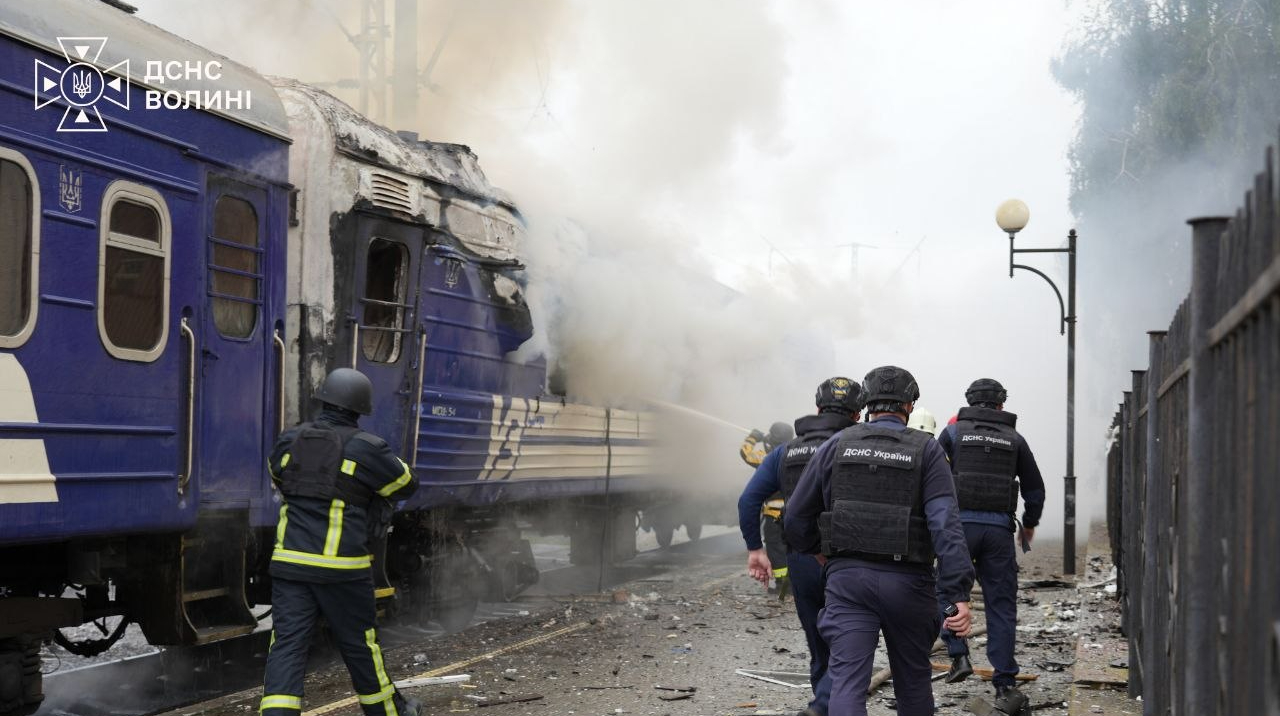
- Railway Infrastructure Targeted:
 Russian long-range drones struck passenger rail hubs in Lutsk and Fastiv overnight, prompting mass passenger evacuations and regional schedule disruptions, according to Ukrainska Pravda.
- Chemical Plant Strikes: Ukrainian long-range strike units hit deep industrial targets inside Russia, striking chemical facilities in Tolyatti and Samara, as detailed by Militarnyi.
- Shadow Fleet Interception: Ukraine’s Unmanned Systems Forces executed a naval drone strike against Russian shadow fleet tankers near Sochi while maneuvering to evade direct fire from an intercepting Russian attack helicopter, per Militarnyi.
- Sabotage Investigations:
 German federal prosecutors formally named a Russian GRU intelligence officer in connection with a drone-bomb plot at Leipzig-Halle Airport, reported by Euromaidan Press.
Iran, Hormuz & Middle East Conflict Watch
- Red Sea Coast Fall: Houthi amphibious forces captured Perim Island and the historic port city of Mocha, securing physical dominance over the Bab el-Mandeb strait while Tehran celebrated the offensive as a "divine triumph," according to USNI News.
- Tanker Rates Surge: International crude shipping costs hit record highs following reciprocal strikes between U.S. naval units and Iranian assets in the Gulf, documented by gCaptain.
 Oman Talks Outlook: Senior Iranian officials confirmed diplomatic discussions will take place Monday in Oman, but cautioned that no binding deal to reopen the Strait of Hormuz is expected, per Al-Monitor.
 Macro & Monetary Policy
- Sovereign Debt Burden: Total U.S. National Debt stands at $40.05 Trillion ($40,047,726,949,770.15), reflecting a 24-hour reduction of $26.56 Billion, with publicly held debt at $32.36 Trillion and a per-taxpayer burden of $296,650.
- FOMC Rate Odds: Four days out from the September 16 FOMC decision, the Effective Fed Funds Rate sits at 3.63% (target 3.50%–3.75%), with futures markets pricing in an 86% probability of a 25-basis-point rate hike following hotter-than-expected core CPI data.
- Commodity & Bond Yield Metrics: Gold rose 1.02% in 24 hours to $4,408.90/oz; 10-Year Treasury yields surged to 4.97% (+0.63%), while Brent Crude traded at $104.61/bbl (+9.52% over 7 days) and USD/JPY strengthened to ¥153.55 amid ongoing carry-trade unwinding.
 The Apprentice Corner: Trump Orbit, Cabinet & Empire

- Irish Diplomacy & Golf: President Trump held bilateral talks in Dublin with Irish President Catherine Connolly and Taoiseach Micheál Martin before traveling to his commercial resort in Doonbeg, declaring that Irish unification is "going to happen eventually."
- Envoys Highlighted: In press statements regarding Middle East diplomacy, Trump specifically praised the efforts of Jared Kushner and Steve Witkoff, asserting they have done a "very good job" in managing Gaza stabilization plans.
- Legal Controversies: Legal scholars highlighted the Justice Department’s post-9/11 invocation of the secret Alien Terrorist Removal Court to execute its first historical deportation via a confidential plea deal, reported by Law Dork.
 Global Dynamics
- Normandy Rail Accident: A passenger train carrying 186 people on the Rouen-Caen route derailed in Normandy, leaving at least 44 passengers injured, local emergency officials told the BBC.
- Latin American Defense Procurement: The U.S. State Department formally approved a potential $140 million defense sale of four UH-60L Black Hawk helicopters to
 Argentina, per MercoPress.
- Climate Impact on Champagne: Consecutive heatwaves across Northern
 France produced record-high grape sugar levels, enabling Champagne winemakers to bottle vintages reaching up to 15% ABV, according to the BBC.
 Tech & Trade Rivalries

- Adversary AI Exploitation: Anthropic released a threat report disclosing that Iranian and Russian state-linked actors used its Claude AI models to aggregate U.S. Navy target data and build autonomous cyberattack bots, per Axios.
- Wall Street Automation: OpenAI launched "ChatGPT for Financial Services," introducing specialized AI tools designed to automate pitchbook assembly and modeling tasks traditionally performed by junior investment bankers, reported by CNBC.
- Automotive Manufacturing Pivot: President Trump stated in a Fox News interview that he would permit Chinese automakers to establish manufacturing plants on U.S. soil, breaking with legacy domestic auto lobby positions, via The Hill.
 Weather Desk: Today Against the Record
 Utqiagvik (Barrow), Alaska
 High 7.4°C (45°F) / Low 2.8°C (37°F) • Slight Snow Showers
 • Precip Risk: 100%
 NASA VIIRS, 11 September 2026
 Cape Town, South Africa High 18.4°C (65°F) / Low 16.0°C (61°F) • Slight Rain
 • Precip Risk: 64% NASA MODIS Terra, 12 September 2026
 La Paz, Bolivia High 16.9°C (62°F) / Low 4.3°C (40°F) • Light Drizzle
 • Precip Risk: 72% NASA VIIRS, 11 September 2026
 On This Day: September 12, 2026
 Holidays and Observances: Today is celebrated across the nation as National Day of Encouragement.
 Notable Birthdays: Actress Sydney Sweeney turns 29 (born 1997), former NBA star Yao Ming turns 46 (born 1980), and Grammy-winning singer Jennifer Hudson turns 45 (born 1981).
 History:
- In 1962, President John F. Kennedy delivered his iconic speech at Rice Stadium in Houston, reiterating America's commitment to land a man on the Moon before 1970.
- In 1983, the clandestine Boricua Popular Army carried out a cash robbery in West Hartford, Connecticut, stealing $7 million in what was the largest cash heist in U.S. history at the time.
- In 1992, aboard Space Shuttle Endeavour, mission specialist Mae Jemison became the first Black woman to travel into space.
 The American Experience: Did You Know?
 The Cartoon Character That Saved Modern Mail Routing
 The History Desk:
 Medieval & Early Modern Europe
The Imperial Post: How the Thurn und Taxis Built Europe’s First Logistics Network Brussels,
 Italy, and
 Vienna. Rather than relying on lone messengers who took weeks to cross the continent, the Taxis family established fixed relay stations spaced roughly a day’s ride apart, keeping fresh horses and mounted couriers ready around the clock. Historians record that by the mid-16th century, the network had grown into a hereditary imperial monopoly—the Reichspost—operating over 300 stations and delivering letters across thousands of miles in mere days. To fund the massive infrastructure, the family opened the service to private merchants, creating Western Europe's first commercial, fee-funded communications utility.
 Why today: This early privatized logistics monopoly illuminates how modern trade networks—such as the crucial East-West Saudi oil pipeline and Red Sea maritime corridors disrupted in today's news—depend entirely on secure relay chokepoints to sustain global commerce.