Calling a Timeout: Tech Leaders Demand an AI Slowdown as Beijing and Washington Clash
 The Big Picture

A unprecedented rift has opened across the tech world after Anthropic CEO Dario Amodei and other frontier lab executives published urgent warnings calling for a voluntary slowdown in artificial intelligence development to prevent catastrophic risks, sending chip stocks tumbling premarket.  Chinese state media and Beijing's Foreign Ministry immediately hit back, accusing American tech leaders of using safety panic as fearmongering to preserve U.S. dominance ahead of bilateral summit talks in Washington. Simultaneously, global energy supply shocks deepened as
 Saudi Arabia shuttered its key East-West pipeline after drone strikes from
 Iraq, causing European gas prices to leap 6 percent and derailing Middle East diplomatic talks. On Capitol Hill, Senate Democratic Leader Chuck Schumer responded to the AI alarms by demanding an immediate classified briefing for all senators as Congress returns to face a crowded legislative calendar.
 MACRO PULSE & PRICE TRACKER |
$40.05T
$117,787 per citizen • $296,650 per taxpayer
|
3.50% – 3.75%
EFFR: 3.63% • SEP / Dot Plot & Press Conf
|
||||||||
Safe Haven & Central Bank Reserves
|
Benchmark Sovereign Borrowing Cost
|
||||||||
WTI: $104.45 • Hormuz Risk Active
|
Global Carry Trade & FX Liquidity
|
 US National Debt
 Gold (XAU/USD)
 Crude Oil & Hormuz
 USD / JPY (Yen)
 Trending Cycles
Saudi Pipeline Outage Threatens Global Oil Supplies as Gas Prices Surge

- Critical Transit Cut Off: Saudi Arabia was forced to execute a precautionary shutdown of its 745-mile East-West Crude Oil Pipeline after drone attacks originating from southern Iraq struck pumping stations near Medina, three separate outlets reported this morning.
- Severe Market Impact: Analysts warn that the disruption removes up to 4 percent of global daily crude supply, forcing Asian refiners to scramble for alternative cargoes as the main Red Sea bypass route around the Strait of Hormuz goes dark.
- European Energy Jump: Benchmark European natural gas prices soared over 6 percent at Monday's opening in Amsterdam as traders priced in prolonged infrastructure outages across the Middle East.
Wall Street Rattled as Frontier AI Labs Demand Development Pause
- Ceo Pause Calls: Major semiconductor and hardware stocks traded sharply lower in premarket action after leading frontier AI CEOs published essays urging a coordinated pause on model scaling, two separate outlets carried today.
- Market Divergence: Shares of Micron, Nvidia, and Marvell Technology retreated, though market analysts note that hyperscale data center capital expenditures are unlikely to slow down in the near term.
- State Department Pushback: Chinese officials blasted the pause movement, asserting that U.S. executive calls for restraint are a disguised attempt to handicap China's domestic artificial intelligence progress.
Defense Giants Expand Autonomous Combat Drone Production
- Skunk Works Expansion: Lockheed Martin's secret research unit announced plans to build five prototypes of its Vectis multirole stealth combat drone, two distinct outlets reported this morning.
- Reaper Successor Bid: Defense startups like Swarm Aero unveiled competing non-stealthy designs like the Gamera drone, optimized for extreme range to succeed legacy uncrewed platforms in long-distance theaters, according to defense coverage from Breaking Defense.
- Flight Test Timeline: Lockheed confirmed that flight testing for the Vectis stealth drone program remains on track to begin in 2027 as autonomous air combat systems receive priority defense funding.
 The Radar
This Week in Congress & Capitol Hill Watch
- House Returns to Session: The House is sitting following its last recorded vote on September 3, with 28 committee meetings scheduled this week beginning with a House Judiciary Subcommittee hearing Monday on healthcare market competition and fraud.
- Cabinet Testimony Scheduled: Treasury Secretary Scott Bessent is slated to appear before the House Financial Services Committee on Tuesday morning for his annual testimony on international financial systems.
- Senate Schedule & Floor Votes: The Senate is not currently voting following its last roll call on August 8, but holds 17 committee sessions this week; on its recent floor record, the House passed H.R. 4795, the Protect Economic and Academic Freedom Act on roll call 295.
- Nuclear Energy Hearing: The House Energy and Commerce Subcommittee on Energy will hear testimony Tuesday from DOE Assistant Secretary Theodore Garrish and Nuclear Energy Institute CEO Maria Korsnick regarding nuclear spent fuel lifecycle campuses.
- Recorded Attendance Absences: On the House floor record over the last 14 roll calls, Rep. Neal Dunn (R-FL) missed 14 of 14 votes (100%), while Rep. Byron Donalds (R-FL), Rep. John Garamendi (D-CA), and Rep. Marcy Kaptur (D-OH) each missed 12 of 14 votes (86%); in the Senate, Sen. Mitch McConnell (R-KY) missed 14 of 14 votes (100%), with official records showing no listed reason for the absences.
 US Politics & Election Watch
- Midterm Countdown: Exactly 50 days remain until the November 3, 2026 midterm elections, with all 435 House seats, 33 Class 2 Senate seats, and 36 governorships on the ballot.
- Generic Ballot Polling: Political data analysis shows Democrats reaching a +7 point lead in generic ballot polling averages for the first time this midterm cycle, buoyed by candidate recruitment.
- Mail Ballot Rules Injunction: U.S. District Judge Carl Nichols issued a preliminary injunction blocking President Trump's Postal Service mail-in voting restrictions nationwide as emergency appeals await Supreme Court action.
- Primary Season Finales: Election analysts are previewing the final statewide primary of the season in Delaware on September 15, as highlighted by The Almanac of American Politics.
 Ukraine War & Frontline Watch
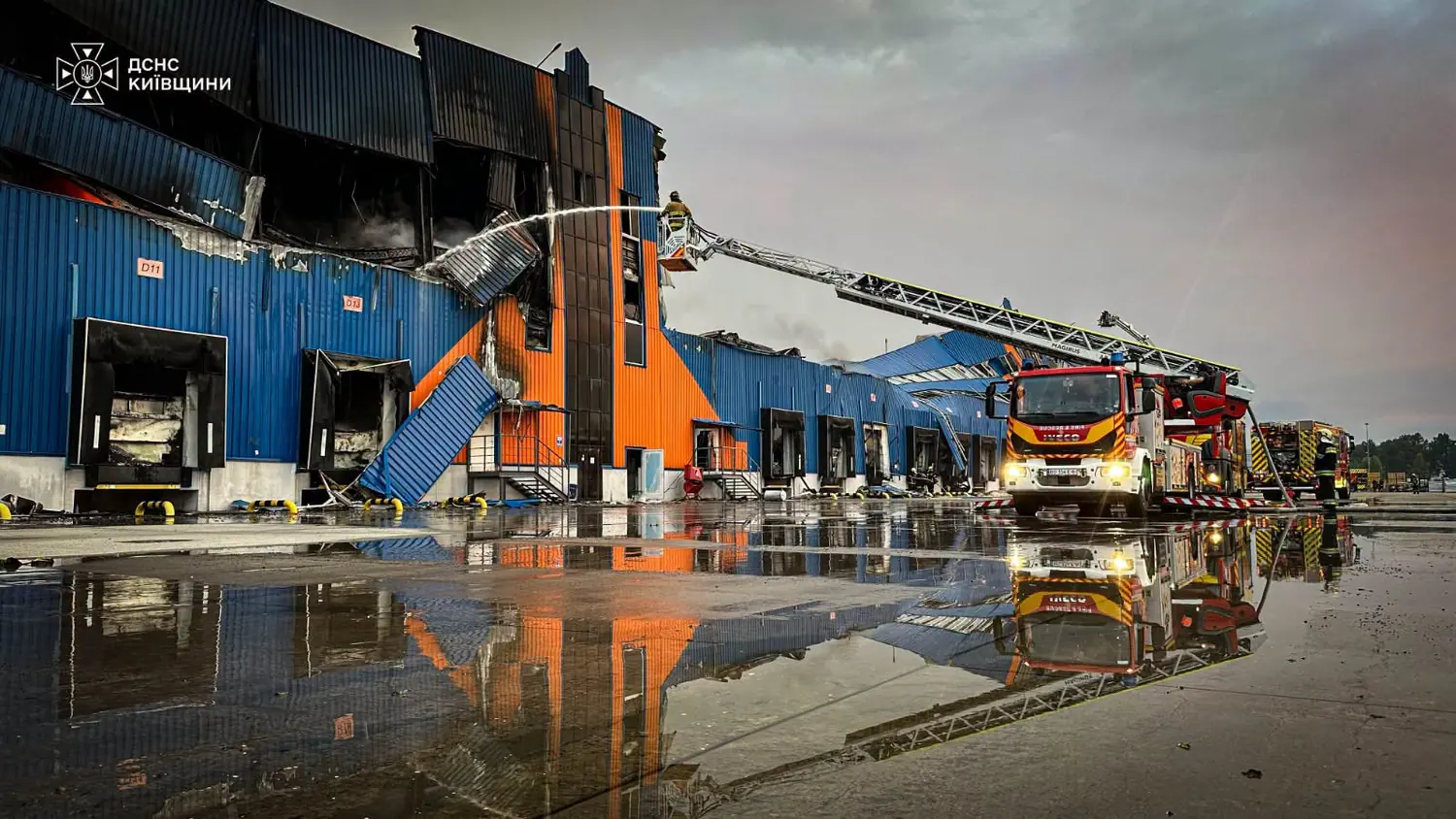
- Border Railway Strike:
 Russian missiles struck a railway station in western Ukraine just two kilometers from the
 Polish border shortly after top European officials departed, in what Kyiv called a direct warning to Western allies.
 Belarusian Relay Relay Stations: Ukrainian border guard services reported that recent long-range Russian drone strikes against Rivne, Volyn, and Lviv oblasts were guided via relay stations inside Belarus.
- Next-Gen Interceptor Tests: President Zelenskyy confirmed Ukraine is actively testing a new generation of custom drone interceptors built specifically to hunt jet-powered Shahed and Geran-5 variants.
- Economic Damage Assessment: Ukraine's government estimates that targeted Russian strikes on logistics, pharmaceutical hubs, and power infrastructure will cost the economy up to $10 billion in losses this year.
 Iran, Hormuz & Middle East Conflict Watch
 Oman Diplomatic Talks Halted: Scheduled maritime peace talks in Oman between Gulf states and Iran collapsed Monday after Houthi forces launched dozens of drones at Saudi Arabia's King Khalid airbase.
- Red Sea Island Seizures: Houthi fighters seized control of additional strategically placed islands in the Red Sea while advancing toward oil-rich Marib and critical transport nodes in Taiz, according to reporting by The Times of Israel.
- IAEA Visa Exclusion: The U.S. blocked Iranian nuclear chief Mohammad Eslami from attending the UN atomic agency summit in
 Vienna by refusing to grant an exemption from snapback sanctions, drawing sharp diplomatic protests from Tehran.
- Overland Supply Bets: Ports giant DP World announced a massive expansion of its Middle East trucking fleet, betting that container flows through the Strait of Hormuz will not recover to pre-conflict levels, detailed by gCaptain.
 Macro & Monetary Policy
- Debt & Yield Steepening: Total U.S. National Debt stands at $40.05 trillion ($117,787 per citizen) as Treasury yields climb sharply ahead of the Fed meeting, with the 10-Year Treasury yield hitting 4.99% and 30-Year at 5.36% (+37 bps spread).
- Fed Rate Decision Imminent: Markets are pricing in a 90% probability of action at the upcoming September 16 FOMC decision, with the Fed Funds target range sitting at 3.50%–3.75% and Effective Fed Funds at 3.63%.
- Energy Surge & Diesel Spike: Brent crude touched $109.41/bbl (+13.64% over 7 days) and WTI reached $104.45/bbl following the Saudi pipeline closure, driving national average U.S. retail diesel prices up to $6.25 per gallon.
- Gold & FX Signals: Gold spot prices settled at $4,312.20/oz (-1.24% on the day), while USD/JPY traded at ¥154.84 (+0.23%) as global currency markets monitor carry trade unwinding dynamics.
 The Apprentice Corner: Trump Orbit, Cabinet & Empire
- Dividend Check Demands: House Speaker Mike Johnson clarified that President Trump's campaign proposal to issue $5,000 dividend checks to citizens must be passed by Congress, casting doubt on administrative implementation plans.
- Don Jr. Wedding Investigation: A ProPublica investigation revealed Donald Trump Jr.'s three-day Bahamas wedding was secretly bankrolled by Russian oligarch Umar Kremlev, a close ally of Vladimir Putin.
- Refinery Strike Demands: Trump publicly called on Ukrainian President Volodymyr Zelenskyy to halt strikes on Russian oil refineries, warning that fuel destruction is causing global diesel prices to surge, reported by gCaptain.
 Global Dynamics
- Mass
 Syrian Fuel Protests: A 28% to 40% sudden increase in fuel prices ignited widespread demonstrations across eight Syrian provinces, sparking the largest protests since the fall of Assad.
- Falklands Sovereignty Bill:
 Argentine President Javier Milei met with lawmakers in Buenos Aires to finalize a new sovereignty bill regarding the Falkland Islands to present to Congress, according to MercoPress.
- Celtic Leaders Summit: First Ministers of
 Scotland, Wales, and Northern
 Ireland gathered in Cardiff to sign a historic trilateral cooperation pact on shared governance, reported by MercoPress.
 Tech & Trade Rivalries
- Beijing Security Warning: Chinese Minister of State Security Chen Yixin issued a formal warning that unchecked AI development poses critical risks to national security and data infrastructure.
- Countering Pause Narrative: Beijing state media dismissed Western tech executives' calls for AI regulation as a tactical attempt to slow down rival Chinese labs, reported by CNBC.
- Congressional AI Push: Former President Obama and senior House lawmakers urged Democrats to place AI regulation at the center of their national platform, as detailed in Politico.
 Weather Desk: Today Against the Record
 Ushuaia, Argentina
 High 1.4°C (35°F) / Low -2.4°C (28°F) • Slight Snow Showers
 • Precip Risk: 100%
 NASA MODIS Terra, 14 September 2026 Hong Kong High 29.5°C (85°F) / Low 23.7°C (75°F) • Thunderstorm
 • Precip Risk: 91% NASA VIIRS, 14 September 2026
 Cape Town, South Africa High 16.7°C (62°F) / Low 13.4°C (56°F) • Moderate Rain Showers
 • Precip Risk: 100% NASA MODIS Terra, 14 September 2026
 On This Day: September 14, 2026
 Notable Birthdays: American basketball star Jimmy Butler (1989), NFL quarterback Deshaun Watson (1995), and NBA shooting guard Gary Harris (1994).
 2019 Drone Oil Strike: Precursor drone strikes hit Saudi Arabian oil processing facilities at Abqaiq and Khurais, temporarily forcing the kingdom to cut over half its national oil output.
- 2015 Gravitational Wave Discovery: Physicists participating in the LIGO and Virgo projects made the historic first direct observation of gravitational waves, confirming predictions made in 1905.
- 2007 British Bank Run: The British lender Northern Rock received emergency liquidity support from the Bank of England, triggering the United Kingdom's first bank run in 150 years.
 The American Experience: Did You Know?
 The Aerodynamic Dimple Secret of Golf Balls
 The History Desk:
 South Asia
Todar Mal and the Mughal Data Survey northern India. Rather than levying arbitrary taxes or relying on local feudal estimates, Todar Mal dispatched imperial surveyors armed with standardized measuring rods to record exact land area, soil fertility, and crop yields across ten consecutive harvest seasons. By averaging a decade of agricultural data, the Mughal state created a predictable cash-tax model that eliminated systemic price shocks and funded one of the world's most sophisticated imperial bureaucracies. It proved that state stability relied on empirical measurement rather than ad-hoc extraction.
 Why today: Just as Raja Todar Mal's 16th-century Mughal survey established data-driven metrics to stabilize resource allocation, modern governments returning to Washington are struggling to build regulatory frameworks around compute infrastructure and artificial intelligence data centers.