Box, Box, Box: Energy Disruption Pushes 10-Year Treasury Yields Past 5% Ahead of Fed Decision
 The Big Picture
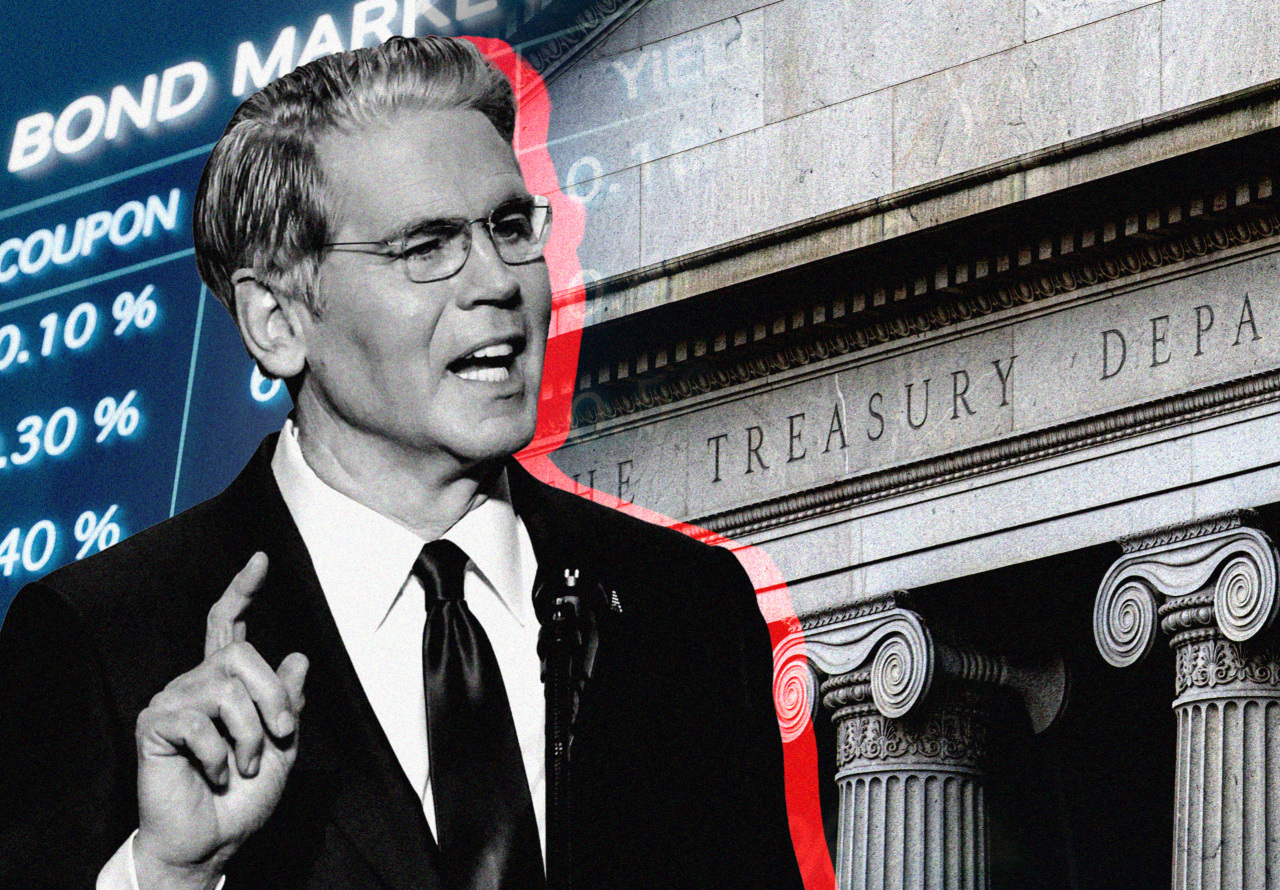
The 10-Year Treasury yield surged past 5.00% as mounting fiscal debt and persistent energy supply shocks forced fixed-income markets to reprice long-term borrowing costs. As the Federal Reserve convenes today for its September rate decision, crude oil prices jumped over 6% week-over-week, driven by Saudi Arabia's forced shutdown of its East-West bypass pipeline following drone strikes. Simultaneously, the U.S. House of Representatives passed a bipartisan War Powers resolution seeking to curtail executive military authority in the widening Gulf conflict. Meanwhile, European leaders proposed a new security strategy to counter hybrid threats, reflecting growing transatlantic friction as trade and diplomatic ties strain under administration policies.
 MACRO PULSE & PRICE TRACKER |
$40.05T
$117,807 per citizen • $296,699 per taxpayer
|
3.50% – 3.75%
EFFR: 3.63% • SEP / Dot Plot & Press Conf
|
||||||||
Safe Haven & Central Bank Reserves
|
Benchmark Sovereign Borrowing Cost
|
||||||||
WTI: $103.81 • Hormuz Risk Active
|
Global Carry Trade & FX Liquidity
|
 US National Debt
 Gold (XAU/USD)
 Crude Oil & Hormuz
 USD / JPY (Yen)
 Trending Cycles
Ex-Kosovo President Hashim Thaci Sentenced to 25 Years for War Crimes

- Historic Conviction: An
 European Union-backed special tribunal in The Hague convicted former Kosovo President Hashim Thaci of war crimes and crimes against humanity, sentencing him to 25 years in prison for actions during the 1998–1999 war of independence from
 Serbia.
- Command Responsibility: The court found Thaci guilty of murder, torture, and enforced disappearances carried out by the Kosovo Liberation Army (KLA), where he served as a political leader.
- Balkan Repercussions: The verdict marks the highest-level conviction of a former Kosovo official, drawing intense reactions across Pristina and Belgrade as regional security remains delicate. Coverage broke across two international outlets this morning.
News Helicopter Crash in Los Angeles Claims Three Lives
- Fatal Aviation Incident: A news helicopter operated by NBCLA crashed near downtown Los Angeles, killing a reporter, a pilot, and at least one individual on the ground.
- On-Scene Assignment: The helicopter was actively broadcasting aerial footage of an earlier fatal city bus collision when the aircraft went down unexpectedly.
- Investigation Underway: The Federal Aviation Administration and NTSB dispatched investigators to examine mechanical telemetry and site wreckage, with two primary wire services reporting the crash overnight.
FBI Arrests Pennsylvania Man Over Alleged ISIS-Inspired Plot
- Preemptive Arrest: Federal agents arrested 21-year-old Jonathan Hunter Kramer in Cranberry Township, Pennsylvania, charging him with attempting to conduct an Islamic State-inspired violent attack.
- Weapons Acquisition: Court filings indicate Kramer had purchased a semiautomatic rifle and tactical ammunition shortly before federal law enforcement moved to intercept him.
- Second Domestic Case: The arrest marks the second domestic terrorism operation intercepted in the state this month, drawing coverage across defense and intelligence monitoring outlets today.
 The Radar
This Week in Congress & Capitol Hill Watch

- House Limits
 Iran Military Action: The House passed a bipartisan War Powers resolution in a 220-204 vote, directing the president to withdraw U.S. forces from hostilities with Iran (H. Con. Res. 93), supported by seven Republican defectors.
- Senate Rejects Crypto Bill Cloture: The Senate blocked procedural advancement of the Clarity Act (H.R. 3633) after key members flipped, while advancing student-athlete NIL legislation (S. 4668).
- Treasury Oversight Hearing: Treasury Secretary Scott Bessent delivered mandatory annual testimony on international financial stability before House Financial Services, defending debt management amid 5% benchmark yields.
- Judiciary FBI Scrutiny: FBI Director Kash Patel faced hostile questioning during a Senate Judiciary oversight hearing regarding recent agent reassignments and federal election monitoring policies.
- Floor Attendance Tracker: House participation averaged 96.9%, though Reps. Byron Donalds (R-FL), Neal Dunn (R-FL), John Garamendi (D-CA), and Cory Mills (R-FL) missed all 14 recent roll calls; Sen. Mitch McConnell (R-KY) missed 11 of 14 Senate votes, with official roll call records showing no stated reasons.
 US Politics & Election Watch
- Midterm Countdown: Exactly 48 days remain until the November 3, 2026 midterm elections, featuring all 435 House seats, 33 Class 2 Senate seats, and 36 state governorships on the ballot.
- Delaware Primaries Conclude: Incumbent Sen. Chris Coons secured the Democratic nomination in Delaware, setting up a general election matchup against former state Sen. Michael Katz (Decision Desk HQ) as the national primary calendar officially closed.
- SCOTUS Leaves Mail-In Stay: The Supreme Court denied an emergency request by the administration to reinstate Postal Service mail-in ballot restrictions, keeping lower-court injunctions intact through the upcoming midterms over dissents from Justices Alito and Thomas (One First Analysis).
- Voting Rights Litigation: Legal advocacy groups formally petitioned federal courts to restrict political appointees from deploying federal law enforcement officers near polling locations during autumn voting.
 Ukraine War & Frontline Watch

- Northern Donetsk Counteroffensive: Ukrainian forces revealed Operation Vivaldi, an ongoing counteroffensive northwest of Lyman that has retaken tactical ground and cleared
 Russian infiltrators along the northern front (Euromaidan Press).
- Russian General Killed: Ukraine's 427th Rarog Brigade targeted and killed Russian Maj. Gen. Anton Grunis, commander of the 4th Separate Motor Rifle Brigade, in occupied Donetsk Oblast weeks after he claimed control over Kostiantynivka.
- Civilian Transport and Base Strikes: A Russian drone hit a scheduled public minibus near Nikopol, killing five civilians, while Ukrainian long-range strikes damaged a Su-24 bomber at Saky airfield in occupied Crimea (Ukrainska Pravda).
- Nordic Aid Package:
 Finland unveiled its 34th military aid shipment to Kyiv worth €290 million (Militarnyi), while
 Germany's Sonderstab task force accelerated arms procurement timelines.
Iran, Hormuz & Middle East Conflict Watch
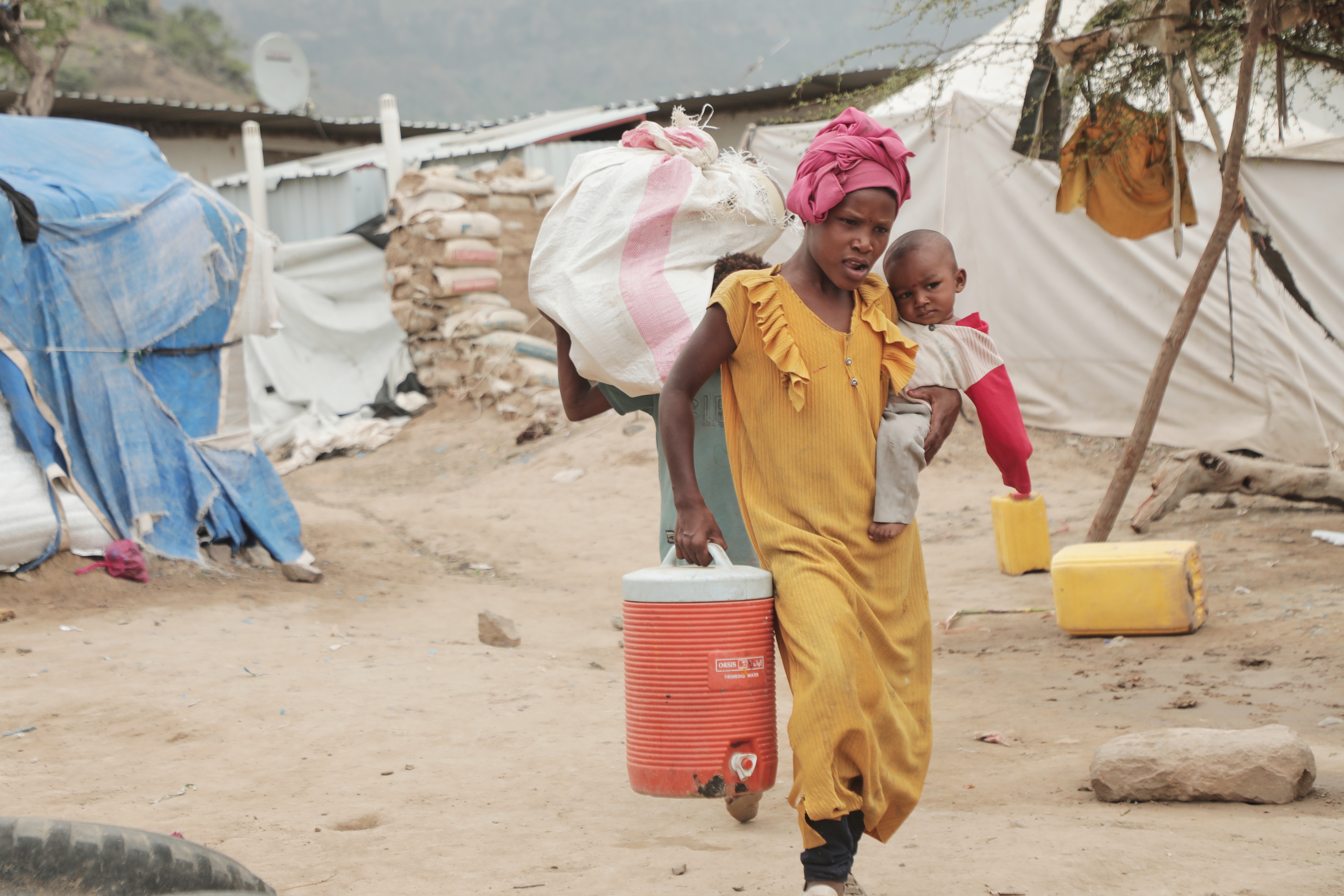
 Saudi Arabia Accuses Houthis of Mecca Attempt: Riyadh declared an attempted Houthi drone strike near Mecca a "red line" (NPR), though
 Yemeni rebels denied launching the attack as regional tensions spiked.
- Pipeline Shutdown Forces Spot Sales: Saudi Aramco suspended crude loadings at its Yanbu Red Sea terminal following East-West pipeline damage, forcing the kingdom to sell up to 20 million barrels of spot crude outside the Strait of Hormuz (OilPrice).
- CBO Quantifies War Expense: The Congressional Budget Office estimated direct Department of Defense sustainment and munition replacement costs for the conflict with Iran reached $38 billion through August 1.
- Hormuz Transit Stalled: Maritime tracking data shows commercial oil tanker transits through the Strait of Hormuz remain depressed in single digits, holding Brent crude above $107 per barrel.
 Macro & Monetary Policy
- Federal Reserve Rate Decision Day: The Federal Open Market Committee concludes its two-day policy meeting today with benchmark rates at 3.50%–3.75% (EFFR at 3.63%), amidst intense political pressure and inflation anxieties (The Hill).
- Treasury Curve Steepening: 10-Year Treasury yields surged to 5.00% (+71 bps 1-day) and 30-Year yields climbed to 5.36%, broadening the 10Y/30Y spread to +37 bps as national debt eclipsed $40.05 trillion ($117,807 per citizen).
- Safe-Haven Rally in Gold: Spot gold advanced 1.27% over 24 hours to $4,387.70/oz as global investors hedge against escalating Middle Eastern supply bottlenecks and currency volatility.
- Yen Softening: The
 Japanese Yen traded at ¥155.15 per USD as Japan’s August energy import bill ballooned 58.7% year-over-year, deepening its national trade deficit (OilPrice).
 The Apprentice Corner: Trump Orbit, Cabinet & Empire

- Oversight Probe Into Wedding Funding: House Oversight Committee Democrats opened a formal inquiry into payments made by Russian oligarch Umar Kremlev to cover venue costs for Donald Trump Jr.’s wedding (ProPublica).
- Kennedy Center Dispute Escalates: District Judge Cooper ruled President Trump cannot mandate putting his name on the Kennedy Center building, prompting White House threats to halt approved facility renovation funding (The Hill).
- Controversial Arctic Appointment: Investigative reports highlighted the influence of MAGA commentator Thomas Dans, appointed to head the U.S. Arctic Research Commission despite documented financial ties to pro- Kremlin commercial ventures (Defense One).
 South Africa Visa Restrictions: The administration announced targeted visa bans against selected South African officials over claims of white minority discrimination, triggering pushback from Pretoria (NYT).
 Global Dynamics

- EU Proposes
 Canadian Associate Membership: European Commission President Ursula von der Leyen offered Canada formal "associate member" status in EU security networks amid weakening transatlantic ties with Washington (NYT).
- Saxony-Anhalt AfD Surge: Immigrant communities in eastern Germany expressed alarm as the far-right Alternative for Germany (AfD) expanded polling leads ahead of state coalition talks (NYT).
 Lebanese Security Strategy: Lebanese President Joseph Aoun stated Beirut seeks a security agreement with
 Israel following border withdrawals and intends to disarm Hezbollah without internal armed conflict (Al-Monitor).
- Japan Centenarian Milestone: Japan's Ministry of Health reported the nation’s population of individuals aged 100 or older has crossed 100,000 for the first time on record (NYT).
 Tech & Trade Rivalries
- Space Force Confirms Orbital Weapons: Space Force Chief Gen. Douglas Schiess publicly acknowledged the U.S. has operational weapons deployed in orbit to counter
 Chinese and Russian anti-satellite capabilities (Defense One).
- AI Industry Safety Warnings: OpenAI CEO Sam Altman and tech executives urged balanced public caution around advanced AI models while Congressional leaders conceded difficulties in enacting federal guardrails (BBC).
- Circle Launches Arc Mainnet: Crypto infrastructure firm Circle launched its Arc mainnet with institutional validators including BlackRock and Visa, minting 10 billion ARC tokens (The Block).
- Institutional Crypto Custody: Deutsche Bank announced plans to launch institutional digital asset custody in Europe later this year, initially covering Bitcoin and Ether (The Block).
 Weather Desk: Today Against the Record
 Anchorage, Alaska
 High 15.4°C (60°F) / Low 11.6°C (53°F) • Light Drizzle
 • Precip Risk: 57%
 NASA MODIS Terra, 15 September 2026
 Madrid, Spain High 27.1°C (81°F) / Low 16.2°C (61°F) • Thunderstorm
 • Precip Risk: 18% NASA VIIRS, 15 September 2026
 Queenstown, New Zealand High 10.3°C (51°F) / Low 3.3°C (38°F) • Heavy Snow Showers
 • Precip Risk: 100% NASA MODIS Terra, 16 September 2026
 On This Day: September 16, 2026
 Notable Birthdays:
- 1995: Aaron Gordon, American NBA forward and champion with the Denver Nuggets.
- 1992: Nick Jonas, American singer-songwriter, actor, and member of the Jonas Brothers.
- 1989: Salomón Rondón, record-setting
 Venezuelan international soccer striker.
 Historical Events:
- 1992: Black Wednesday Devaluation — The
 British pound was forced out of the European Exchange Rate Mechanism following heavy currency speculation.
- 1989: Yeltsin’s Texas Supermarket Visit — Future Russian President Boris Yeltsin visited a Houston grocery store, later noting the abundance reshaped his view of Soviet economic planning.
- 1963: Formation of Malaysia — The nation of Malaysia officially united the Federation of Malaya,
 Singapore, North Borneo, and Sarawak.
- 1992: Black Wednesday Devaluation — The
 The American Experience: Did You Know?
 The Physics of the Runaway Truck Arrester Bed
 The History Desk:
 Maps, Borders & Cartography
The 36-Day Line That Split a Continent British lawyer Sir Cyril Radcliffe arrived in  New Delhi having never previously traveled to India. Appointed to chair two Boundary Commissions, he was given exactly 36 days to draw a 4,500-kilometer international border dividing the provinces of Punjab and Bengal between the newly independent nations of India and
 Pakistan. Radcliffe relied on outdated census figures and basic topographical surveys, working isolated in a retreat to prevent leaks. The resulting Radcliffe Line arbitrarily severed irrigation networks, rail tracks, and agricultural communities overnight. The announcement triggered one of the largest mass migrations in human history, as contemporaneous British and regional administration records estimated 10 to 12 million people were displaced, resulting in widespread communal violence.
 Why today: This historical partitioning illuminates today's news regarding former Kosovo President Hashim Thaci's 25-year war crimes conviction, rooted in the violent territorial disintegration and contested borderlines of the former Yugoslavia.