The Bends: Berkshire Succession and Fed Rate Cuts Shake Global Markets
 The Big Picture
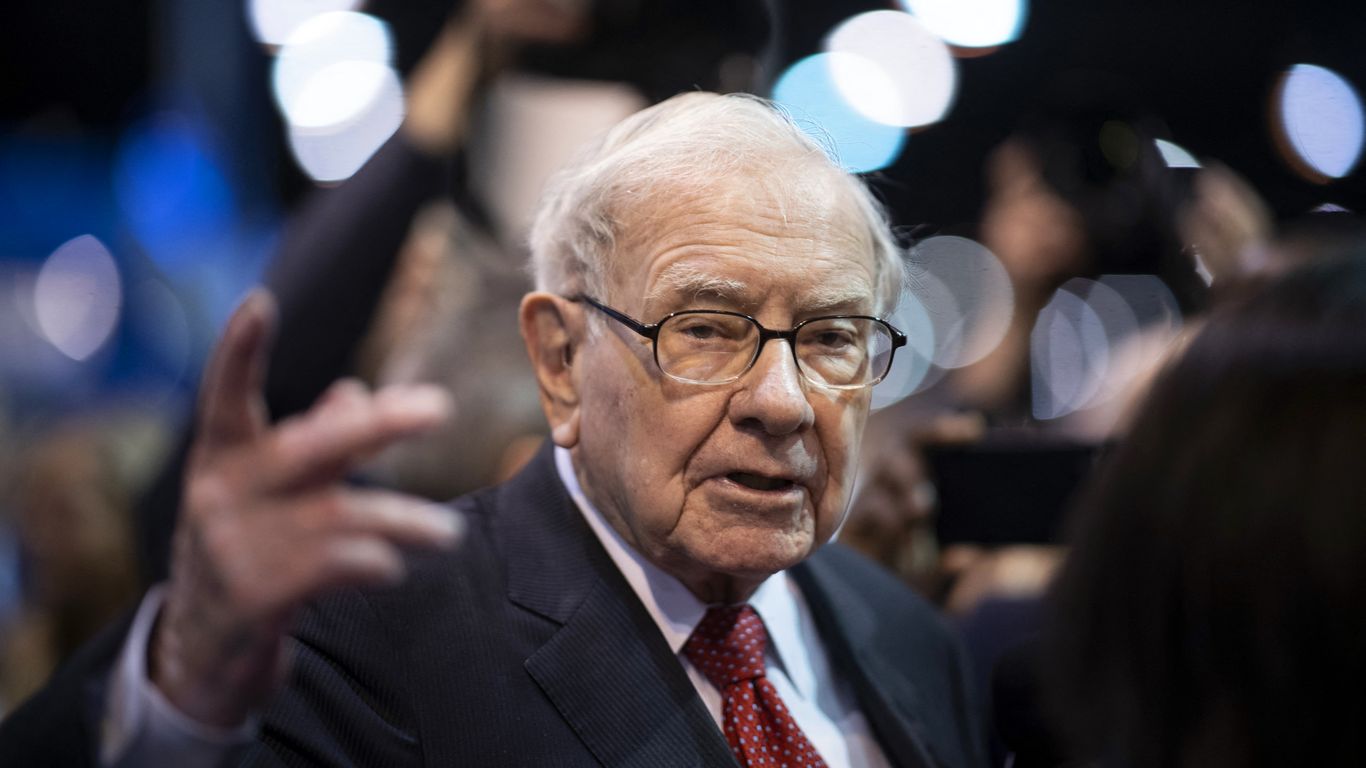
Financial markets absorbed a seismic shift on Friday as Warren Buffett stepped down as chairman of Berkshire Hathaway, handing the corporate reins to his son Howard in alignment with long-standing succession plans. Concurrently, the Federal Open Market Committee released its most terse statement since 2007—clocking in at just 130 words—to explain a quarter-point rate hike that has left monetary strategists parsing the limits of economic resilience. Against this backdrop of corporate transitions and monetary tightening, lawmakers on Capitol Hill are grappling with escalating energy and AI security debates, highlighted by the House passing a ratepayer protection bill aimed at shielding consumers from the massive power demands of expanding data centers.
 MACRO PULSE & PRICE TRACKER |
$40.09T
$117,924 per citizen • $296,993 per taxpayer
|
3.50% – 3.75%
EFFR: 3.63% • Standard Policy Decision
|
||||||||
Safe Haven & Central Bank Reserves
|
Benchmark Sovereign Borrowing Cost
|
||||||||
WTI: $95.67 • Maritime Corridor Steady
|
Global Carry Trade & FX Liquidity
|
 Gold (XAU/USD)
 Crude Oil & Hormuz
 USD / JPY (Yen)
 Trending Cycles
Clean Energy Investments Surge Amid Regional Energy Pressures
- Global Pivot:
 India’s coal power generation remained entirely flat between the first half of 2024 and the first half of 2026, marking the first such two-year stagnation in over half a century for the world's second-largest coal consumer, according to an analysis by the Centre for Research on Energy and Clean Air highlighted by OilPrice.com.
- Corporate Solar PPA: In domestic markets, Meta signed a 144-megawatt solar power purchase agreement with Apex Clean Energy in Texas, securing exclusive rights to all environmental attributes and renewable energy credits, as reported by Utility Dive.
- Cycle Momentum: Mentions of clean energy infrastructure scaling across corporate and developing markets expanded across three separate energy and policy desks this morning, emerging as a brand-new narrative cycle.
Tragedy Strikes a  Philippine School in Third High-Profile Incident
- Breaking Incident: At least two people were killed in a school shooting in Banga, Philippines, where the suspected student shooter also died from self-inflicted wounds, according to reporting from The New York Times.
- Escalating Pattern: Local authorities confirmed this marks the third high-profile school shooting in the country in recent months, drawing urgent scrutiny over campus safety and youth access to firearms.
- Media Spread: Coverage of the shooting ran across two major international news desks this morning as local officials struggled to contain the fallout.
End of an Era as Berkshire Hathaway Chairman Steps Down
- The Oracle Steps Aside: Warren Buffett officially relinquished his role as chairman of Berkshire Hathaway, with his son Howard stepping into the position as outlined in the conglomerate's multi-year succession framework, Axios reported.
- Conglomerate Continuity: The transition follows Buffett's earlier departure from daily CEO duties, cementing a generational handoff for the massive insurance, rail, and equity holding firm.
- Outlets React: The retirement announcement was carried by two major financial desks within minutes of the opening bell.
 The Radar
This Week in Congress & Capitol Hill Watch
- House Action: The House cleared S. 2403, the Retire through Ownership Act, on a motion to suspend the rules, alongside the Water Resources Development Act (source).
- Judicial Confirmation: The Senate confirmed Kasdin Miller Mitchell to be U.S. District Judge for the Northern District of Texas, voting 238 to invoke cloture and finalize the lifetime appointment (source).
- Committee Oversight: The House Financial Services Subcommittee on Financial Institutions scheduled a Friday hearing examining community bank access, featuring testimony from Kentucky Bankers Association CEO Timothy Schenk (source).
- Attendance Record: House floor participation averaged 97.6% over the recent two-day voting run, though records show five members—including Reps. Dunn, Garamendi, Mills, Tiffany, and Womack—missed all 14 recent roll calls without recorded reasons.
 US Politics & Election Watch
- Midterm Ad Blitz: Two Trump-aligned super PACs have reserved more than $150 million in ads targeting competitive House and Senate seats, aiming to counter a difficult political environment for the GOP, NPR reported.
- Kansas Senate Tightens: A new The Hill/Emerson College Polling survey shows Democratic challenger Adam Hamilton narrowly leading incumbent Republican Gov. Roger Marshall 45% to 43% in deeply conservative Kansas.
- Gas Tax Push: Michigan Senate candidate Mike Rogers called for an immediate suspension of state and federal gas taxes to alleviate working-family pressures amid surging pump prices, The Hill noted.
 Ukraine War & Frontline Watch
- Sanctions Advance: The U.S. House passed the first major
 Russian oil sanctions package in two years, leaving the legislation one signature away from becoming law, according to Euromaidan Press.
- Refinery Strikes: Ukrainian drone strikes successfully targeted the AVT-3 unit at Russia's Yaroslavl refinery and the ELOU-AVT-7 unit at Nizhnekamsk, cutting major primary crude processing capacities as reported by regional intelligence trackers.
- European Security Formats: Ukrainian President Volodymyr Zelenskyy announced the launch of the "Carpathian Eight" (C8) diplomatic and security cooperation framework uniting Ukraine with
 Romania,
 Serbia,
 Poland,
 Slovakia,
 Czechia,
 Austria, and
 Hungary, Ukrainska Pravda reported.
 Iran, Hormuz & Middle East Conflict Watch
- Strait Transit Slump: Shipping data indicates only four commodity vessels moved inbound or outbound through the Strait of Hormuz on Thursday as
 Saudi Arabia scrambled to secure alternative oil export channels following the closure of the Yanbu pipeline, OilPrice.com reported.
- F-35 Sale Controversy: The U.S. formally cleared a $24 billion military sale to supply advanced F-35 fighter jets to Saudi Arabia, triggering intense congressional pushback over regional proliferation risks, Breaking Defense noted.
- Displacement Crisis: Ongoing conflict along
 Yemen's west coast has internally displaced over 112,000 people in the past two weeks, with nearly 3,000 fleeing across the sea to Djibouti, according to the United Nations migration agency cited by Al-Monitor.
 Macro & Monetary Policy
- Treasury Yield Curve: The 10-year Treasury yield hovered at 4.95% while the 30-year yield sat at 5.30%, maintaining a steepening 35 basis point spread as markets digest the Federal Reserve's rate hike.
- Safe-Haven Gold: Gold prices traded at $4,420.60 per ounce, up 0.48% on the day amid persistent central bank reserve accumulation and geopolitical safe-haven demand.
- Carry Trade Dynamics: The
 Japanese Yen weakened to ¥157.98 against the U.S. dollar, continuing to provide a tailwind for global carry trades despite impending monetary policy shifts from the Bank of Japan.
 The Apprentice Corner: Trump Orbit, Cabinet & Empire
- Kennedy Center Standdown: A federal judge issued a strict order requiring 30 days of advance notice before any demolition or structural alterations can occur at the Kennedy Center following administration threats to remove or alter the building, as detailed by Law Dork.
- Pension Rule Rollback: The Trump administration is quietly proposing to rescind a 16-year-old ethics rule enacted to prevent "pay-to-play" financial schemes involving investment advisers and public pension funds, Popular Information reported.
- Transportation Family Ties: Transportation interests have poured significant funding into congressional candidate Michael Alfonso—who is Transportation Secretary Sean Duffy's son-in-law—raising ethics questions regarding departmental decision-making, The Bulwark noted.
 Global Dynamics
 Malaysia Ex-PM Mansion Transfer: Convicted former Malaysian Prime Minister Najib Razak is set to serve out the remainder of his 1MDB corruption prison sentence under house arrest in a luxury mansion, The New York Times reported.
 Argentina Falklands Bill: Argentine President Javier Milei submitted a National Sovereignty Defense Bill to Congress that toughens penalties for natural resource exploitation around the Falklands and creates a sweeping anti-terrorism registry, MercoPress reported.
 South Africa Femicide Crisis: Public outcry surged across Johannesburg after the bodies of nine women were discovered in a single neighborhood over a two-month span, intensifying pressure on law enforcement, Al Jazeera noted.
 Tech & Trade Rivalries
 Chinese AI Integration: Chinese AI startup Moonshot announced a strategic partnership connecting its large language model directly to major Wall Street financial data providers including CICC, CNBC reported.
- Tokenized Stocks Greenlit: Securitize shares and sector sentiment surged following federal regulatory approval permitting the issuance and trading of tokenized U.S. stocks across domestic alternative platforms, according to CNBC.
- AI Chatbot Safety Lobbying: Major technology firms, including Google, are actively working alongside state lawmakers to draft chatbot safety regulations while inserting carve-outs and loopholes exempting their flagship commercial products, NPR revealed.
 Weather Desk: Today Against the Record

 Darwin, Australia
 High 31.4C (89F) / Low 24.5C (76F) •
 Overcast • Precip Risk: 0%
 NASA VIIRS, 18 September 2026 El Paso, TX High 34.5C (94F) / Low 20.4C (69F) •
 Light Drizzle • Precip Risk: 28% NASA VIIRS, 17 September 2026 Yakutsk, Russia High 5.3C (42F) / Low -2.6C (27F) •
 Heavy Snow Showers • Precip Risk: 63% NASA VIIRS, 18 September 2026
 On This Day: September 18, 2026
 National Observances: National HIV/AIDS and Aging Awareness Day is observed across the United States.
 Historical Milestone: In 1961, United Nations Secretary-General Dag Hammarskjöld and 15 others were killed when their aircraft crashed near Ndola in Northern Rhodesia.
- Pusan Perimeter: In 1950, the Korean People's Army retreated from the Battle of the Pusan Perimeter after six weeks of intense combat, marking the high-water mark of their advance.
 Notable Birthday: Born in 1998, American international soccer star Christian Pulisic.
- Notable Birthday: Born in 1984,
 British pioneering hip hop musician Dizzee Rascal.
- Notable Birthday: Born in 1993, American- Austrian actor and model Patrick Schwarzenegger.
 The American Experience: Did You Know?
 The Sticky Note That Refused to Fail
 The History Desk:
 The Pacific & Oceania
Polynesian Wayfinding and the Art of Stick Charts Why today: This sophisticated mastery of maritime corridors and navigational resilience illuminates modern efforts by global supply chains to reroute maritime transit as traffic through chokepoints like the Strait of Hormuz encounters severe disruptions.