Pump Fake: Trump Presses Zelenskyy to Halt Refinery Strikes as Diesel Hits Record $6.50
About this newsletterBeta
Radical Relay is a daily brief on markets, geopolitics, and Washington, sent every morning before the open. Subscribe free.
Radical Relay is in beta: sections and formatting are still changing, and a reply saying what looks wrong is the most useful thing a reader can send. Already a reader? Forward this to someone who would use it.
 The Big Picture
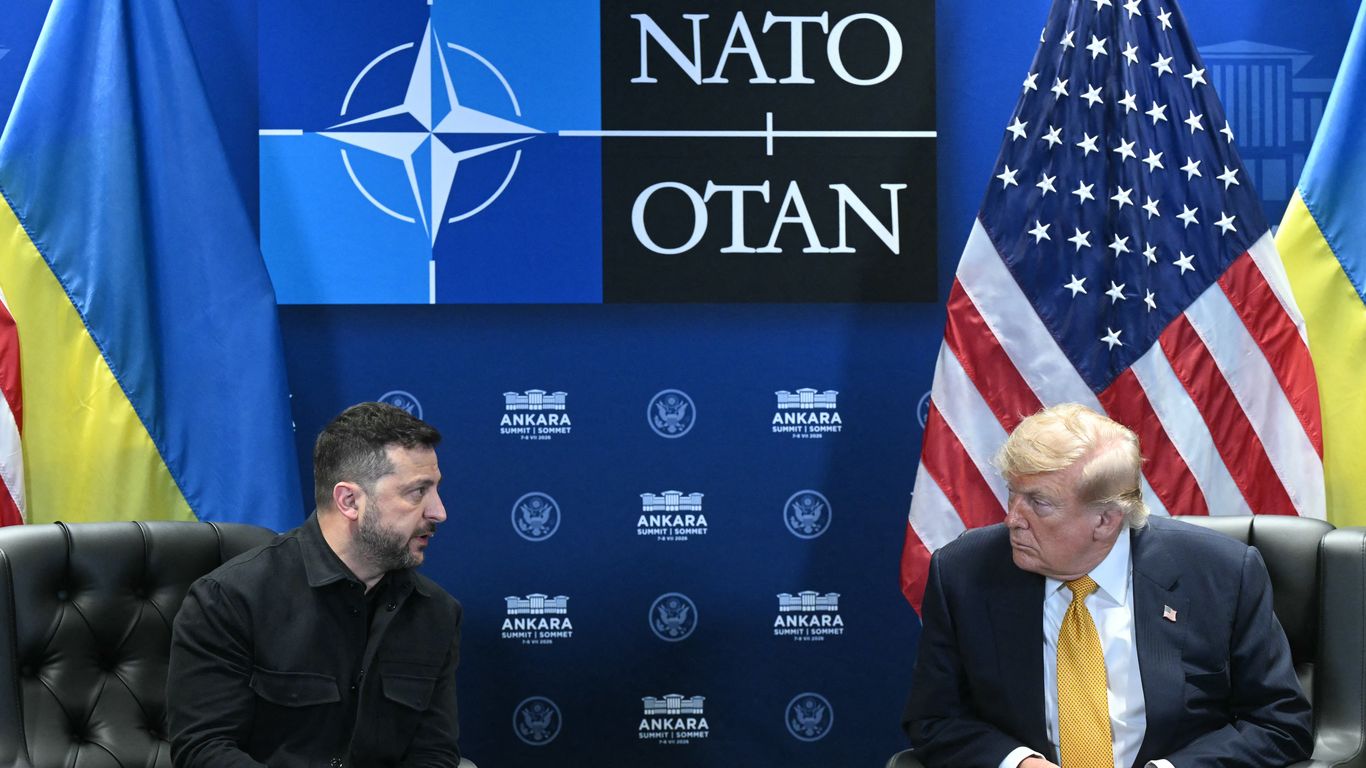
A critical collision of global energy strain and high-stakes diplomacy is dominating the agenda this morning, as the national average for U.S. retail diesel surged to an unprecedented record high of $6.50 per gallon. In response, President Donald Trump reportedly pressed  Ukrainian President Volodymyr Zelenskyy in a phone call to halt drone strikes on
 Russian oil refineries, warning that the attacks are exacerbating a global fuel deficit. The two leaders are scheduled to meet face-to-face in New York this week on the sidelines of the UN General Assembly, where deep geopolitical divisions continue to widen even as corporate earnings continue to grow faster than the real economy.
Key Conflict & Security · Washington & Politics · Energy & Climate · World — link colours follow these themes throughout
 MACRO PULSE & PRICE TRACKER |
$40.09T
$117,922 per citizen • $296,988 per taxpayer
|
3.75% – 4.00%
EFFR: 3.88% • Standard Policy Decision
|
||||||||
Safe Haven & Central Bank Reserves
|
Benchmark Sovereign Borrowing Cost
|
||||||||
WTI: $93.00 • Maritime Corridor Steady
|
Global Carry Trade & FX Liquidity
|
 Gold (XAU/USD)
 Crude Oil & Hormuz
 USD / JPY (Yen)
 Trending Cycles
 Electoral Backlash: German Chancellor Merz Vows to Stay the Course After State Defeats

- A bad night for the center: German Chancellor Friedrich Merz conceded that the latest state election results represented a "disaster" for the political center after damaging losses in Mecklenburg-Vorpommern and Berlin (BBC World News).
- Pushing ahead: Despite the electoral blowback and rising support for populist movements emphasizing national identity over globalism, Merz assured the public he will push ahead with his federal agenda of tax and welfare reforms (NPR).
- Narrative momentum: This story was marked as NEW today, capturing widespread attention across major European and American news outlets this morning.
 High-Stakes Welcomes: Superpowers and Border States Prepare for U.S. Visits
- The Xi-Trump summit:
 Chinese President Xi Jinping is preparing to arrive in Washington with China's export machine roaring, heavily complicating trade discussions as Trump faces pressure over domestic inflation (Al-Monitor).
- Building strategic stability: Analysts are closely watching how the transition of power in Washington will affect upcoming talks on trade, investments, and global AI governance (Pekingnology).
- South Asian stakes: Meanwhile, regional leaders like
 Bangladesh Prime Minister Tarique Rahman are timing U.S. visits to secure critical economic and trade concessions (The Diplomat).
- Narrative status: This strategic alignment of diplomatic travel was recorded as NEW today in our global tracking.
 East African Pivot:
 Egypt Backs
 South Sudan's Fula Dam While Opposing
 Ethiopia
- A tactical endorsement: Egypt has formally agreed to South Sudan's planned Grand Fula Dam after reviewing technical studies, marking a major development in regional water politics (AllAfrica).
- Objections to Addis Ababa: Cairo used the announcement to simultaneously renew its sharp objections to the unilateral operation of Ethiopia's massive Grand Ethiopian Renaissance Dam (GERD).
- Fragile political transitions: This water dispute unfolds as South Sudan approaches a critical transition with national elections scheduled for December 2026, amid deep questions about political inclusion and constitutional reform (African Arguments).
- Narrative status: This East African regional dynamic emerged as a NEW today cycle in our reporting network this morning.
 The Radar
This Week in Congress & Capitol Hill Watch
- Chamber work split: The House is sitting this week but has not filed a legislative floor programme, which usually signals a quiet floor schedule; meanwhile, the Senate remains highly active with 17 committee meetings scheduled in its current legislative window.
- Bipartisan athlete reform: The Senate is aiming to pass S. 4668 this week, a bill introduced by Senators Ted Cruz (R-TX) and Maria Cantwell (D-WA) to protect the name, image, and likeness (NIL) rights of student-athletes (Roll Call).
- Focusing on the fiscal cliff: Today, the House Budget Committee is holding a critical hearing titled "America's Fiscal Future: Examining the Need for a Fiscal Commission," featuring high-profile testimonies from former Defense Secretary Leon Panetta, former Senator Rob Portman, and former Senator Joe Manchin (House Budget Committee).
- Missing in action: House roll call records show severe attendance gaps, with Representatives Neal Dunn (R-FL), John Garamendi (D-CA), Cory Mills (R-FL), Tom Tiffany (R-WI), and Steve Womack (R-AR) all missing 14 of the last 14 consecutive floor votes, with no official reasons provided in the record.
 US Politics & Election Watch

- The battleground map widens: With the midterm elections just 43 days away on November 3, 2026, senators from both parties report that voter anger over energy prices and the economy has expanded the competitive map to historically safe states like Kansas and Nebraska (The Hill).
- GOP's massive war chest: The Republican-aligned super PAC MAGA Inc. has amassed an unprecedented $400 million war chest to run advertising in key midterm races (Popular Information), representing a major financial advantage for the GOP despite strong Democratic momentum in recent polls (The Bulwark).
- Deniability vs. reality: A new NPR analysis shows that while many Republican candidates in tight tossup races continue to echo Donald Trump's claims regarding the 2020 election, a significant share of GOP voters express a strong desire to move on (NPR).
Ukraine War & Frontline Watch
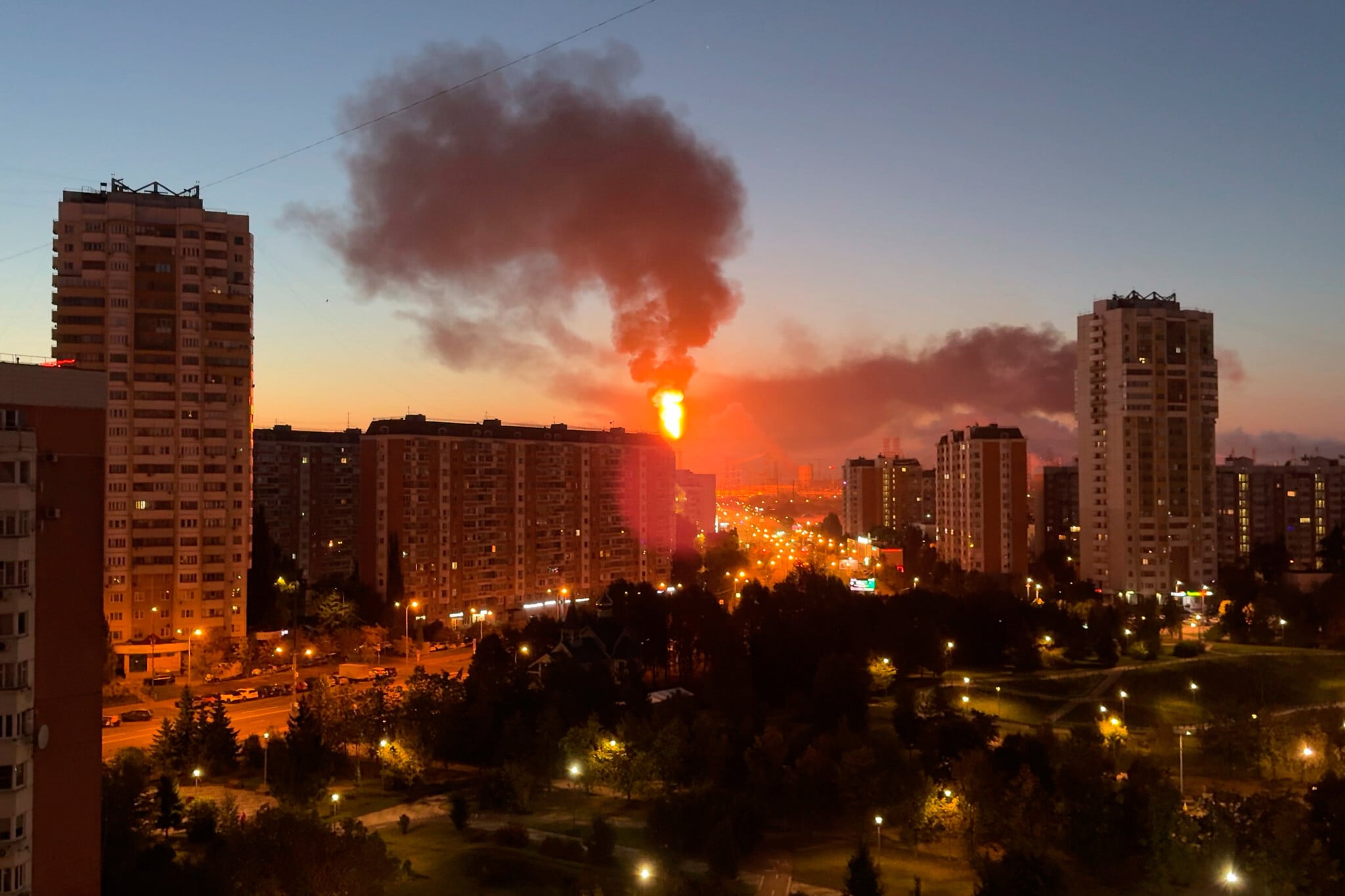
- Deep strike in Bashkortostan: Long-range Ukrainian attack drones successfully struck the Bashneft-Ufaneftekhim Oil Refinery in Ufa—more than 1,300 km from the Ukrainian border—prompting local authorities to suspend regional flight operations (Militarnyi).
- Severing Russian supply lines: Ukrainian Air Assault forces successfully destroyed vital bridges near Polohy on the Huliaipole axis, crippling Russian logistics and preventing the movement of heavy armor and ammunition toward Orikhiv (Ukrainska Pravda).
- Industrial output devastated: A new Financial Times report reveals that Russian missile strikes targeting Ukraine's economic infrastructure have successfully halted operations at three major steel plants, wiping out 90% of Ukraine's pre-war steel production (Ukrainska Pravda).
 Iran, Hormuz & Middle East Conflict Watch
- Hormuz traffic collapses: Shipping traffic through the strategic Strait of Hormuz fell sharply to just 12 commodity vessels over the weekend, down from 35 carriers the previous week, as regional risks rise (Reuters via OilPrice).
 Pakistan's safe-passage deal: Despite the maritime slowdown, Pakistan successfully secured its second
 Qatari LNG shipment of the month after directly negotiating a safe-passage agreement with Iran through the chokepoint (OilPrice).
- Iranian military warning: The Iranian military publicly declared that the U.S. is preparing further strikes in the region, warning that any Middle Eastern nations hosting American military assets will be "considered complicit" (Middle East Eye).
 Macro & Monetary Policy
- Yield curve steepens: U.S. Treasury yields surged with the 10-Year hitting 5.00% (up 1.03%) and the 30-Year rising to 5.33% (up 0.66%), pushing the 10Y/30Y spread to +33 bps.
- Energy cost emergency: As national average retail diesel hit a record $6.50 per gallon, global oil benchmarks reacted to the drop in Persian Gulf transit, with Brent Crude hovering at $96.57/bbl and WTI Crude at $93.00/bbl (OilPrice).
- Sovereign debt weight: The total U.S. national debt has hovered at a massive $40.09 trillion as of September 17, placing the per-taxpayer burden at $296,988.
- Carry trade tailwind: The
 Japanese Yen softened further, with the USD/JPY spot rate rising 0.68% to ¥157.19, providing a tailwind for global carry trades ahead of the October 28 FOMC meeting.
 The Apprentice Corner: Trump Orbit, Cabinet & Empire
- First Amendment lawsuit: Media organizations CNN, Politico, and MS NOW have announced plans to file a joint lawsuit against the White House, arguing their First Amendment rights were violated when their reporters were blocked from the grounds over the weekend (Axios).
- Triumphal Arch as "military complex": President Trump took to Truth Social to defend his proposed 250-foot "Triumphal Arch" in Washington, D.C., claiming it is not a vanity project but will be a "top-grade military complex" holding drone fleets and sniper ammunition (Mother Jones).
- "Necessary evil" in New York: Representative Maria Elvira Salazar (R-FL) defended Trump's decision to meet with
 Venezuelan Vice President Delcy Rodríguez in New York during the UN General Assembly, calling the controversial official a "necessary evil" until free elections are held (The Hill).
 Weather Desk: Today Against the Record

 Manila, Philippines
the coldest low for this date in 30 years of record
 High 29.7°C (85°F) / Low 23.5°C (74°F) •
 Thunderstorm • Precip Risk: 100%
The overnight low of 23.5°C matched the absolute bottom of Manila's historical 30-year range, bringing intense electrical storms and cooling relief to the city.
Manila's historical 30-year range, bringing intense electrical storms and cooling relief to the city. NASA VIIRS, 21 September 2026
 Dakar, Senegal
the 7th warmest low for this date in 30 years
High 30.1°C (86°F) / Low 27.5°C (82°F) • Thunderstorm • Precip Risk: 93%A warm, sticky overnight low of 27.5°C was accompanied by wind gusts up to 45 km/h, keeping conditions extremely humid across the coastal capital.
NASA VIIRS, 20 September 2026 Key West, Floridathe 8th coldest low for this date in 30 years
High 30.0°C (86°F) / Low 24.9°C (77°F) • Violent Rain Showers • Precip Risk: 43%A cooler morning low of 24.9°C will give way to a scorching afternoon high that sits in the warmest 5 percent of historical records.
NASA VIIRS, 20 September 2026 On This Day: September 21, 2026
- Historical Milestones: In 1996, the United States Congress passed the Defense of Marriage Act, which prohibited federal recognition of same-sex marriage and allowed states to define marriage as they chose.
 The Great New
 England Hurricane (1938): One of the most destructive storms in American history made landfall on Long Island, New York, killing an estimated 682 people and causing massive coastal devastation.
 Notable Birthdays: Celebrated violinist and composer Lindsey Stirling (born 1986); Pakistani politician Bilawal Bhutto Zardari (born 1988); and
 Eritrean-
 Swedish professional footballer Alexander Isak (born 1999).
 The American Experience: Did You Know?
 The Gas Chambers Ripening Your Bananas
While the average American consumes roughly 27 pounds of bananas each year, practically zero of them ripen naturally. According to a 2018 United States Department of Agriculture (USDA) logistics review, nearly 99 percent of bananas sold in domestic supermarkets are shipped completely green and ripened inside airtight, regional distribution warehouses. By injecting these sealed vaults with a precise dose of ethylene gas—a natural plant hormone—for 24 to 48 hours, distributors can trigger a perfectly synchronized ripening window, ensuring that vast truckloads turn yellow at the exact moment they hit grocery shelves.
 The History Desk:
 The Islamic World & the Middle East
The State-Insured Silk Road: Seljuk CaravanseraisDuring the 13th century, the Seljuk Sultanate of Rum engineered one of the ancient world's most sophisticated logistics networks to secure trade. They constructed a network of fortified stone roadhouses called caravanserais, spaced precisely 30 kilometers apart—the exact distance a camel caravan could travel in a single day. According to modern archaeological surveys by the  Turkish Ministry of Culture, over 100 of these structures dotted the Anatolian landscape, offering merchants free lodging, food, and veterinary care for up to three days. Crucially, the Seljuk state acted as a pioneer in commercial insurance, fully compensating merchants for any goods lost to bandits along these monitored routes, which dramatically minimized the risk of long-distance trade.
 Why today: The dramatic plunge in Strait of Hormuz shipping traffic this weekend, dropping to just 12 transiting vessels, highlights how the physical security and state-backing of global trade corridors remain as critical to the modern economy as they were to medieval empires.