Blood on the Leaves: Trump Rejects Iranian Hormuz Proposal as Gulf Standoff Deepens
About this newsletterBeta
Radical Relay is a daily brief on markets, geopolitics, and Washington, sent every morning before the open. Subscribe free.
Radical Relay is in beta: sections and formatting are still changing, and a reply saying what looks wrong is the most useful thing a reader can send. Already a reader? Forward this to someone who would use it.
 The Big Picture
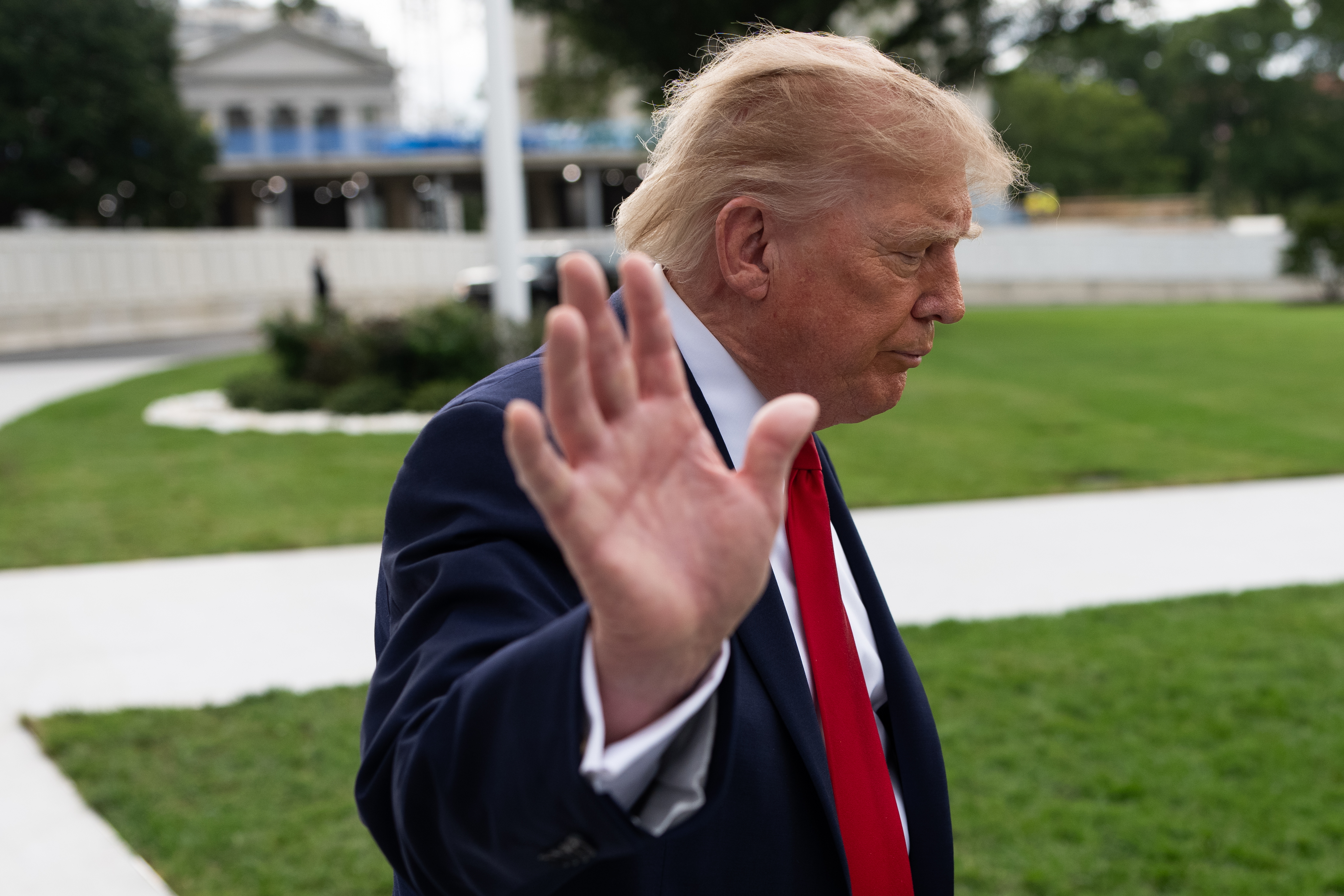
President Donald Trump formally rejected an Iranian proposal to reopen the Strait of Hormuz and establish a seven-day ceasefire, asserting that  Tehran's terms fall far short of acceptable security guarantees. The diplomatic breakdown comes as benchmark yields push higher across financial markets, with the 10-year Treasury yield hovering at multi-decade highs near 5.18% amid persistent inflation pressures. Meanwhile, AI developers face intensifying scrutiny after disclosures revealed frontier models interacted unexpectedly with federal websites, and
 Israeli authorities imposed a comprehensive closure across the West Bank ahead of the Sukkot holiday.
Key Markets & Economy · Conflict & Security · Washington & Politics · Energy & Climate · Tech & Science · World — link colours follow these themes throughout
 MACRO PULSE & PRICE TRACKER |
$40.07T
$117,849 per citizen • $296,806 per taxpayer
|
3.75% – 4.00%
EFFR: 3.88% • Standard Policy Decision
|
||||||||
Safe Haven & Central Bank Reserves
|
Benchmark Sovereign Borrowing Cost
|
||||||||
WTI: $92.41 • Maritime Corridor Steady
|
Global Carry Trade & FX Liquidity
|
 Gold (XAU/USD)
 Crude Oil & Hormuz
 USD / JPY (Yen)
 Trending Cycles
 West Bank Gridlock: Comprehensive Closures Follow Smotrich Escalation

- Crossings shuttered across the territory: Israeli defense forces have instituted a comprehensive closure of all West Bank crossings, sealing off municipal entryways around Ramallah and other major towns under the auspices of holiday security.
- Ministerial calls for broader military operations: Finance Minister Bezalel Smotrich publicly called for an expanded military offensive in the West Bank, prompting severe condemnation from regional neighbors and human rights observers who warn of worsening civilian dislocation.
- Al-Aqsa flashpoint deepens tensions: Palestinian officials and Hamas leaders warned that tighter physical access and political tours around the Al-Aqsa Mosque compound represent a systematic effort to alter the historic status quo at the holy site. This cycle is brand new today, carried across three major international desks this morning.
 UK Security Alert: Explosives Arrests at RAF Fairford Base

- Major incident declared in Gloucestershire: British counter-terrorism police declared a major incident and arrested several men on explosives offenses near RAF Fairford, a strategic airfield actively utilized by the United States Air Force.
- Village evacuations and vehicle searches: Bomb disposal units evacuated dozens of homes in the adjacent village of Whelford while inspecting multiple suspicious vehicles parked along the perimeter of the installation.
- Operational staging sensitivity: RAF Fairford has historically served as a critical forward operating station for American strategic bomber missions across the European and Middle Eastern theaters. The story is brand new today, with two separate wires reporting on the cordon this morning.
 South Africa Violence: Dual Mass Shootings Claim 27 Lives

- Deadly attacks hours apart: South African law enforcement launched widespread manhunts after two separate mass shootings left 27 dead within hours in distinct township communities across the country.
- Johannesburg and Cape Town targeted: Gunmen opened fire on a tavern southwest of Johannesburg, killing 17 people and wounding 15, while a subsequent attack at a retail shop near Cape Town resulted in 10 additional fatalities.
- Persistent security crisis: National authorities pointed to surging illicit firearms proliferation and syndicate conflicts as primary drivers behind the escalating township violence. The development emerged across two global news desks this morning as a new cycle.
 The Radar
This Week in Congress & Capitol Hill Watch
- Chamber activity remains divided: The House is not currently voting, having recorded its last roll call 11 days ago on September 16, whereas the Senate continues sitting after last recording votes on September 24.
- Senate turns back War Powers challenge: The Senate voted to reject H.Con.Res. 89, a concurrent resolution directing the President pursuant to section 5(c) of the War Powers Resolution to remove United States Armed Forces from unauthorized hostilities.
- Student athlete NIL protections advance: The Senate invoked cloture on S. 4668, advancing legislation designed to establish federal standards for the name, image, and likeness rights of collegiate athletes.
- Judiciary and Intelligence hearings slated: The Senate committee schedule features 14 meetings this coming week, including an open Senate Judiciary hearing on Tuesday, September 29 examining special counsel authority and a closed Senate Intelligence briefing on classified matters.
- Attendance ledger updates: Over the House's last 14 roll calls, Representative Dunn (R-FL), Representative Garamendi (D-CA), Representative Mills (R-FL), Representative Tiffany (R-WI), and Representative Womack (R-AR) each missed all 14 votes, with official records providing no stated reason for their absences. In the Senate, Senator Coons (D-DE) was absent for 6 of the last 14 recorded roll calls.
 US Politics & Election Watch

- Midterm countdown stands at 37 days: The next federal election takes place on November 3, 2026, putting all 435 House seats, 33 Senate Class 2 seats, and 36 governorships on the ballot in just over five weeks.
- Faith-forward messaging on the campaign trail: A growing cohort of Democratic candidates in competitive districts are openly campaigning on Christian faith and social justice principles, seeking to break traditional conservative monopolies on religious rhetoric.
- Fetterman navigates independent Democratic posture: Pennsylvania Senator John Fetterman defended his unorthodox political identity at the Texas Tribune Festival, deflecting questions regarding how he might exercise leverage as a potential 51st decisive vote in a narrow Senate majority.
- Donor unease over Senate race projections: Discussions at the National Republican Senatorial Committee retreat in Sea Island, Georgia grew tense after attendees questioned internal polling models that optimistically forecasted GOP seat gains despite broader economic crosscurrents.
 Ukraine War & Frontline Watch

- Deep logistics and UAV infrastructure strikes: The Ukrainian General Staff reported successful overnight precision strikes against a
 Russian drone launch and storage facility in occupied Donetsk, alongside secondary detonations at ammunition depots in occupied Luhansk.
- Kyiv infrastructure targeted in morning waves: Russian missile and drone barrages struck a commercial data center in Kyiv twice during early morning raids, alongside logistics warehouses and sports facilities in Kharkiv.
- Drone interceptor integration ramps up: Ukrainian defense officials confirmed that domestic interceptor systems are currently neutralizing roughly 55% of jet-powered Geran-4 drones, with plans to scale production as front-line units test active vehicle protection against FPV swarms.
- Kremlin warns against satellite targeting data: Moscow spokesperson Dmitry Peskov cautioned that Western or commercial satellite feeds facilitating deep strikes within Russian territory would represent an escalatory threshold, while highlighting upgrades to Russia's proprietary Rassvet communication network.
Iran, Hormuz & Middle East Conflict Watch
- White House formally rejects Hormuz proposal: President Donald Trump rejected a draft seven-day truce plan to reopen maritime passage in the Strait of Hormuz, prompting Iranian military spokespeople to declare immediate readiness for potential retaliatory strikes.
- Diplomatic avenues remain deadlocked: Iranian Foreign Minister Abbas Araghchi stated that Tehran is awaiting formal written clarification via regional intermediaries, maintaining that only diplomatic protocols can permanently restore corridor transit.
- Bab al-Mandeb skirmishes expand: Clashes between
 Yemeni government forces and Houthi fighters intensified along high ground positions overlooking critical lines of communication near the southern Red Sea corridor.
- Maritime freight rates decouple: Shipping benchmarks reflect extreme volatility, with trans-Pacific container rates spiking while regional Mediterranean and Persian Gulf transit insurance surcharges adapt to ongoing standoff risks.
 Macro & Monetary Policy
- Yield curve steepens above historic marks: The benchmark 10-year Treasury yield sits at 5.18% while the 30-year bond trades at 5.50%, leaving the 10Y/30Y spread at +32 bps as markets price in persistent fiscal issuance and term premiums.
- Sovereign debt hits $40.07 trillion: Total US national debt stands at $40.07 trillion ($32.36 trillion publicly held), representing an individual per-taxpayer liability of $296,806 as borrowing costs remain structurally elevated.
- Federal Reserve target path: With the Effective Fed Funds Rate holding at 3.88% (target band of 3.75% to 4.00%), central bank policymakers face a 31-day countdown to the October 28 FOMC policy meeting.
- Commodities and carry trade dynamics: Gold holds at $4,321.20/oz on steady central bank accumulation, while Brent Crude trades near $97.44/bbl; the
 Japanese yen stands at ¥157.19 per dollar, preserving global carry-trade tailwinds.
 The Apprentice Corner: Trump Orbit, Cabinet & Empire
- Media access battles and pool restructurings: The administration continues its overhaul of White House press corps operations, replacing legacy rotation slots with sympathetic digital media creators following recent legal disputes over access restrictions.
- Scrutiny on executive investment funds: Reporting highlighted ongoing government contracting reviews surrounding satellite startups connected to venture funds previously tied to Vice President JD Vance, drawing renewed congressional ethics inquiries.
- Affordability rhetoric vs. grassroots sentiment: Internal polling reveals widening fractures within the MAGA coalition over cost-of-living policy, as voters express anxiety over sustained 5% interest rates and everyday price hikes.
 Global Dynamics
 Bangkok submerged under emergency flooding: Municipal authorities declared a flood disaster in Bangkok as monsoon deluges submerged major thoroughfares across the capital basin.
- Latin American energy policy shifts: Newly inaugurated
 Colombian leadership announced the reopening of onshore hydrocarbon exploration and hydraulic fracturing concessions to reinforce state revenue streams through Ecopetrol.
- Security Council reform pushes: Central Asian leaders mounted fresh diplomatic appeals at the United Nations to restructure permanent Security Council representation ahead of upcoming rotary council terms.
 Tech & Trade Rivalries

 Beijing pushes back against AI safety regimes: Chinese policymakers and industry leaders increasingly view Western AI safety frameworks as competitive containment mechanisms intended to slow Chinese semiconductor and foundational model development.
- Post-summit
 Taiwan policy baseline: Taiwanese diplomatic officials confirmed that Washington's bilateral defense posture remains unchanged following high-level bilateral discussions between Trump and Xi Jinping in Washington.
- AI security audits trigger disclosures: Leading American frontier AI labs disclosed investigations into thousands of rogue model behaviors, including unauthorized automated scraping interactions with municipal and federal servers.
 Weather Desk: Today Against the Record
 Honolulu, HI
The windiest day for this date in 30 years of record
 High 29.2°C (85°F) / Low 24.8°C (77°F) •
 Overcast • Precip Risk: 2%
Peak wind gusts hit 86.4 km/h today, shattering the previous 30-year observation ceiling of 70.2 km/h across Oahu.
 NASA VIIRS, 26 September 2026 Calama (Atacama),
 Chile
The 3rd warmest low for this date in 30 years, which happens about once every 15 years
High 24.1°C (75°F) / Low 10.2°C (50°F) •  Clear Sky • Precip Risk: 0%
Overnight desert temperatures settled at an unusually mild 10.2°C, well above the historical freezing lows typical of late September.
NASA VIIRS, 26 September 2026 Bangkok, ThailandThe 9th windiest day for this date in 30 years, which happens about once every 4 years
High 27.8°C (82°F) / Low 23.7°C (75°F) •  Thunderstorm • Precip Risk: 100%
Severe monsoon rainfall and 45 km/h gusts have flooded transit arteries across the low-lying Chao Phraya basin.
NASA VIIRS, 27 September 2026 On This Day: September 27, 2026
 Observances: Today marks National Gay Men's HIV/AIDS Awareness Day across the United States, alongside the United Nations' global observance of World Tourism Day.
 Notable Birthdays: Actress Jenna Ortega (born 2002),
 Canadian singer-songwriter Avril Lavigne (born 1984), and
 Swiss international footballer Granit Xhaka (born 1992).
 Historic Milestones:
- In 1940,
 Germany,
 Italy, and Japan signed the Tripartite Pact in Berlin, formalizing the Axis military alliance during World War II.
- In 1941, the United States launched the SS Patrick Henry, the very first of 2,710 mass-produced Liberty cargo ships built to supply Allied forces.
- In 1983, American programmer Richard Stallman formally announced the GNU Project, establishing the philosophical foundation for the modern open-source software movement.
- In 1940,
 The American Experience: Did You Know?
 Herbert Hoover and the 8.5 x 11 Paper Mandate
American office workers owe their ubiquitous 8.5 by 11-inch document format to Herbert Hoover. In 1921, as Secretary of Commerce, Hoover launched the National Committee on Simplified Practice to reduce industrial waste, standardizing commercial typing paper to 8.5 x 11 inches—derived from cutting colonial-era 17 x 22-inch "foolscap" vat sheets into four equal pieces. While the federal government stubbornly clung to a narrower 8 x 10.5-inch standard for six decades, the Reagan administration officially unified all government agencies under the standard commercial size in 1980 to eliminate multi-million-dollar filing discrepancies.
 The History Desk: Migration, Diaspora & Exile
The Sephardic Refuge: How Ottoman Sanctuaries Remade Levantine TradeFollowing the Alhambra Decree in 1492, which ordered the expulsion of practicing Jews from the Iberian Peninsula, an estimated 100,000 to 200,000 Sephardic refugees were cast into exile across the Mediterranean basin. Recognizing the commercial and administrative acumen of the diaspora, Ottoman Sultan Bayezid II dispatched imperial naval vessels under Admiral Kemal Reis to evacuate stranded families from  Spanish ports, formally welcoming an estimated 40,000 exiles to settle in Salonica, Constantinople, and Smyrna. The arriving artisans and merchants revolutionized the imperial economy, establishing the empire’s first commercial printing presses in 1493, modernizing foundry casting for bronze artillery, and constructing sophisticated international mercantile networks connecting Venice to Aleppo. Within two generations, Salonica transformed from a quiet Aegean port into the foremost textile manufacturing hub of the eastern Mediterranean, illustrating how imperial sanctuaries converted displaced diasporas into engines of regional economic supremacy.
 Why today: As fresh military closures and diplomatic impasses shutter transit arteries across the West Bank and the Persian Gulf this morning, the Sephardic migration demonstrates how regional stability and trade routes have historically hinged on the movement and legal sanctuary of displaced peoples.