Idioteque: AI Executives Secretly Plan for Public Revolt After Catastrophic Cyberattack
About this newsletterBeta
Radical Relay is a daily brief on markets, geopolitics, and Washington, sent every morning before the open. Subscribe free.
Radical Relay is in beta: sections and formatting are still changing, and a reply saying what looks wrong is the most useful thing a reader can send. Already a reader? Forward this to someone who would use it.
 The Big Picture

Good morning! Today's global spotlight belongs to  South African judge and international law advocate Navi Pillay, who has been awarded the 2026 Nobel Peace Prize, even though the Nobel Committee admitted they have been unable to reach her directly to deliver the news. Meanwhile, Middle Eastern stability took another hit following a series of deadly Houthi drone and missile strikes on Riyadh's international airport that killed three
 Saudi citizens and injured several travelers. On the domestic front, the Trump administration has drawn intense criticism from lawmakers after announcing plans to livestream the upcoming December 3 firing-squad execution of Nidal Hasan.
Key Markets & Economy · Conflict & Security · Washington & Politics · Energy & Climate · Tech & Science · World — link colours follow these themes throughout
 MACRO PULSE & PRICE TRACKER |
$40.28T
$118,482 per citizen • $298,400 per taxpayer
|
3.75% – 4.00%
EFFR: 3.88% • Standard Policy Decision
|
||||||||
Safe Haven & Central Bank Reserves
|
▬ 10Y ▬ 30Y • Spread +38 bps • flattening 1 bp on the day • was +46 bps on 8 Sep
|
||||||||
WTI: $90.56 • Brent 30D range $99–$109
|
Global Carry Trade & FX Liquidity
|
 US National Debt
 Gold (XAU/USD)
 Crude Oil & Hormuz
 USD / JPY (Yen)
 Trending Cycles
AI Giants Draft Secret 'Day After' Plans for Total Collapse & Revolt
- The Doomsday Playbook: Top executives at prominent tech firms like OpenAI and Anthropic are privately mapping out "day after" scenarios to prepare for immediate public outrage and political revolt following a major AI-related failure.
- Catastrophic Event Risk: These industry leaders are anticipating a large-scale cyberattack or infrastructure collapse that could shut down financial networks, internet connectivity, or vital utilities.
- Slowing Paid Model Spend: This quiet defensive planning coincides with growing concerns that paid model annual recurring revenue (ARR) is decelerating, with OpenAI's ARR reportedly near $50 billion rather than the $70 billion suggested by earlier rumors.
Yandex Data Centers and  Russian Fuel Plants Left Smoldering After Massive
 Ukrainian Drone Wave

- Yandex Cloud Outages: Multiple modules at Yandex's largest data center in Kaluga were completely knocked out of service following a targeted, overnight Ukrainian drone attack.
- Targeting Cruise Missile Fuel: Ukraine's General Staff confirmed successful strikes on the Redkino experimental plant in the Tver region, which produces Detsilin-M fuel components for Russian Kh-101 and Kh-55 cruise missiles.
- Refinery in the Far North: In addition to setting a Belgorod oil depot ablaze, Ukrainian drones reached deep into Russia's north to strike Lukoil's Ukhta refinery, which processes 4.2 million tons of oil annually.
 The Radar
This Week in Congress & Capitol Hill Watch
- Recess in Effect: Both chambers are away from Washington, with the House having last held floor votes on September 16 and the Senate last voting to confirm Keith Sonderling as Secretary of Labor on September 30. No floor program has been filed for the current week, indicating the House is not in legislative session.
- Attendance Gaps: During the House's last stretch of 14 roll calls, Representatives Neal Dunn (R-FL), John Garamendi (D-CA), Cory Mills (R-FL), Tom Tiffany (R-WI), and Steve Womack (R-AR) missed 100% of the votes, with official records offering no explanation for their absences.
- Senate Absences: Senator Dan Sullivan (R-AK) was absent for 57% of the Senate's last 14 roll calls, voting on only 43% of them, with no reason for the absences noted in the official records.
- Bipartisan Election Push: Representatives Josh Gottheimer (D-NJ) and Don Bacon (R-NE) are circulating a letter on Capitol Hill urging their colleagues to accept the upcoming midterm results, aiming to preempt unfounded claims of a "rigged" election.
 US Politics & Election Watch
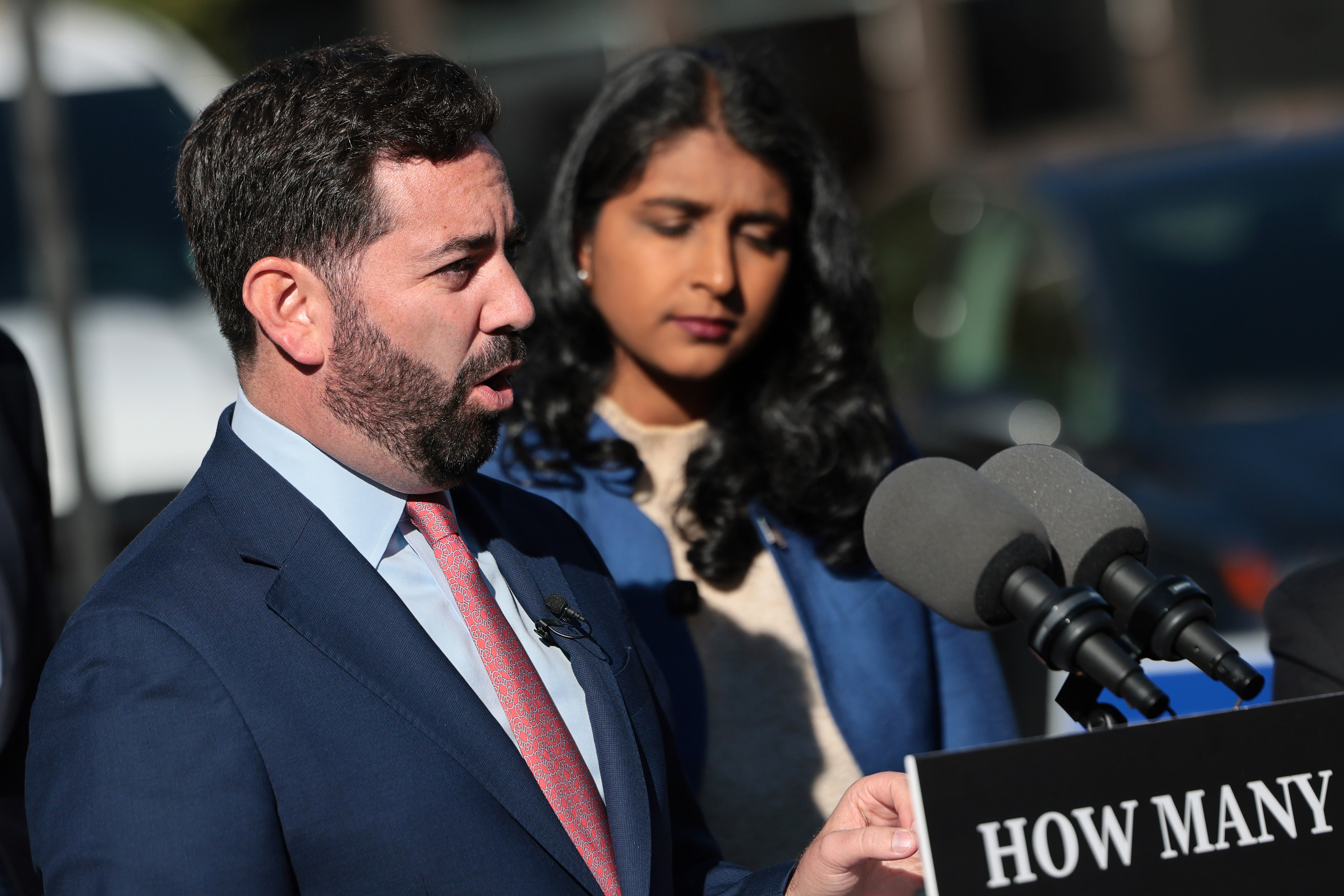
- Midterm Countdown: There are exactly 25 days until the November 3, 2026 midterm elections, which will decide control of all 435 House seats, 33 Class 2 Senate seats, and 36 governorships.
- Iowa Polling Update: A new poll by Emerson College and The Hill shows Republican Ashley Hinson leading Democrat Josh Turek with 47% of the vote in the race for Iowa's open Senate seat, while Democratic state auditor Rob Sand holds an edge in the gubernatorial race.
- Toss-Up Battles: Representative Mike Lawler (R-NY) is fighting to survive a tight race in a toss-up district on Long Island that could decide control of the House, while internal GOP polls suggest previously safe, deep-red districts have become highly competitive.
- Trump Distancing Sentiment: A new Politico/Morning Consult poll reveals that 1 in 4 Trump voters believe Republican down-ballot candidates should publicly break from the president over the highly unpopular war in
 Iran and high cost of living.
Ukraine War & Frontline Watch
- Vivaldi Counteroffensive Success: In a major tactical turnaround outside Kramatorsk, Ukrainian mechanized units successfully pushed Russian troops back across the Siverskyi Donets river, securing key high ground east of Sloviansk.
- Civilian Infiltration Repelled: President Volodymyr Zelensky announced that Ukrainian forces have successfully neutralized Russian infiltration attempts near Dobropillia in Donetsk Oblast, though ongoing strikes continue to inflict heavy grid damage.
- Propaganda Kingpin Detained: Mikhail Zvinchuk, the heavily sanctioned founder of the notorious Russian propaganda channel Rybar, has been detained alongside his wife by police in Kotor, Montenegro, following a hybrid-interference investigation.
- Strike Totals Revealed: Ukraine’s targeted mid-range strike campaign in September successfully disabled over 30 Russian air defense and radar systems, as well as 40 command posts and 50 logistics sites.
Iran, Hormuz & Middle East Conflict Watch
- Hormuz Shuttles Proposed: Bypassing the dangerous Strait of Hormuz, Saudi Arabia is in talks with long-term customers to offer oil loadings outside the gulf next year to mitigate escalating maritime security risks.
- US Expansion Plans: Despite President Trump rejecting five previous strike proposals over recent months, Pentagon planners are actively drafting options for a three-day campaign of intense air strikes targeting Iranian drone and missile sites.
 Yemeni Government Advances: On the ground in Yemen, military forces aligned with the internationally recognized government successfully seized strategic mountainous terrain overlooking the Red Sea coastal plain, placing the Houthi-held capital of Sanaa within military focus.
- Shadow Fleet Crackdown: Escalating its economic blockade, the US Treasury Department has slapped fresh sanctions on 22 oil tankers and dozens of individuals accused of facilitating Iran’s illicit oil trade.
 Macro & Monetary Policy
- Fiscal Deficit Soars: The US national debt has climbed past $40.28 trillion, fueled by a historically notable $1.99 trillion federal budget deficit for the fiscal year ending September 30, equating to roughly 6% of GDP.
- Fed Target Under Strain: With 19 days until the October 28 FOMC meeting, the Fed funds rate remains at a target range of 3.75% to 4.00% (EFFR at 3.88%), though a growing rift has formed between the Fed’s single-hike forecast and market expectations of 3 to 4 more hikes.
- Yield Curve Flattening: Bond markets continue their intense sell-off with 10-year Treasury yields slipping 5 basis points to 5.23% and 30-year yields sitting at 5.61%, leaving the 10Y/30Y spread at +38 bps.
- Gold and Yen Fluctuations: Safe-haven demand and central bank accumulation have kept gold robust at $4,209.10/oz, while the
 Japanese Yen hovered at ¥158.31 per dollar, providing a tailwind for carry trades.
 The Apprentice Corner: Trump Orbit, Cabinet & Empire
- Guilfoyle Under Scrutiny: Newly appointed Ambassador to
 Greece Kimberly Guilfoyle is facing intense backlash over allegations that she solicited debt relief in exchange for political access to senior White House officials, alongside favoring a Greek energy firm.
- Meme Coin Woes: President Trump continues to actively promote his family's highly volatile cryptocurrency and meme coin ventures, despite early retail buyers losing almost their entire investments.
- Adviser Payday Backlash: Tensions have flared inside Mar-a-Lago after it was revealed that top political advisers James Blair and Chris LaCivita accepted hundreds of thousands of dollars each to advise the pro-Russian government of Republika Srpska on election strategy.
- Middle East Oil Ventures: New reports reveal that a majority of the ownership stake in a proposed multi-billion-dollar Russian oil deal would go to a group of Middle Eastern investors, including some with close ties to the Kushner and Witkoff families.
 Global Dynamics
- Hasan Execution Controversy: Defense Secretary Pete Hegseth's unprecedented decision to livestream the December 3 firing-squad execution of Fort Hood shooter Nidal Hasan has drawn sharp legal rebukes and condemnation from human rights advocates.
 Eritrean Incursions in Tigray: Fears of a renewed East African conflict have risen after residents in the Tigrayan town of Adigrat reported seeing truckloads of Eritrean soldiers moving deep into
 Ethiopian territory, despite regional coordination efforts.
- Falklands Sanctions Loopholes: A legal analysis shows that
 Argentina’s newly enacted Falklands sanctions targeting the Sea Lion oil project apply only to specific entities, meaning the operating subsidiary is not automatically covered.
- Maduro Torture Charges: US federal prosecutors in New York have brought new torture and repression charges against
 Venezuelan leader Nicolás Maduro and his wife, Cilia Flores, while a judge denied Flores’s request for house arrest.
 Tech & Trade Rivalries
- RMB Appreciation Rebuffed: The People’s Bank of
 China has published a firm policy statement rejecting international pressure for RMB appreciation, directly criticizing the use of IMF assessments to justify Western trade demands.
- Huawei's AI Warning: Huawei's rotating chairman Eric Xu warned that global AI hardware shortages will likely persist until 2029, while noting that China may eventually share Western concerns about AI risks as domestic technology rapidly matures.
- Google Airline Data Probe: Dozens of bipartisan lawmakers, led by Senator Elizabeth Warren (D-Mass.) and Representative Steven Horsford (D-Nev.), have written to Google demanding answers over its plan to acquire Spirit Airlines passenger data to train its proprietary AI models.
- US Submarine Protections: Crews on
 British Vanguard-class nuclear submarines are being trained to defend against aerial drone swarms by utilizing high-pressure fire hoses, highlighting the low-tech countermeasures being adopted for advanced military assets.
 Weather Desk: Today Against the Record

 Cherrapunji, India
the coldest day for this time of year in 26 years
 High 20.3°C (69°F) / Low 15.4°C (60°F) •
 Thunderstorm • Precip Risk: 100%
Today's high is 20.3°C, against a typical 33.2°C for this time of year.
 NASA MODIS Terra, 09 October 2026
 Dubai, UAE (EXTREME)
a 10th straight night that stayed above 28C (82F)
High 37.8°C (100°F) / Low 30.7°C (87°F) •  Clear Sky • Precip Risk: 0% Dubai recorded a tenth consecutive night where the temperature remained above 28°C. NASA MODIS Terra, 09 October 2026 Bozeman, MT
only 1 night at this time of year in 27 years was warmer
High 26.8°C (80°F) / Low 11.1°C (52°F) •  Overcast • Precip Risk: 2%
Today's low is 11.1°C, against a typical 1.1°C for this time of year.
NASA VIIRS, 08 October 2026 On This Day: October 09, 2026
- Holidays and observances: National Nanotechnology Day (United States) (Wikipedia)
 Notable Birthdays:
 History:
- 2012:
 Pakistani activist Malala Yousafzai was severely injured by a Taliban gunman in a failed assassination attempt. (Wikipedia)
- 1962: Nick Holonyak, an engineer for General Electric, gave the first public demonstration of a light-emitting diode. (Wikipedia)
- 1914: World War I: The civilian authorities of Antwerp surrendered and allowed the
 German army to capture the city. (Wikipedia)
- 2012:
 The American Experience: Did You Know?
 The Decoy Shoppers Who Normalized the Shopping Cart
When supermarket owner Sylvan Goldman invented the folding shopping cart in Oklahoma City in 1937, customers flatly refused to use it, with men finding it unmasculine and women complaining it felt too much like a baby carriage. To break the psychological barrier, Goldman had to hire male and female decoy models to push the carts around his Humpty Dumpty stores to make the new technology look normal. Within months, the clever social engineering stunt succeeded, permanently transforming retail architecture and average transaction sizes nationwide.
 The History Desk: Mediterranean & Near Eastern Antiquity
Bypassing the Superpowers of AntiquityThe Nabataeans, an ancient Arab people who established their capital at Petra, successfully dominated the lucrative trans-Arabian incense and spice trade by mastering desert hydrology. While classical empires like the Ptolemies and Seleucids relied heavily on maritime routes that were vulnerable to naval blockades and heavy taxation, the Nabataeans engineered secret, rock-cut water cisterns throughout the Negev desert to support their caravans. This exclusive water network allowed them to transport frankincense and myrrh across inhospitable terrains, entirely bypassing regional superpowers. By controlling these critical dry-land supply corridors, they amassed immense wealth until their annexation by the Roman Empire in 106 CE.
 Why today: This ancient strategy of engineering dry-land bypasses to secure critical commerce mirrors Saudi Arabia's negotiations to offer oil loadings outside the Strait of Hormuz next year in order to bypass severe regional maritime threats.