It Ain't Hard to Tell: Trump's Russian Diesel Deal Ignites Bipartisan Senate Revolt
 The Big Picture
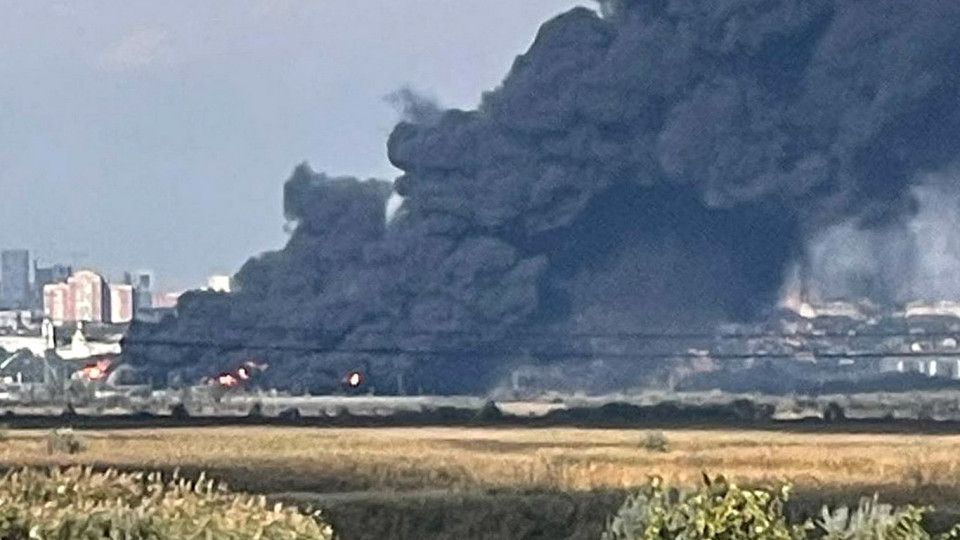
President Donald Trump’s sudden agreement to import  Russian fuel has triggered an immediate rebellion across Capitol Hill, where four Republican senators broke ranks to condemn the pact as an end-run around federal sanctions statutes. Across the Atlantic, the diplomatic gambit coincided with renewed escalation rather than de-escalation, as Ukrainian strike drones hammered the Rostov-on-Don fuel terminal and knocked out more than half its export tanks while Russian strikes on a Kharkiv residential building killed four. At the same time, regional spillover deepened in the Persian Gulf after Saudi Arabia intercepted two Houthi ballistic missiles fired toward its critical hubs, pushing global energy markets higher and leaving the IMF warning of mounting growth risks.
 MACRO PULSE & PRICE TRACKER |
$40.31T
$118,545 per citizen • $298,558 per taxpayer
|
3.75% – 4.00%
EFFR: 3.88% • Standard Policy Decision
|
||||||||
Safe Haven & Central Bank Reserves
|
▬ 10Y ▬ 30Y • Spread +36 bps • unchanged on the day • was +37 bps on 14 Sep
|
||||||||
WTI: $91.95 • Brent 30D range $99–$109
|
Global Carry Trade & FX Liquidity
|
 US National Debt
 Gold (XAU/USD)
 Crude Oil & Hormuz
 USD / JPY (Yen)
 Trending Cycles
Russian Diesel Deal Sparks Bipartisan Backlash as Frontline Strikes Rage
The White House’s attempt to ease soaring fuel prices through an arrangement with Moscow has sparked a major domestic and international dispute, with two outlets carrying the story yesterday and five reporting this morning.
- Diplomatic Envoys Pitch Deal: Presidential envoys Steve Witkoff and Jared Kushner told a
 Ukrainian delegation at a recent meeting in Miami that accepting a Russian diesel pact could help bring the Kremlin back to negotiations, according to reporting by Reuters, while critics warn the move signals domestic economic leverage to Moscow and
 Beijing.
- Terminal Ablaze in Rostov: Despite talk of an energy truce, Ukrainian strike drones hit the major river-and-sea transshipment terminal in Rostov-on-Don the very night the accord was revealed, leaving the site burning for three consecutive days and taking out over half its storage tanks.
- Senate Pushback Mounts: Key Republican senators, including Susan Collins, Lisa Murkowski, Thom Tillis, and John Curtis, openly rebelled against the White House, insisting the unilateral waiver violates statutory sanctions enacted by Congress in 2022 to cut off the Kremlin's petroleum revenues.
 Saudi Arabia Fortifies Energy Defenses as Regional Attacks Mount
Saudi air defenses intercepted two ballistic missiles launched by  Yemen's Houthi movement today following consecutive strikes on Riyadh's international airport.
- Ballistic Interceptions Over the Kingdom: The Royal Saudi Air Defense forces destroyed two inbound ballistic missiles, according to energy security reports from OilPrice.com, as the Saudi-Houthi standoff threatened to disrupt core industrial hubs following casualties at King Khalid International Airport.
- Massive Pipeline Expansion Planned: At the WPC Energy Congress in Riyadh, Saudi Energy Minister Prince Abdulaziz bin Salman announced plans to expand the capacity of the kingdom’s East-West pipeline to 10 million barrels per day within two to three years, an engineering measure aimed directly at bypassing transit risks through the Strait of Hormuz.
- Riyadh Rebuffs
 Israeli Outreach: Saudi leadership declined a formal proposal from Israeli Prime Minister Benjamin Netanyahu to form a joint military coordination front against the Houthis, according to reporting by Middle East Eye, preferring to retain independent regional posture.
 The Radar
This Week in Congress & Capitol Hill Watch
- Chamber Voting Status: The House is not currently voting, with its last recorded roll call vote held 27 days ago on September 16, while the Senate is also not currently voting, having taken its last recorded vote 13 days ago on September 30.
- Recent Legislative Actions: Before pausing floor activity, the Senate confirmed Keith Sonderling to serve as Secretary of Labor by roll call vote under Nomination PN1129, while rejecting cloture on motions to proceed to utility regulatory revisions in H.R. 9340 and member stock trading limits under H.R. 7008; the House previously passed the Retire through Ownership Act via S. 2403 and the Water Resources Development Act via H.R. 9497.
- Upcoming Committee Hearings: The Senate committee calendar shows no scheduled meetings in the current window, while the House Committee on Education and the Workforce has scheduled a hearing titled “More Choices, Brighter Futures: Expanding Education Freedom” for Friday, October 23.
- Floor Attendance Records: Across the last 14 House roll calls, representatives Neal Dunn, John Garamendi, Cory Mills, Tom Tiffany, and Steve Womack missed 14 of 14 votes (100% missed, voting on 0%), while Andy Biggs, Byron Donalds, and María Elvira Salazar missed 7 of 14 votes (50% missed, voting on 50%), with the official record indicating no reasons for these absences; in the Senate, Dan Sullivan missed 8 of the last 14 votes (absent from 57%, voting on 43%), with no reason listed in the official record.
 US Politics & Election Focus: Primaries & Races

The next federal election is 21 days away on November 03, 2026, with all 435 House seats, 35 Senate seats (33 Class 2 seats, plus special elections in Florida and Ohio), and 36 governorships on the ballot.
- Democrats Lead Generic Ballot: A new NewsNation-Decision Desk HQ poll conducted by AI research platform TrueDot.ai and released on Tuesday showed Democrats leading Republicans by 7 points on the generic congressional ballot, reinforcing a favorable polling environment for the party three weeks out from Election Day.
- Healthcare Survey Shows Shift: Supporters of Medicare for All now outnumber opponents by nearly 2-to-1 in a fresh survey of U.S. adults from the Axios-Ipsos American Health Index, with two-thirds of respondents and half of Republicans stating the federal government should allocate additional tax dollars to reduce medical costs.
- Iowa Senate Clash: Democrat Josh Turek and Republican Representative Ashley Hinson meet for their second debate on Tuesday in the race to succeed retiring Senator Joni Ernst, clashing sharply over surging pump prices and Middle East military entanglements.
- Ad Placement Blunder: A Republican super PAC backing Senator Susan Collins mistakenly directed approximately $25,000 in digital television and online advertising into the Portland, Oregon media market instead of Portland, Maine, drawing widespread attention to campaign expenditure mechanics.
Ukraine War & Frontline Watch
- Missile Repair Hub Targeted: The Ukrainian General Staff confirmed units struck an Iskander-M missile repair base near Kondrinka in Russia's Kursk Oblast overnight, which serviced self-propelled launchers and transporter-loaders, alongside a Russian military radar installation near Shkryabine in Bryansk Oblast.
- Civilian Toll in Kharkiv and Rivne: Search-and-rescue personnel in Kharkiv confirmed the death toll climbed to four after an apartment stairwell collapsed in a Russian missile strike, reported by Kharkiv Mayor Ihor Terekhov, while a separate Russian drone strike damaged an educational institution in central Rivne, leaving several civilians injured.
- Black Sea Merchant Shipping Struck: Two merchant vessels were struck by drones off the
 Bulgarian coast near Krapets, causing one cargo ship to sink and damaging the Maltese-flagged vessel Chelsea 3; Bulgarian Prime Minister Rumen Radev announced plans to summon the Russian ambassador, while Ukrainian Foreign Minister Andrii Sybiha confirmed Ukrainian and Azerbaijani crew members were injured.
 Iran, Hormuz & Middle East Conflict Watch
- Surveillance Aerostats Deployed: The U.S. Army has deployed dozens of high-altitude tethered aerostats across the Middle East to bolster stratospheric sensing and defensive tracking for U.S. Central Command, as reported by Militarnyi and defense officials.
 UK Naval Escort Drawdown: The Royal Navy destroyer HMS Dragon returned home to Portsmouth after a seven-month tour across the Mediterranean and Red Sea, leaving the auxiliary mothership RFA Lyme Bay in theater and multinational escort operations in the Strait of Hormuz in limbo.
- Tehran Limits Non-Essential Imports: Iranian government spokeswoman Fatemeh Mohajerani confirmed Tehran has halted vehicle imports for hotel operators and expatriates, redirecting foreign currency allocations strictly toward medicines and essential food provisions under mounting regional economic pressure.
 Macro & Monetary Policy
- Debt Trajectory and Fed Signals: Total U.S. national debt reached $40.31T ($40,305,316,210,829.72), growing by $21.28B over 24 hours, representing a burden of $118,545 per citizen; with the EFFR holding at 3.88% within the 3.75%–4.00% target range ahead of the October 28 FOMC meeting (15 days away), Cleveland Fed President Beth Hammack warned that tighter monetary policy may be needed to prevent an inflationary mindset.
- Treasury Yields and Commodity Pressures: Benchmark 10-year Treasury yields held steady at 5.24% and 30-year yields stood at 5.60% (+36 bps spread), while gold traded at $4,207.10/oz on steady central bank accumulation; Brent crude stood at $104.66/bbl (+4.06% over 7 days) and WTI reached $91.95/bbl, as the IMF cautioned that prolonged Middle East conflict could derail global economic growth and forecast Saudi GDP to contract by 3.3%.
- Housing Squeeze and Currency Divergence: The 30-year fixed mortgage rate increased to 7.40% (up 12 bps week-over-week and 1.10 percentage points year-over-year) and 15-year fixed rates rose to 6.73%, while Redfin reported that pending home sales have sunk near 12-year lows; meanwhile, the USD/JPY spot exchange rate reached ¥158.15 (+3.08% over 30 days), maintaining carry trade tailwinds.
 White House Watch: Trump, the Cabinet & Family Business
- Controversy Over Omar Residence Search: Homeland Security Investigations agents executed a search warrant at the Washington, D.C., residence of Representative Ilhan Omar, prompting Omar and New York City Mayor Zohran Mamdani to denounce the raid as intimidation, while President Trump told reporters before departing for an Ohio rally that he has always found her totally crooked.
- Envoys Linked to Russian Energy Talks: Beyond discussions with Kyiv regarding fuel imports, presidential envoys Jared Kushner and Steve Witkoff have been engaged with Kremlin figures regarding the proposed disposition of approximately $20 billion in Lukoil international assets to an investor consortium that includes their personal business partners.
- Trump Dismisses Beijing- Moscow Iran Links: Responding to intelligence inquiries regarding foreign coordination in the Persian Gulf, President Trump publicly claimed he does not believe China or Russia are assisting Iran, asserting both nations have too much to lose.
 Global Dynamics

 French Protests and High-Seas Interdiction: As French President Emmanuel Macron faces mounting fiscal unrest and secondary school walkouts joined by climate activist Greta Thunberg in Saint-Denis, the French Navy boarded the shadow tanker DF Peak 450 nautical miles south of Réunion to clamp down on illicit Russian maritime transport.
- Border Airstrike in
 Sudan: Airstrikes struck a remote gold mining installation near the Sudanese-
 Egyptian border hundreds of miles from frontline fighting, leaving dozens dead as video evidence examined by The New York Times identified what appeared to be Egyptian-supplied munitions.
- Latin American Economic Revisions: The International Monetary Fund reduced its 2026 regional growth outlook for Latin America to 2.3% and sharply lowered
 Argentina’s forecast from 3.5% to 2.1%, while tourist walkways at Iguazú National Park were closed after river flows surged past 12,000 cubic meters per second following intense El Niño rainfall.
 Tech & Trade Rivalries
- Beijing Grants Visa Operating Clearance: Chinese regulators granted full market clearance for Visa’s domestic bank card operations after 40 years of local presence, reported by CNBC, occurring ahead of a planned third summit between U.S. and Chinese leaders next month.
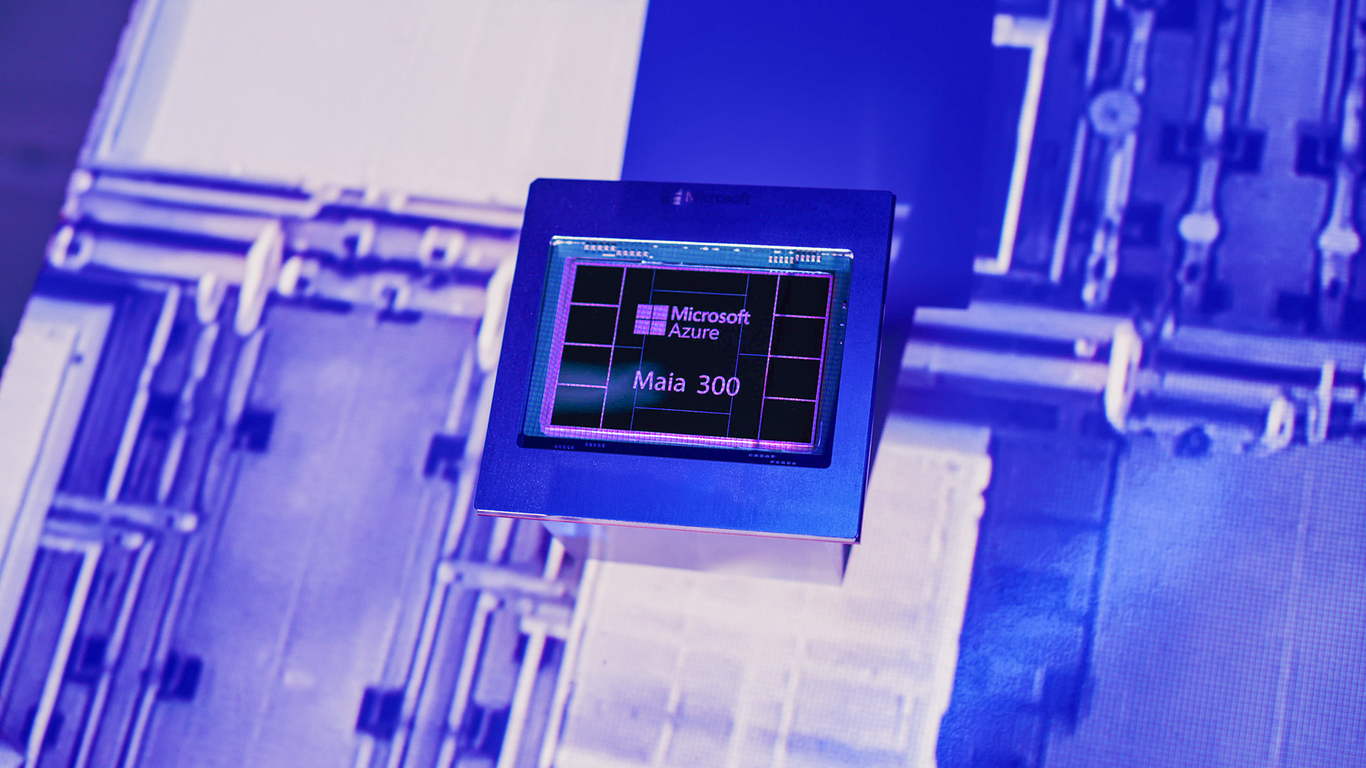
- Big Tech Pivots to Proprietary Silicon: Microsoft accelerated the rollout of its in-house Maia artificial intelligence accelerators, signaling a push across major tech platforms to reduce dependency on Nvidia hardware and cut operational inference overhead.
- Superintelligence Ban Proposed: Senator Bernie Sanders called for a permanent statutory ban on artificial superintelligence following warnings from OpenAI CEO Sam Altman regarding an imminent wave of open-source cybersecurity vulnerabilities.
 Weather Desk: Today's Forecast Against the Record

 La Paz, Bolivia
 High 20.3°C (69°F) / Low 3.2°C (38°F) •
 Partly Cloudy • Precip Risk: 0%
 NASA MODIS Terra, 12 October 2026 Oklahoma City, OK High 33.5°C (92°F) / Low 23.3°C (74F) •
 Overcast • Precip Risk: 15% NASA MODIS Terra, 12 October 2026
 Doha, Qatar (EXTREME) High 36.3°C (97°F) / Low 30.3°C (87°F) •
 Clear Sky • Precip Risk: 0% NASA MODIS Terra, 13 October 2026
 On This Day: October 13, 2026
- Commemorations: Observers marked the International Day for Disaster Risk Reduction worldwide, while
 Poland commemorated Paramedics' Day and Azerbaijan observed Azerbaijani Railway Day.
- Notable Birthdays: American lawmaker Alexandria Ocasio-Cortez (born 1989), Grammy-winning singer-songwriter Ashanti (born 1980), and five-time Olympic gold medalist swimmer Ian Thorpe (born 1982).
- History:
- In 1921, the Soviet republics of Russia,
 Armenia,
 Azerbaijan, and Georgia concluded the Treaty of Kars with the Grand National Assembly of Turkey, establishing modern international borders in the South Caucasus.
- In 1972, Uruguayan Air Force Flight 571 crashed into a remote sector of the Andes mountains, beginning a grueling 72-day survival ordeal for the 16 remaining passengers.
- In 1994, during a gathering at Fernhill House in Belfast, loyalist leader Gusty Spence formally announced that the Combined Loyalist Military Command would observe a historic Northern
 Irish ceasefire.
- In 1921, the Soviet republics of
 The American Experience: Did You Know?
 The Vanishing Cotton Plug in the Aspirin Bottle
 The History Desk:
 Science, Medicine & Disease in History
Bazalgette’s Arteries: The Great Stink and London's Underground Revolution London, United Kingdom · 1858–1865 Why today: This episode illustrates the decisive role of centralized filtration and conduit design when municipal water systems fail, mirroring Israel's emergency expenditure of over NIS 50 million today to re-equip private desalination facilities crippled by sudden microalgae contamination.