Devil in a New Dress: Trump Waives Russian Energy Sanctions as Bipartisan Backlash Mounts
 The Big Picture
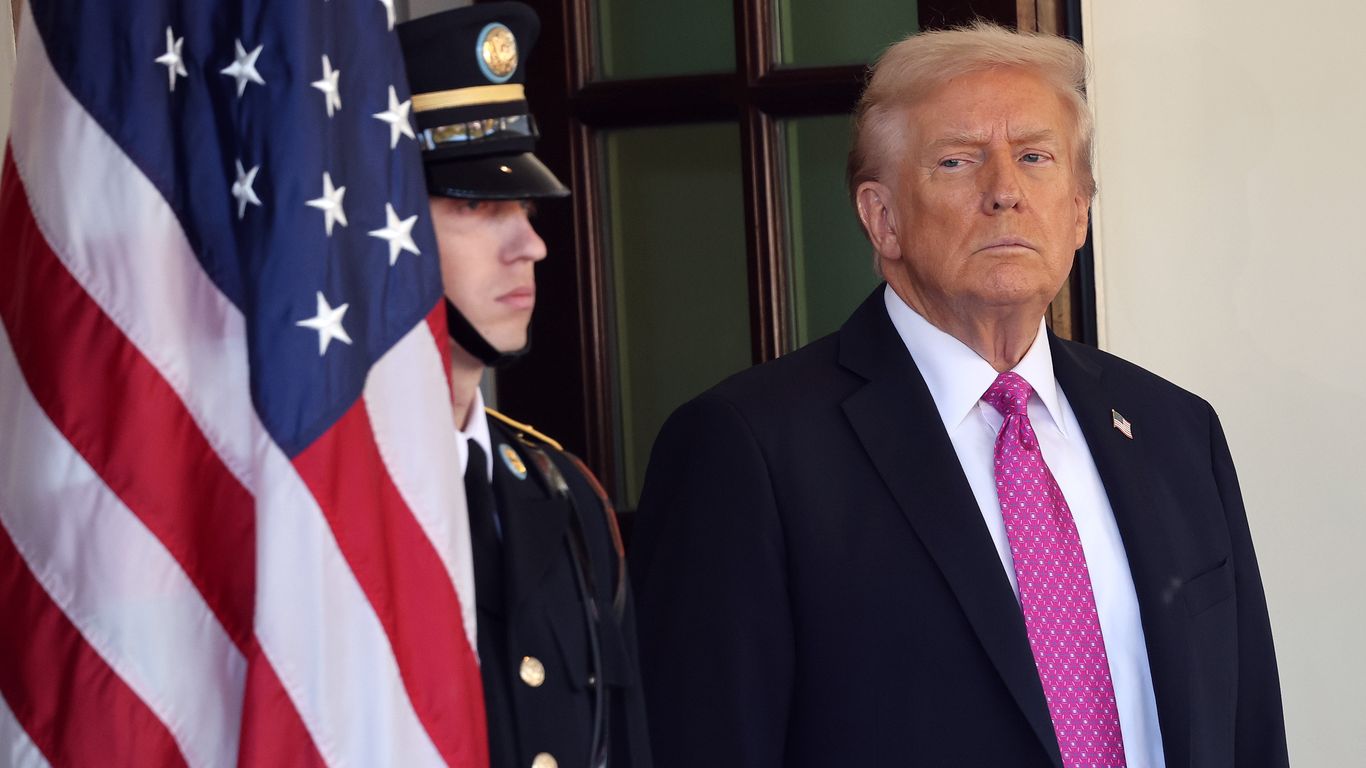
President Donald Trump’s late-night executive order granting a waiver on sweeping  Russian energy penalties under the Graham Act has triggered immediate fury across Capitol Hill, where lawmakers from both parties labeled the concession a dangerous capitulation (Axios, The Hill). That political fissure opened just as
 Ukrainian long-range strike drones bombarded infrastructure hubs across St. Petersburg overnight, setting oil depots and an Ozon fulfillment warehouse ablaze (Militarnyi, The Moscow Times). Meanwhile, maritime risks in the Middle East intensified after two commercial oil tankers struck naval mines in the Strait of Hormuz, driving Brent crude toward $110 a barrel and prompting
 Egypt's parliament to prepare defensive military support for
 Saudi Arabia (gCaptain, Middle East Eye).
 MACRO PULSE & PRICE TRACKER |
$40.39T
$118,789 per citizen • $299,173 per taxpayer
|
3.75% – 4.00%
EFFR: 3.88% • Standard Policy Decision
|
||||||||
Safe Haven & Central Bank Reserves
|
▬ 10Y ▬ 30Y • Spread +34 bps • unchanged on the day • was +34 bps on 16 Sep
|
||||||||
WTI: $99.02 • Brent 30D range $99–$110
|
Global Carry Trade & FX Liquidity
|
 Gold (XAU/USD)
 Crude Oil & Hormuz
 USD / JPY (Yen)
 Trending Cycles
Lethal Fire at Alberta Military Base Prompts  Canadian Investigation

- Fatalities at Wainwright: Canada’s Department of National Defence confirmed that personnel were killed and injured Saturday during an incident that ignited a major fire at Canadian Forces Base Wainwright in east-central Alberta (The New York Times).
- Active Emergency Response: Military and civilian emergency crews moved quickly to isolate the flames, with defense officials declining to provide a formal casualty count or speculate on causes while describing the scene as active and delicate (BBC News).
- Base Operations Impact: CFB Wainwright serves as one of the Canadian Army's primary training centers for large-scale field exercises, raising immediate questions about operational readiness and industrial safety protocols during live-fire training routines (NPR).
 Romanian F-16s Intercept Infiltrating Drones Over Territorial Waters

- Black Sea Shootdown: Romanian Air Force F-16 fighter jets intercepted and brought down two unmanned aerial vehicles after they entered Romanian airspace over the country's Black Sea territorial waters (Militarnyi).
- Heightened Border Scramble: Romania's Ministry of National Defense confirmed the aerial engagement occurred amid escalating Russian air strikes against southern Ukrainian port infrastructure near NATO borders (gCaptain).
- Allied Air Policing: The incident underscores how Black Sea airspace remains precarious, with NATO surveillance craft tracking maritime incursions to prevent uncrewed systems from drifting toward commercial shipping corridors (WarTranslated on Bluesky).
 The Radar
This Week in Congress & Capitol Hill Watch
- Chamber Voting Status: The House is not currently voting, having held its last floor vote 32 days ago on September 16, while the Senate has not voted since September 30; the House committee calendar features a single upcoming hearing on Friday, October 23, before the Committee on Education and the Workforce titled “More Choices, Brighter Futures: Expanding Education Freedom” (House Committee on Education and the Workforce).
- Defense Spending Confrontation: House Republicans are openly warning the administration that they are prepared to block at least $350 billion in requested defense appropriations championed by Defense Secretary Pete Hegseth unless President Donald Trump rescinds his executive waivers and enforces tougher measures against Moscow (The Hill).
- Recent Roll Call Records: Before pausing floor action, the Senate confirmed Keith Sonderling to be Secretary of Labor (PN1129) while rejecting cloture on stock trading prohibitions for lawmakers under H.R. 7008, as official records show five House members (Dunn, Garamendi, Mills, Tiffany, and Womack) were absent for 100% of the chamber's last 14 votes with no explanation noted in the record.
 US Politics & Election Watch

- Sixteen Days to Midterms: With all 435 House seats, 35 Senate seats, and 36 governorships on the ballot for the November 3 midterm elections, Republican Representative María Elvira Salazar released a campaign ad directly warning Trump that his immigration enforcement stance has "gone too far," exposing GOP anxiety over alienating Hispanic communities (NPR).
- Texas Senate Friction: In Texas, Republican nominee Ken Paxton continues to struggle with intraparty consolidation against 37-year-old Democratic state Representative James Talarico, with a ReconMR/Siena Research Institute poll showing Talarico leading 48% to 44% amid crossover GOP support (Washington Examiner).
- 2028 Positioning Emerges: Pennsylvania Governor Josh Shapiro launched "New Path PAC," an independent federal political committee dedicated to backing candidates who challenge Trump's policies, accelerating national speculation around Shapiro's preparations for the 2028 presidential cycle (The Hill).
Ukraine War & Frontline Watch
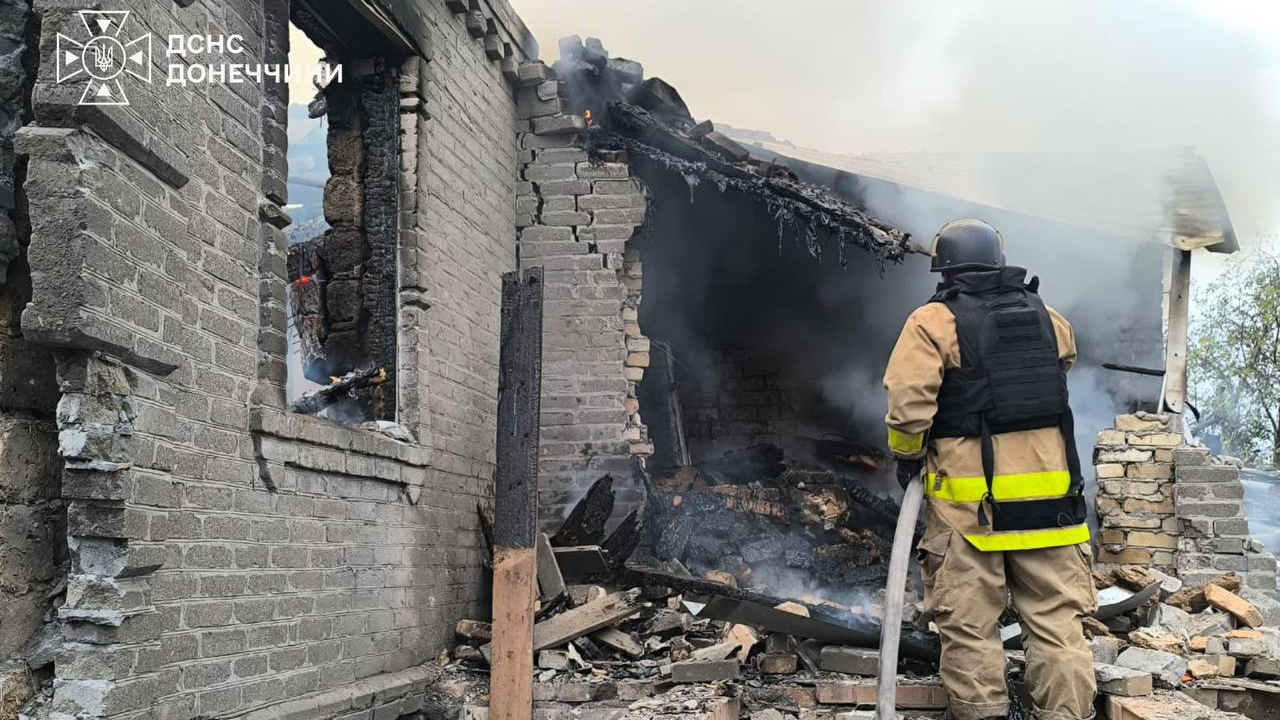
- St. Petersburg Infrastructure Hit: Ukrainian deep-strike drone swarms struck targets across Leningrad Region overnight, causing confirmed fires at an Ozon distribution logistics facility, power substations, the Korabelny Fairway bridge, and municipal fuel depots (Militarnyi, NOELREPORTS on Bluesky).
- Frontline Bombardment: Russian aerial bombs and loitering munitions struck residential sectors in Sloviansk on October 17, killing six civilians, wounding 15, and damaging more than 20 homes as rescue teams search collapsed structures (Ukrainska Pravda).
- Satellite Network Dispute: Secretary of State Marco Rubio stated that Ukraine currently lacks access to SpaceX's military Starshield constellation for long-range strikes into Russia, though Ukrainian military representatives contend systems are operational for tactical drone intercepts (Al Jazeera, Axios).
 Iran, Hormuz & Middle East Conflict Watch
- Mines in the Strait of Hormuz: Iran’s Islamic Revolutionary Guard Corps Navy reported that two commercial tankers caught fire after striking naval mines while navigating the Strait of Hormuz, compounding transit risks for merchant vessels along Persian Gulf energy routes (gCaptain).
- Tehran Defense Appointment: Iran’s parliament confirmed Mehrdad Akhlaqi Ketabchi as Minister of Defence, with the incoming chief immediately issuing public warnings that any American miscalculation would trigger an extensive and surprising response (Middle East Eye, Al-Monitor).
- Cairo Emergency Mandate: Egypt’s parliament scheduled an emergency session to consider President Abdel Fattah al-Sisi’s request to authorize defensive military assistance to Saudi Arabia, as recurring Houthi strikes led Riyadh's 99-story Kingdom Centre tower to mandate remote work (Middle East Eye, Al-Monitor).
 Macro & Monetary Policy
- Sovereign Debt Burden: Total US national debt stands at $40.39 trillion ($40,388,317,675,071.91), expanding by $59.09 billion over the past 24 hours to leave the national burden per taxpayer at $299,173.
- Fed Rate Expectations: With the Federal Reserve policy target held between 3.75% and 4.00% (EFFR at 3.88% and SOFR at 3.89%), money markets face an upcoming FOMC rate decision on October 28 just 10 days away as policymakers debate pauses versus incremental hikes.
- Bond Curve & Commodities: The 10-year Treasury yield hovered at 5.10% and the 30-year yield reached 5.44% (+34 bps spread), reinforcing a 5% floor (Wolf Street), while Brent crude traded at $109.86/bbl, spot gold stood at $4,181.10/oz, and the USD/JPY rate registered ¥157.99 amid persistent carry trade unwinds.
 White House Watch: Trump, the Cabinet & Family Business
- Executive Sanctions Waiver: President Donald Trump signed an executive order late Friday exempting Russian energy supplies from new restrictions passed under the Graham Act, claiming the delay was required in the "national interest" (Axios).
- Congressional Condemnation: The sanctions waiver drew immediate opposition from key sponsors, including Senator Lindsey Graham (R-SC) and Senate Minority Leader Chuck Schumer (D-NY), the latter arguing the move provided economic lifelines to Moscow (The Hill).
- Communications Staff Exit: White House Press Secretary Katie Zacharia was removed from her role five days into her tenure after reporting revealed inaccuracies regarding her status as a practicing attorney (Popular Information).
 Global Dynamics

- Widespread
 French Riots: Nationwide protests across France degenerated into arson and looting over the weekend, resulting in approximately 1,800 arrests as demonstrators and student groups rallied against severe cost-of-living increases and public spending cuts (BBC News).
- Political Agitation in
 India: Indian opposition figure Rahul Gandhi launched national demonstration tours challenging the ruling party on inflation and electoral transparency, coinciding with a stampede at a religious event in Kolkata that left at least 19 people dead (The New York Times, The New York Times).
- Peacekeeper Departure Anxiety: Residents in
 southern Lebanese villages such as Ibl al-Saqi expressed rising alarm as UNIFIL units began steps toward winding down their decades-long mission following earlier diplomatic votes (Times of Israel).
 Tech & Trade Rivalries
- Tokenized Equity Pushback: Nine prominent companies, including CoreWeave, Broadcom, and Verizon, lodged formal objections against unauthorized tokenized trading of their corporate shares on the OKXICE digital asset platform, citing market volatility and liquidity transparency risks (The Block).
- Unscheduled Orbital Rendezvous: Orbital tracking data revealed that Russia’s military satellite Kosmos-2612 completed an uncoordinated close approach within a few kilometers of the US ICEYE X36 radar satellite, marking a rare low Earth orbit intercept of an unconsenting commercial asset (Jonathan McDowell on Bluesky).
- Frontier AI Model Lobbying: AI developer Anthropic circulated draft legislative language on Capitol Hill proposing its own statutory thresholds for state intervention in commercial model deployments, drawing pushback from safety researchers (Mother Jones).
 Weather Desk: Today's Forecast Against the Record

 Seoul, South Korea
 High 21.0°C (70°F) / Low 14.5°C (58°F) • Heavy Rain
 • Precip Risk: 100%
 NASA MODIS Terra, 18 October 2026 Longyearbyen, Svalbard High -1.2°C (30°F) / Low -15.7°C (4°F) • Moderate Snow Fall
 • Precip Risk: 100% NASA MODIS Terra, 17 October 2026 Honolulu, HI High 28.4°C (83°F) / Low 22.0°C (72°F) • Light Drizzle
 • Precip Risk: 84% NASA VIIRS, 17 October 2026
 On This Day: October 18, 2026
 Observances: Alaska Day marks the formal transfer of the Russian claim over Alaska to the United States in 1867.
 Notable Birthdays: American Olympic alpine skier Lindsey Vonn (1984), American actor Zac Efron (1987), and American basketball player Brittney Griner (1990).
 History:
- 1775: During the American Revolutionary War, the Royal Navy burned and destroyed what is now Portland, Maine, in retaliation against maritime ports backing colonial Patriot operations.
- 1967: The Soviet spacecraft Venera 4 successfully conducted the first direct in situ environmental analysis of another planet as it entered the atmosphere of Venus.
- 1968: American long jumper Bob Beamon set a world record of 8.90 meters (29.2 feet) at the 1968 Summer Olympics in
 Mexico City, a mark that stood unbeaten for 23 years.
 The American Experience: Did You Know?
 "Barking Up the Wrong Tree": The Frontier Night Hunt
 The History Desk:
 South Asia
The Rock Edicts of Ashoka Indian subcontinent. To circumvent regional satraps and priestly gatekeepers, Ashoka commissioned dozens of comprehensive decrees carved directly onto prominent rock faces and monumental sandstone pillars throughout modern-day India,  Pakistan, and
 Afghanistan. The inscriptions were purposefully cut in local vernaculars, using Brahmi Prakrit in central regions, Kharosthi in the northwest, and even
 Greek and Aramaic along Hellenistic trade borders. These edicts proclaimed state-funded medical treatment for people and animals, mandated religious tolerance among disparate sects, and established public ombudsmen to review bureaucratic conduct. By turning natural landscapes into immutable civic notices, Ashoka established an enduring subcontinental tradition of open public proclamation that survived the fall of his dynasty.
 Why today: As political parties and public protesters mobilize in India against central administrative policies, Ashoka’s inscriptions reveal South Asia’s ancient precedent of attempting to anchor civic accountability directly before the public eye.