Quiet Storm: France Extends Curfews After Tenuous Calm as Unrest Spreads
 The Big Picture

 French authorities are extending nighttime curfews across major cities following days of riots and the destruction of civic landmarks, pushing the 10-year French-
 German sovereign bond spread above 150 basis points. In the Middle East, maritime supply lines fractured further after the IRGC reported two commercial tankers struck mines south of the Strait of Hormuz, driving Asian spot liquefied natural gas prices past $30 per million British thermal units and Brent crude above $111 a barrel. Domestic political tensions spiked simultaneously as the Justice Department charged 28 California residents with noncitizen voting offenses exactly two weeks before the midterm elections, while President Donald Trump pledged an $8 billion emergency diesel payout to shield agricultural producers from soaring autumn fuel expenses.
 MACRO PULSE & PRICE TRACKER |
$40.39T
$118,787 per citizen • $299,167 per taxpayer
|
3.75% – 4.00%
EFFR: 3.88% • Standard Policy Decision
|
||||||||
Safe Haven & Central Bank Reserves
|
▬ 10Y ▬ 30Y • Spread +34 bps • unchanged on the day • was +33 bps on 21 Sep
|
||||||||
WTI: $100.82 • Brent 30D range $99–$111
|
Global Carry Trade & FX Liquidity
|
 US National Debt
 Gold (XAU/USD)
 Crude Oil & Hormuz
 USD / JPY (Yen)
 Trending Cycles
Voting Rights: Justice Department Indicts 28 California Residents in Midterm Enforcement Push
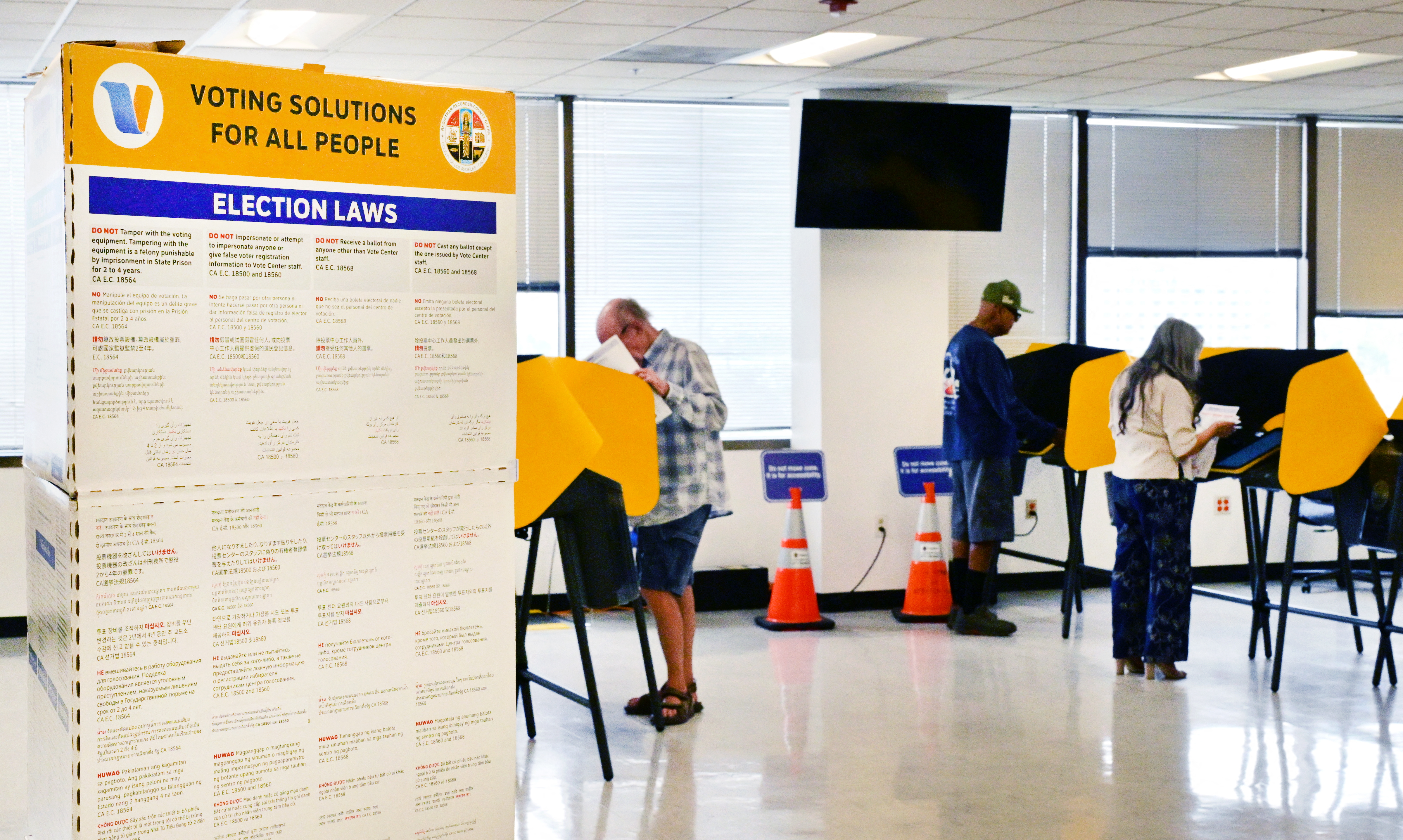
- Federal Indictments: Federal prosecutors in California unsealed criminal charges against 28 individuals accused of registering to vote without United States citizenship, arresting at least 11 defendants across the state on Monday.
- Ballot Processing Injunction: The Department of Justice filed an emergency petition in federal court seeking an immediate injunction to stop California election clerks from processing returned mail ballots from registered voters whom federal data systems identify as likely noncitizens.
- Defendant Legal Status: Case records show that all 28 charged individuals hold lawful permanent resident status, with four defendants indicted solely for submitting voter registration forms rather than casting ballots in the 2024 general election.
Judicial Review: Supreme Court Confronts Video Privacy Claims and Emergency Detention Petitions
- Digital Streaming Privacy: The Supreme Court heard oral arguments in Salazar v. Paramount, considering whether the Video Privacy Protection Act restricts modern streaming platforms from disclosing consumer browsing data to external tracking networks without explicit consent.
- Immigration Habeas Review: Attending attorneys filed an emergency cert petition asking the high court to allow federal judges to immediately review and reverse immigration detentions for lawful permanent residents detained over political speech. Two outlets monitored the court's calendar yesterday and four do this morning.
- Home Distilleries and Executive Power: The justices agreed to review the constitutionality of a Reconstruction-era federal statute prohibiting residential alcohol distilleries, while refusing appeals to restore vacated plea deals for Guantánamo defendants.
Diplomatic Rift:  South Korea Pulls Diplomatic Personnel from
 Kyiv Over
 North Korean Captives
- Staff Evacuation: The South Korean Ministry of Foreign Affairs ordered additional diplomatic staff to vacate its embassy in Kyiv, deepening an administrative drawdown that began earlier this month.
- Prisoner Transfer Dispute: The diplomatic rift erupted after Ukrainian President Volodymyr Zelenskyy disclosed that captured North Korean soldiers fighting for
 Russia were slated for direct transfer to Seoul, prompting South Korea to recall its ambassador.
- Intelligence Reassessment: South Korean national security officials signaled that public disclosure of the covert prisoner transfers exposed sensitive intelligence networks and complicated monitoring of foreign personnel embedded within Russian military formations.
 The Radar
This Week in Congress & Capitol Hill Watch
- Chamber Voting Status: The House is not currently voting, with its last roll call recorded 34 days ago on September 16, according to the House Clerk. The Senate is likewise not currently voting, having recorded its last vote 20 days ago on September 30, per the Senate roll call record.
- Prior Floor Enactments: Before pausing votes, the Senate confirmed Keith Sonderling to be Secretary of Labor under PN1129 on September 30, after rejecting cloture on motions to proceed to the utility regulatory amendments in H.R. 9340 and stock trading restrictions in H.R. 7008. On September 16, the House passed the Retire through Ownership Act via S. 2403, the Water Resources Development Act via H.R. 9497, and the PROOF Act under H.R. 10326.
- Committee Schedule and Attendance: Congressional committee feeds list no scheduled hearings or markups for the current legislative window. Across the final 14 House roll calls, representatives maintained a 97.6% participation rate, though Republican Representatives Neal Dunn, Cory Mills, Tom Tiffany, and Steve Womack, alongside Democratic Representative John Garamendi, missed 14 of 14 votes; in the Senate, where participation averaged 97.7% over the last 14 votes, Republican Senator Dan Sullivan missed 8 of 14 roll calls, with official records providing no stated explanation for the absences.
 US Politics & Election Focus: Primaries & Races

- Midterm Countdown and Balance of Power: Exactly 14 days remain until the November 3, 2026 midterm elections, with all 435 House seats, 35 Senate seats (33 Class 2 seats, alongside special elections in Florida and Ohio), and 36 governorships on the ballot.
- Battleground Ohio Volatility: Cook Political Report rates both the gubernatorial race and the special U.S. Senate election in Ohio as toss-ups, as total cycle fundraising across the country topped $15 billion, making this the most expensive midterm on record.
- Polling Margins and Sunbelt Dynamics: Times/Siena surveys found President Trump's approval rating sits below 41% across competitive red-state Senate contests, while an Equis Research poll showed registered Latino voters backing Democratic congressional candidates 57% to 31%, prompting Republican Representative María Elvira Salazar to launch advertisements distancing herself from administration immigration enforcement.
Ukraine War & Frontline Watch

- Refinery and Pipeline Strikes: Ukrainian long-range strike drones hit the Nikolskaya oil pumping station in Russia's Tambov region, igniting a fuel storage facility along the Druzhba crude pipeline network following separate strikes against two telecom operators in occupied Donetsk.
- Interceptor Missile Impasse: President Volodymyr Zelenskyy told visiting senators that the Department of Defense is withholding transfer approvals for Patriot interceptor missiles that European allies have already financed, as Russian forces launched 16 ballistic missiles and 200 drones that cut power to 550,000 homes.
- Foreign Fighter Accounting: Ukrainian prisoner-of-war authorities reported documenting nearly 46,000 foreign nationals from 151 countries serving under contract within the Russian armed forces, as German Chancellor Friedrich Merz declared that European nations have now assumed the primary financial burden of funding Ukrainian weaponry.
 Iran, Hormuz & Middle East Conflict Watch
- Hormuz Mining Casualties: The Islamic Revolutionary Guard Corps Navy announced that two commercial tankers caught fire after detonating naval mines in waters south of the Strait of Hormuz, while claiming Iranian air defense units shot down an unmanned American surveillance drone.
- Tehran Defense Diplomacy: Iranian Foreign Minister Abbas Araghchi hosted Russian Foreign Minister Sergey Lavrov in Tehran to coordinate bilateral nuclear and trade agreements, while
 Pakistan Army Chief Field Marshal Asim Munir landed in Tehran for security consultations as
 Turkey's parliament prepares to ratify the Mecca Joint Defence Agreement alongside
 Riyadh and Islamabad.
- Unannounced Tel Aviv Consultations: United States Defense Secretary Pete Hegseth held unannounced meetings in Jerusalem with Prime Minister Benjamin Netanyahu to review operational options regarding Iran, as empty export berths at Kharg Island confirm the ongoing drag of naval interdictions on Iranian crude shipments.
 Macro & Monetary Policy
- Fiscal Debt Trajectory: The United States national debt stands at $40.39 trillion, translating to a per-taxpayer burden of $299,167, as the annual federal budget deficit reached $2.0 trillion—its widest level since 2021.
- Treasury Yields and Rate Expectations: Benchmark 10-year Treasury yields climbed 4 basis points to 5.14%, while 30-year yields rose to 5.47%, keeping the 10Y/30Y yield spread unchanged at +34 basis points ahead of the Federal Open Market Committee's October 28 policy decision, where target rates sit at 3.75% to 4.00%.
- Commodity and Carry Trade Strains: Spot gold traded at $4,136.80 per ounce, Brent crude settled up 5.48% on the week at $111.48 per barrel, and the dollar changed hands at ¥158.11 against the
 Japanese yen, while the 30-year fixed mortgage rate held flat at 7.40%, dragging NAHB homebuilder sentiment down to 29.
 White House Watch: Trump, the Cabinet & Family Business
- East Potomac Golf Course Hearing: United States District Judge Ana Reyes held an evidentiary hearing over White House plans to redevelop the municipal East Potomac Golf Links, where Interior Department Deputy Chief of Staff Gregory Wischer testified that private course architects transmitted course designs directly to his personal phone, shortly after President Trump branded the park Trash Island on Truth Social.
- Harvest Diesel Subsidies: At a Kansas campaign stop, President Trump announced that the Department of Agriculture will distribute $8 billion in direct relief payments to offset high diesel prices for farmers, while Energy Secretary Chris Wright confirmed policies allowing commercial buyers to purchase sanctioned dark-fleet tankers to restore them to lawful maritime service.
- CISA Machine Access Request: Political appointees within the administration formally requested that analysts at the Cybersecurity and Infrastructure Security Agency attempt to hack an active voting machine, triggering resistance from career agency personnel who cited prohibitions against domestic political operations.
 Global Dynamics
- French Urban Curfews: The French government extended municipal curfews across multiple urban districts following several nights of civil unrest, which saw the spire of the Limoges town hall clock tower collapse in flames and triggered expedited trials for hundreds of detained demonstrators.
- Alberta Independence Rejection:
 Canadian voters in the province of Alberta rejected an independence referendum initiative, with preliminary tallies indicating approximately 76% voted to remain within Canada against 24% supporting formal separation proceedings.
- Caribbean Boundary Dispute:
 Colombian President Abelardo de la Espriella reasserted sovereignty claims over disputed Caribbean islands against
 Nicaragua, just days after completing the relocation of Colombia's embassy in Israel to Jerusalem.
 Tech & Trade Rivalries

- Orbital Reconnaissance Maneuvers: Tracking telemetry revealed that the Russian military inspector satellite Cosmos-2612 conducted an unannounced close-proximity approach to the radar satellite ICEYE-X36 in low Earth orbit, coming within several hundred meters before repositioning more than 100 kilometers away.
- Maritime Unmanned Strike Deployments: Shipbuilders in Guangzhou began construction on a second dedicated Chinese vessel for deploying unmanned underwater vehicles, while the United States Marine Corps activated its first operational battalion equipped with the NMESIS autonomous anti-ship missile platform.
 Chinese Export Restrictions and GDP: Beijing logged 4.5% gross domestic product growth for the third quarter while tightening international export controls covering photovoltaic technology, dredgers, and autonomous drone components, as leading artificial intelligence laboratories move to draft voluntary safety rules in lieu of federal statutory standards.
 Weather Desk: Today's Forecast Against the Record

 Timbuktu, Mali
 High 40.1°C (104°F) / Low 30.0°C (86°F) • Overcast
 • Precip Risk: 12%
 NASA MODIS Terra, 20 October 2026
 Melbourne, Australia High 28.0°C (82°F) / Low 19.9°C (68°F) • Light Drizzle
 • Precip Risk: 8% NASA VIIRS, 20 October 2026 Juneau, AK High 8.5°C (47°F) / Low 5.4°C (42°F) • Slight Snow Showers
 • Precip Risk: 100% NASA VIIRS, 19 October 2026
 On This Day: October 20, 2026
- Commemorations: Observers mark Heroes' Day in
 Kenya, alongside Revolution Day in Guatemala and Arbor Day across the Czech Republic.
- Notable Birthdays:
- 1979: John Krasinski, American actor, director, and producer.
- 1988: ASAP Ferg, American rapper.
- 2001: Paige Bueckers, American basketball player.
- Historical Milestones:
- 1973: Attorney General Elliot Richardson and Deputy Attorney General William Ruckelshaus resigned during the Watergate scandal after refusing an order to dismiss special prosecutor Archibald Cox in the Saturday Night Massacre.
- 1984: The
 Spanish fishing trawler Sonia sank in
 British territorial waters after a five-hour maritime pursuit by the Irish Naval Service vessel Aisling during the sinking of the Spanish trawler Sonia.
- 2011:
 Libyan leader Muammar Gaddafi was captured and killed by opposition fighters during the Battle of Sirte.
 The American Experience: Did You Know?
 The Microscopic Constellation That Halts Color Copiers
 The History Desk:
 Maps, Borders & Cartography
The Ink That Severed the Pashtun: The Durand Line British  India & Emirate of
 Afghanistan · 1893 British civil servant Sir Mortimer Durand and Afghan Emir Abdur Rahman Khan signed a single-page agreement in Kabul delineating a 2,670-kilometer boundary between British India and Afghanistan. Intended to establish an imperial buffer against the Russian Empire during the Great Game, the boundary was drawn through mountainous tribal territory without surveying local topography or consulting the indigenous population. The line severed historic trade routes and bisected the Pashtun homeland, dividing clans, pastureland, and villages across two political entities. Rather than stabilizing the frontier, the border became an enduring source of regional instability, contested by successive Afghan governments who refused to recognize the partition after the 1947 independence of Pakistan.
 Why today: Connects to ongoing border skirmishes between Pakistani forces and the Taliban along this disputed frontier, as Pakistan's military leadership negotiates regional security agreements in Tehran.