Slipstream: Putin Frees American Prisoner and Clears Diesel Cargo as Trump Envoy Lands in Russia
 The Big Picture

 Russian President Vladimir Putin opened diplomatic talks with White House special envoy Steve Witkoff in St. Petersburg on Wednesday by releasing imprisoned 73-year-old American Stephen Hubbard following an explicit request from President Donald Trump. Parallel to the diplomatic opening, Russian Deputy Prime Minister Alexander Novak announced that Moscow will dispatch its first 40,000-tonne tanker of diesel fuel to the United States on Thursday under a bilateral supply pact aimed at capping surging domestic pump prices. Across the Red Sea theater, regional security fractured further as the British Ministry of Defence deployed Eurofighter Typhoon jets to defend Saudi Arabia following Houthi ballistic missile strikes against an Aden military command center. Domestically, both major parties entered the final 13-day sprint toward the November 3 midterm elections while navigating fallout from executive pardons and tightening credit conditions.
 MACRO PULSE & PRICE TRACKER |
$40.40T
$118,813 per citizen • $299,233 per taxpayer
|
3.75% – 4.00%
EFFR: 3.88% • Standard Policy Decision
|
||||||||
Safe Haven & Central Bank Reserves
|
▬ 10Y ▬ 30Y • Spread +31 bps • flattening 3 bps on the day • was +33 bps on 21 Sep
|
||||||||
WTI: $99.98 • Brent 30D range $99–$111
|
Global Carry Trade & FX Liquidity
|
 Gold (XAU/USD)
 Crude Oil & Hormuz
 USD / JPY (Yen)
 Trending Cycles
 Australian Lawmaker Helen Haines Gravely Injured in Targeted Vehicle Strike

- Severe Trauma and Emergency Surgery: Australian federal independent MP Helen Haines underwent emergency bilateral leg amputations following a vehicular collision outside her constituency office, with her husband confirming she is currently in stable condition at the hospital.
- Suspect Remanded in Court: Victoria Police arrested 43-year-old Brendan Nugent at the scene and charged him with three separate offenses, presenting him in Melbourne Magistrates' Court on Wednesday morning while investigators treat the incident as a premeditated targeted attack.
- Escalating Political Hostility: The attack follows a verified multi-year surge in targeted abuse and security threats directed at sitting lawmakers across Australia, where federal police recorded an increase in formal threat investigations targeting parliamentary representatives.
 Israel Formalizes Regional Diplomacy as Pacific Islands Forum Partner
- Multilateral Partnership Ratified: The 18-member Pacific Islands Forum formally admitted Israel as a dialogue partner on Wednesday, with Israeli Foreign Minister Gideon Sa'ar announcing that Jerusalem will provide specialized technology partnerships focusing on seawater desalination, agricultural adaptation, and infrastructure resilience.
- Oceania Diplomatic Realignment: The institutional accession builds on accelerating diplomatic momentum across the South Pacific, following Nauru opening an embassy in Jerusalem last month to solidify regional voting blocs within international assemblies.
 The Radar
This Week in Congress & Capitol Hill Watch
- Chamber Roll Call Inactivity: The House of Representatives has held no floor votes since September 16—a span of 35 days—while the Senate last voted 21 days ago on September 30, with both chambers clearing their active voting programs and showing no hearings scheduled on their committee calendars.
- Final Legislative Floor Outcomes: Before pausing legislative floor action, the Senate confirmed Keith Sonderling to serve as Secretary of Labor by roll call vote on September 30 via executive nomination PN1129, while rejecting cloture on both H.R. 9340, the Ratepayer Protection Act, and H.R. 7008, imposing stock trading restrictions on members of Congress.
- Chamber Attendance Records: House attendance averaged 97.6% across the final 14 roll calls, though Republican Representatives Neal Dunn, Cory Mills, Tom Tiffany, and Steve Womack, alongside Democrat John Garamendi, missed 14 of 14 votes (100% absent), while the official record shows no stated reasons for their absences; in the upper chamber, Republican Senator Dan Sullivan missed 8 of the Senate's final 14 votes (absent from 57% of roll calls) as tracked by the official Senate roll call log.
 US Politics & Election Watch
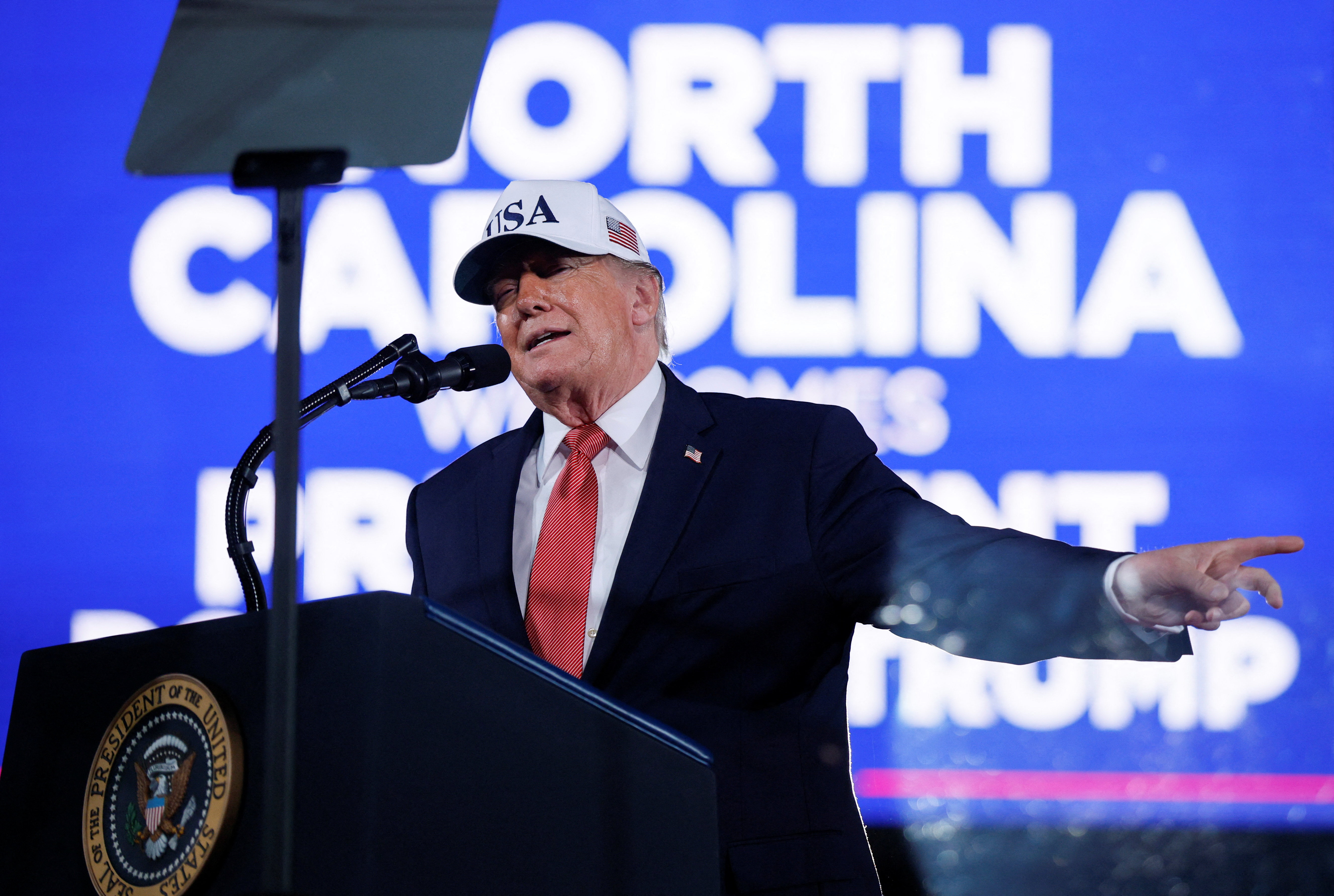
- Midterm Countdown and National Polling: Exactly 13 days remain until the November 3 midterm elections, where all 435 House seats, 35 Senate seats, and 36 governorships will be decided; a new national survey by Verasight and Strength in Numbers published on October 21 found Democrats holding a 10-point lead on the generic congressional ballot among registered voters and a 12-point advantage among likely voters.
- Battleground Ad Spending and Early Balloting: State election returns in North Carolina reveal that registered Democrats have submitted 70% of early ballots cast between the two parties, representing the widest partisan margin at this juncture since 2006, coming as the Senate Republicans' primary campaign spending arm curtailed broadcast reservations in the state while Trump headlined a late rally in North Carolina.
- Plains and Prairie Senate Clashes: In Kansas, incumbent Republican Senator Roger Marshall and Democratic nominee Adam Hamilton take the debate stage Wednesday evening in a tightening race where Trump explicitly conditioned federal ethanol incentives on Marshall's victory, as nonpartisan handicapper Inside Elections moved 30 competitive congressional races toward the Democratic column.
 Ukraine War & Frontline Watch
- Direct Moscow Diplomatic Negotiations: White House special envoy Steve Witkoff arrived at the Constantine Palace in St. Petersburg to meet Vladimir Putin, bringing settlement proposals and frameworks for a potential ceasefire while securing the immediate release of Stephen Hubbard, an American convicted in Russia of mercenary activity who was transferred directly to Pulkovo Airport.
- Bilateral Diesel Pipeline Cargoes: Russian Deputy Prime Minister Alexander Novak verified that Russia will send an initial 40,000-tonne tanker of diesel to the United States on October 22, drawing pushback from Ukrainian sanctions commissioner Vladyslav Vlasiuk, who noted that a 40,000-ton cargo covers less than two hours of aggregate US domestic fuel demand.
- Infrastructure Bombardment and Battlefield Systems: Russian forces launched overnight drone and missile strikes damaging a 24-story residential building in Kyiv, a university in Uman, and commercial facilities in Chernihiv, while Ukrainian FPV teams on the southern front reported the frontline deployment of an unidentified Russian drone powered by an internal combustion gasoline engine.
 Iran, Hormuz & Middle East Conflict Watch
 British RAF Fighter Jets Deploy to
 Riyadh: The United Kingdom Ministry of Defence confirmed it is deploying Eurofighter Typhoon combat aircraft to Saudi Arabia to intercept incoming ballistic missiles and one-way attack drones launched by
 Yemen's Ansar Allah movement.
- Aden Command Post Struck by Ballistic Missile: Houthi military spokesman Yahya Saree claimed responsibility for firing a precision ballistic missile into the Saudi-led coalition's operations center at Badr Camp adjacent to Aden International Airport, as ground forces engaged in intensive close-quarters fighting across Kahboub in southwestern Yemen.
- Maritime Chokepoint Freight Squeeze: Analysis from Goldman Sachs warns that average global crude oil freight rates have spiked from $3 per barrel last year to $20 per barrel due to persistent tanker transit risks, naval mine reports, and insurance premiums surrounding the Strait of Hormuz and the southern Red Sea corridor.
 Macro & Monetary Policy
- Sovereign Debt and Treasury Curve Metrics: Total US national debt expanded by $8.89 billion in 24 hours to reach $40.396 trillion ($40,396,401,120,485.05), pushing the per-taxpayer debt burden to $299,233, while the benchmark 10-year Treasury yield retreated 2 basis points to 5.12% and the 30-year yield fell 5 basis points to 5.42%, flattening the 10Y/30Y yield curve spread to +31 basis points.
- FOMC Decision Countdown and Crude Benchmarks: The Federal Reserve convenes its policy meeting in exactly 7 days on October 28 with the target Fed Funds rate at 3.75%–4.00% and SOFR fixing at 3.87%, operating against an energy backdrop where Brent crude trades at $110.92 per barrel and WTI stands at $99.98 per barrel amid Hormuz shipping disruptions.
- Sovereign Yield Pressures and Currency Unwinds:
 In Europe, French 10-year sovereign bond yields touched 5.00% for the first time in 24 years, widening the France-
 Germany spread above 150 basis points, while the
 Japanese yen traded at ¥158.07 per US dollar amid an ongoing structural carry trade unwind.
 White House Watch: Trump, the Cabinet & Family Business
 Venezuelan Banker Pardon Scrutiny: Former Trump legal advisor Alina Habba secured an employment agreement guaranteeing $50 million over four years from a firm established by the family of Venezuelan banker Julio Herrera Velutini while advising Attorney General Pam Bondi; weeks later, the White House issued an executive pardon dismissing federal bribery charges against Herrera Velutini.
- East Potomac Golf Course Litigation: Federal District Judge Ana Reyes convened an evidentiary hearing in Washington concerning administration directives to bulldoze and redesign the public East Potomac Park golf links into a private championship facility, questioning Department of Justice counsel over the rapid felling of mature trees despite active preservation injunctions.
- Diplomatic Business Delegations: Alongside Witkoff's talks in St. Petersburg, Secretary of State Marco Rubio traveled to Mumbai to meet with prominent Indian industrial leaders regarding bilateral trade terms and critical supply chains.
 US Housing Market & Mortgage Desk
- Mortgage Rates and Purchase Commitments: Freddie Mac survey data via FRED shows the 30-year fixed mortgage rate holding flat at 7.40% as of October 15, up 1.13 percentage points year-over-year, while the 15-year fixed rate settled down 2 basis points at 6.71% (up 1.19 percentage points from 5.52% one year ago).
- Housing Construction and Sales Activity: Seasonally adjusted annual housing starts dropped to 1,221K units in September—a 7.4% year-over-year decline—while new one-family house sales reached 684K units in August with supply holding at 8.5 months; pending home sales plunged 7.3% month-over-month in September according to the National Association of Realtors.
- Home Prices and Federal Enterprise Oversight: The median sales price of houses sold stands at $410,700 (down 1.3% year-over-year), as National Economic Council advisor Scott Bessent signaled that potential restructuring plans for Fannie Mae and Freddie Mac targeted for 2027–2028 will prioritize preventing any widening of secondary mortgage rate spreads.
 Global Dynamics
 Haitian Local Government Collapse: In Kenscoff, Haiti, armed gang factions overran municipal borders and killed dozens of residents including the town mayor, who had sent hundreds of unheeded warning letters to federal authorities requesting perimeter security reinforcements.
 Rwandan Dissident Murdered in Exile: Former Rwandan soldier and vocal political dissident Robert Kabera was found beheaded in
 Kampala, Uganda, following public video statements posted earlier this month describing direct death threats from security services.
- Latin American Sovereign Growth Divergence: While
 Argentine President Javier Milei publicly criticized
 Brazilian President Luiz Inácio Lula da Silva ahead of Sunday's runoff election, regional data reveals smaller Latin American economies are posting accelerating GDP growth rates driven by nearshoring manufacturing investments.
 Tech & Trade Rivalries
- Naval Shipbuilding Tonnage Asymmetry: Naval intelligence assessments presented at the Euronaval conference revealed that China built more than twice the total naval surface tonnage of the United States across the 2024–2025 cycle, steadily shrinking the numerical and fleet displacement gap.
- Proposed
 Chinese Technology Export Controls: The Ministry of Commerce in Beijing drafted fresh export control mandates restricting foreign transfers of advanced AI systems, photovoltaic manufacturing equipment, and precision industrial machinery while restricting raw rare earth processing access to Japanese industrial buyers.
- Consolidated Corporate Mega-Merger Review: Elon Musk confirmed that independent special committees within Tesla and SpaceX have formally convened to assess a structural mega-merger of the two corporate entities to centralize artificial intelligence computation, rocketry, and vehicle manufacturing under one corporate balance sheet.
 Weather Desk: Today's Forecast Against the Record
 Juneau, Alaska
 High 5.3°C (42°F) / Low 3.1°C (38°F) •
 Heavy Snow Showers • Precip Risk: 100%
 NASA VIIRS, 20 October 2026
 Doha, Qatar (EXTREME) High 35.3°C (96°F) / Low 28.7°C (84F) • Mainly Clear • Precip Risk: 31% NASA MODIS Terra, 21 October 2026
 Quito, Ecuador High 15.1°C (59°F) / Low 10.8°C (51°F) •
 Violent Rain Showers • Precip Risk: 100% NASA VIIRS, 20 October 2026
 On This Day: October 21, 2026
 Holidays and Observances: There are no official United States public holidays observed on this date; international observances include Armed Forces Day in Honduras and the Catholic feast day of Pedro Calungsod.
 Notable Birthdays:
- 1988: Glen Powell, American actor.
- 1990: Ricky Rubio,
 Spanish basketball player and Olympic medalist.
- 1995: Doja Cat, American Grammy Award-winning rapper and songwriter.
 Historic Anniversaries:
- 1944: World War II Allied forces captured the border city of Aachen after a three-week engagement, marking the first German city taken on sovereign home soil.
- 1959: The Solomon R. Guggenheim Museum, designed by architect Frank Lloyd Wright featuring its continuous spiral ramp gallery, opened its doors to the public in New York City.
- 1994: The United States and
 North Korea executed the Agreed Framework in Geneva to freeze and replace Pyongyang's graphite-moderated nuclear reactor program in exchange for normalized ties.
 The American Experience: Did You Know?
 The 555 Exchange: Hollywood’s Fictional Phone Firewall
 The History Desk: West Africa & the Sahel
Wagadou’s Gold Tolls: Taxing the Trans-Saharan Arteries Ghana Empire) · 11th century Ghana, established supreme financial power across the Sahel without operating a single active gold mine. Wagadou’s monarchs derived their wealth by positioning their administrative capital at Koumbi Saleh directly between the Saharan salt mines of Taghaza to the north and the alluvial gold fields of Bambuk to the south. As the geographer al-Bakri documented in his 1068 treatise, King Tunka Manin levied an exact transit duty of one gold dinar on every donkey load of salt entering the imperial borders, and two gold dinars on every donkey load departing. Wagadou deployed royal cavalry squadrons to safeguard the desert caravan trails, while the sovereign exercised an absolute crown monopoly over all raw gold nuggets found in the realm to prevent market inflation. By monopolizing transit access and logistics protection rather than physical extraction, Wagadou maintained a commercial hegemony that dictated terms of exchange between Mediterranean merchants and Sub-Saharan miners for generations.
 Why today: This medieval customs monopoly mirrors the leverage governing global energy transit this morning, where soaring tanker rates of $20 per barrel and maritime bottlenecks across the Strait of Hormuz demonstrate that controlling transit corridors matters far more than controlling the wells.