Lysistrata's Accord: White House Announces Oleshky Truce as Starshield Throttling Ends
 The Big Picture

The White House announced a localized humanitarian ceasefire in  Russian-occupied Oleshky, with officials claiming First Lady Melania Trump helped broker the temporary pause to allow emergency food supplies and civilian evacuations from the besieged town (BBC World News; Euromaidan Press).
 Concurrently, Ukraine's Ministry of Defense confirmed that high-speed functionality has been restored across Elon Musk's Starlink and Starshield networks after more than a week of terminal throttling crippled drone operations along the frontline (Axios; The New York Times). Across energy markets, crude held near elevated levels with Brent trading at $111.70 per barrel as the Department of Energy authorized an emergency release of 400,000 barrels from the Strategic Petroleum Reserve to supply a Louisiana refinery (OilPrice.com). Domestically, the Department of Justice initiated a federal lawsuit to preemptively block certification of Alaska's Senate race if the Republican incumbent is defeated in next month's election (PBS NewsHour).
 MACRO PULSE & PRICE TRACKER |
$40.44T
$118,954 per citizen • $299,588 per taxpayer
|
3.75% – 4.00%
EFFR: 3.88% • Standard Policy Decision
|
||||||||
Safe Haven & Central Bank Reserves
|
▬ 10Y ▬ 30Y • Spread +33 bps • flattening 1 bp on the day • was +29 bps on 23 Sep
|
||||||||
WTI: $103.27 • Brent 30D range $100–$117
|
Global Carry Trade & FX Liquidity
|
 Gold (XAU/USD)
 Crude Oil & Hormuz
 USD / JPY (Yen)
 Trending Cycles
Satellite Bandwidth: High-Speed Starshield Connectivity Restored in Ukraine
Ukrainian defense units regained high-speed data transmission on Starlink and military Starshield satellite dishes on Saturday following two weeks of operational throttling that severely degraded frontline drone defenses.
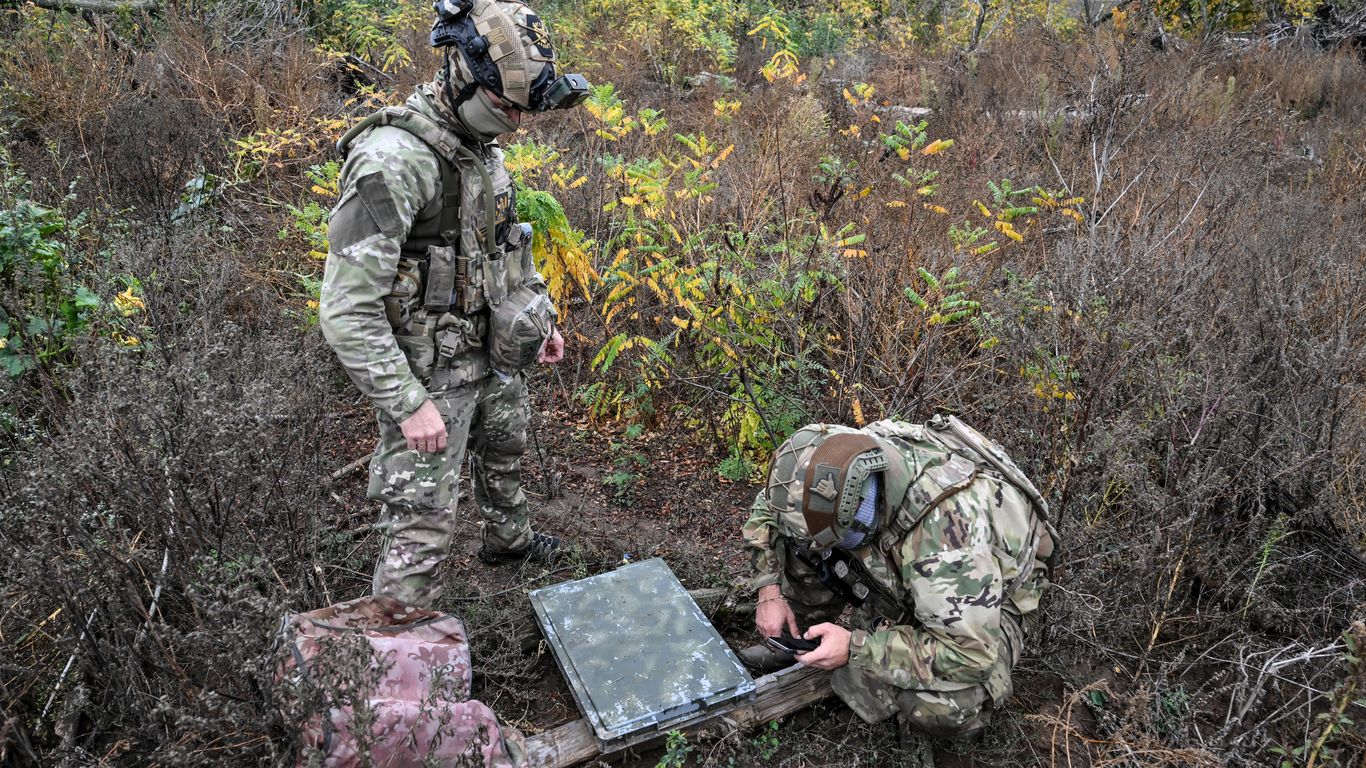
- Field Verification: Ukraine’s Ministry of Defense announced that terminal data transfer rates now exceed 161 km/h in operational field testing, allowing reconnaissance units to resume intercepting Russian loitering munitions (Axios).
- Congressional Scrutiny: The restoration follows immediate pushback from Capitol Hill, where a bipartisan coalition of lawmakers sent an urgent inquiry to Defense Secretary Pete Hegseth warning that satellite bandwidth caps were directly endangering Ukrainian defensive positions (The Hill).
- Sovereign Contingencies: Spurred by the service disruption, Ukrainian defense officials signed a letter of intent to procure dedicated sovereign communications satellites developed jointly by ICEYE and Nokia (Breaking Defense).
Infrastructure Gridlock: Lawmakers and Regulators Target AI Data Center Energy Demand
- Federal Tax Proposals: Sen. Ron Wyden introduced legislation to impose targeted taxes on commercial data centers while directing revenues to assist workers and communities burdened by resulting energy cost spikes (Roll Call).
- Generation Mandates: President Trump voiced support for administrative measures that would force data center operators to generate their own off-grid electricity rather than drawing heavy baseload power from municipal utilities (Reason).
- Municipal Pushback: New York City Mayor Zohran Mamdani warned that unregulated server farm expansion threatens state emissions goals and strains metropolitan stormwater and cooling infrastructure (Mother Jones).
 The Radar
This Week in Congress & Capitol Hill Watch
- Chamber Voting Status: The House is not currently voting, with its last recorded roll call held on September 16 (38 days ago), and its committee calendar remains empty; the Senate is likewise not voting, with no recorded floor votes in the current window.
- Prior Floor Enactments: Before entering the current recess, the House passed S. 2403, the Retire through Ownership Act (Clerk of the House), alongside H.R. 9497, the Water Resources Development Act (Clerk of the House), and H.R. 9340, the Ratepayer Protection Act (Clerk of the House).
- Roll Call Absences: Across the final 14 House roll calls in mid-September, Representatives Neal Dunn (R-FL), John Garamendi (D-CA), Cory Mills (R-FL), Tom Tiffany (R-WI), and Steve Womack (R-AR) missed all 14 votes (100% absence rate), with the official roll call record showing no documented reasons for their absences (Clerk of the House).
- Member Legislation: Rep. Brian Fitzpatrick filed legislation seeking to overturn presidential waivers that permitted Russian diesel imports (Roll Call), while Rep. Randy Fine stated he will introduce an expulsion resolution against Rep. Ilhan Omar if an active federal probe finds statutory violations (The Hill).
 US Politics & Election Watch

- Alaska Senate Lawsuit: The Department of Justice filed a federal lawsuit seeking to halt the certification of Alaska's Senate race if incumbent Republican Sen. Dan Sullivan is defeated by Democrat Mary Peltola, with President Trump confirming he ordered the legal action (PBS NewsHour; The Hill).
- Battleground Tariff Relief: President Trump signed an executive proclamation exempting specific
 Canadian forestry and agricultural imports from his 50% tariff regime to bolster Sen. Susan Collins in her competitive race against Democrat Troy Jackson in Maine (White House; PBS NewsHour).
- Early Voting Surge: North Carolina election officials reported more than 1.2 million accepted early ballots, representing a 37% volume increase compared to the identical point in the 2022 midterm elections (The Hill).
Ukraine War & Frontline Watch
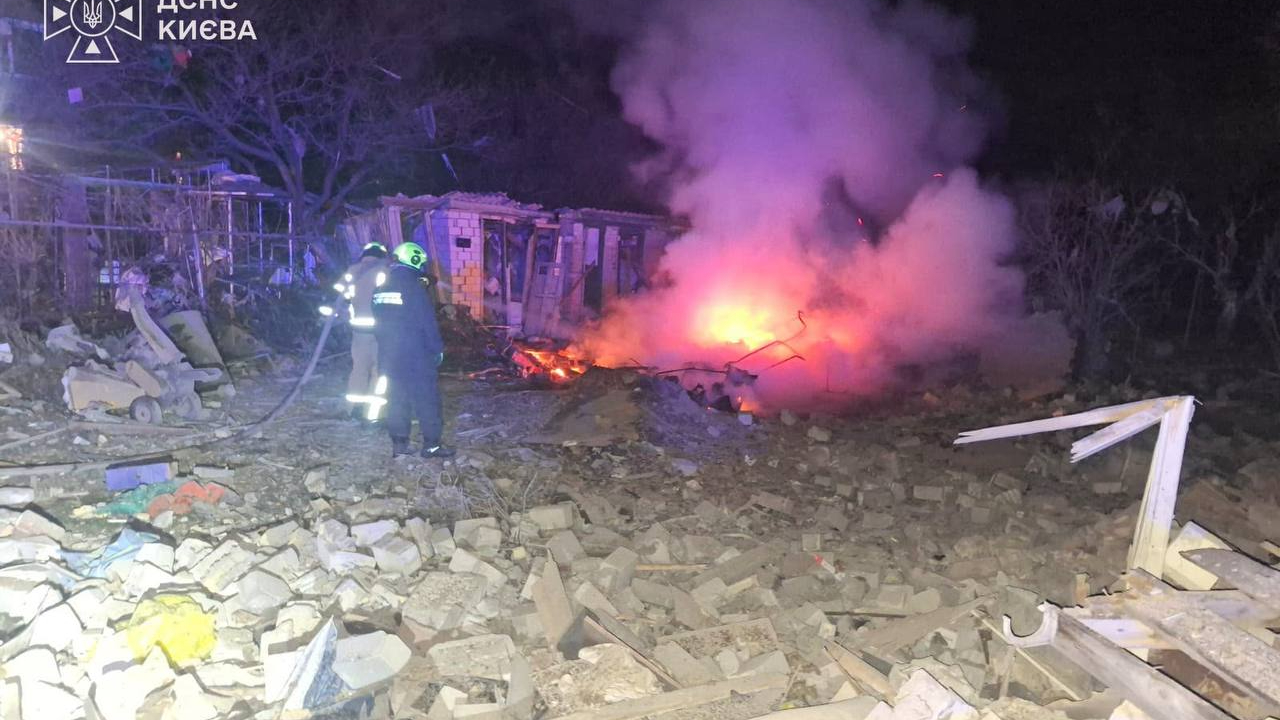
- Oleshky Ceasefire: Moscow and Kyiv agreed to a localized ceasefire in occupied Oleshky, Kherson Oblast, to allow emergency deliveries of food and medical supplies to isolated residents alongside the release of 270 captives, including American teacher Stephen Hubbard (The Moscow Times; Euromaidan Press).
- Deep Industrial Strikes: Ukrainian long-range drones struck the Tolyattikauchuk synthetic rubber plant in Russia's Samara region—a key production facility for solid rocket propellant components—while striking a military aircraft at Yeysk airfield in Krasnodar (NoelReports; WarTranslated).
- Air Defense Depletion: President Volodymyr Zelensky stated Ukraine received only 24 Patriot interceptor missiles from the United States over the past three months, contrasting with an operational requirement of 350 interceptors per month to counter Russian barrages (Ukrainska Pravda).
 Iran, Hormuz & Middle East Conflict Watch
- Targeting Warning: A declassified intelligence memo from Director of National Intelligence Jay Clayton warned Secretary of State Marco Rubio that Iranian-backed plots to target American diplomats and personnel in the Middle East have substantially increased and reached advanced planning stages (Axios; The Hill).
- Red Sea Missile Interceptions:
 Saudi air defense units intercepted two ballistic missiles launched by Iranian-aligned Houthi forces toward Taif and the industrial port of Yanbu on the Red Sea coast (Middle East Eye).
- Tanker Charter Records: Leasing costs for crude tankers traversing Pacific routes approached a record $80 million per voyage, threatening to drive American oil shipments to Asian markets down to seven-year lows as maritime operators price in persistent Gulf security risks (gCaptain).
 Macro & Monetary Policy
- Debt and Yield Expansion: Total U.S. National Debt rose $30.70 billion in 24 hours to reach $40.44 trillion ($40,444,342,709,389.15) (U.S. Treasury), as 10-year Treasury yields climbed 3 basis points to 4.99% and 30-year yields rose 3 basis points to 5.32%, narrowing the yield curve spread to +33 basis points (U.S. Treasury).
- Rate Decision Horizon: The Federal Reserve policy target remains held at 3.75%–4.00%, with the Effective Federal Funds Rate at 3.88% and SOFR at 3.90% (Federal Reserve Bank of New York), just 4 days ahead of the October 28 FOMC interest rate decision (Federal Reserve Board).
- Commodities and Currency: Gold spot prices fell 1.29% on the day to $4,007.90 per ounce, Brent crude traded at $111.70 per barrel, and the USD/JPY exchange rate hovered at ¥156.81, reflecting ongoing volatility across cross-border carry trades (Mohamed El-Erian).
- Housing Benchmark Shifts: Freddie Mac reported the 30-year fixed mortgage rate declined 8 basis points to 7.32% (FRED), while the 15-year fixed rate fell 3 basis points to 6.68% (FRED) against a median sales price of $410,700 (FRED).
 White House Watch: Trump, the Cabinet & Family Business
- Alaska Gas Venture: A Russian energy corporation moved secretly to acquire an equity stake in a major Alaska natural gas project during negotiations involving administration emissaries Steve Witkoff and Jared Kushner, causing the U.S. operator’s chief executive to resign (The New York Times).
- Republika Srpska Advisory: Senior Trump advisers Chris LaCivita and James Blair donated hundreds of thousands of dollars received for advising the pro- Russian leadership of Republika Srpska to the Trump presidential library, after which the president dismissed ethics concerns (The New York Times via Ken Vogel).
- Russian Fuel Shipments: Russian Deputy Prime Minister Alexander Novak announced that three tankers carrying Russian diesel are sailing for North American ports under a six-month Treasury sanctions waiver intended to curb pre-election retail fuel prices (The Moscow Times).
 Global Dynamics

 French Mobilization: French authorities deployed 70,000 police officers and gendarmerie across major metropolitan centres to prevent widespread arson and civil unrest ahead of planned nationwide protests (The New York Times).
 Brazil Presidential Debate: President Luiz Inácio Lula da Silva and Senator Flávio Bolsonaro concluded their final televised debate on TV Globo ahead of Sunday's runoff election, with the latest Datafolha survey showing both candidates deadlocked at 50% of valid votes (MercoPress).
 Kenya Disasters: A multi-story commercial building under construction collapsed in Nairobi's Eastleigh district, trapping at least seven people (BBC World News), while Kenya recorded its second Ebola fatality, prompting
 Nigerian officials to impose emergency screening protocols at all national borders (Premium Times / AllAfrica).
 Tech & Trade Rivalries

- Kim Visits
 Beijing:
 North Korean leader Kim Jong-un crossed the border via a newly constructed bridge to arrive in China for his first bilateral summit in over a year (The New York Times).
- Submarine Technology Transfers: Russian naval defense contractors transferred non-nuclear submarine design documentation and acoustic test materials to China to deepen bilateral defense production (Militarnyi), while AUKUS partners accelerated testing of the 34-foot Hadalus-XL autonomous undersea vehicle in San Diego (USNI News).
- Outbound Capital Bans: The U.S. Treasury Department proposed formal administrative rules restricting outbound American capital from investing in advanced artificial intelligence, supercomputing, and microelectronics within China, Russia, and North Korea (PBS NewsHour).
 Weather Desk: Today's Forecast Against the Record

 Dakar, Senegal
 High 32.8°C (91°F) / Low 27.6°C (82°F) • Overcast
 • Precip Risk: 0%
 NASA VIIRS, 23 October 2026 Churchill, Canada High 3.2°C (38°F) / Low 1.4°C (35°F) • Slight Snow Showers
 • Precip Risk: 100% NASA VIIRS, 23 October 2026
 Edinburgh, UK High 10.9°C (52°F) / Low 4.3°C (40°F) • Moderate Rain
 • Precip Risk: 100% NASA VIIRS, 23 October 2026
 On This Day: October 24, 2026
 Observance: Food Day, an annual national observance founded in the United States to promote sustainable agricultural practices and healthy nutrition.
 Notable Birthdays:
- 1989: PewDiePie (Felix Kjellberg),
 Swedish online creator and YouTube personality.
- 1990: İlkay Gündoğan,
 German international association football midfielder.
- 1996: Jaylen Brown, American professional basketball player and NBA Finals MVP.
- 1989: PewDiePie (Felix Kjellberg),
 Historical Milestones:
- 1931: The George Washington Bridge, spanning the Hudson River between Manhattan and Fort Lee, New Jersey, was dedicated before opening to motor vehicle traffic.
- 1945: The Charter of the United Nations officially entered into force after ratification by the permanent members of the Security Council and a majority of signatory nations.
- 1975: Ninety percent of Iceland’s female population went on strike during the 1975 Icelandic women's strike to protest unequal wages and discriminatory employment conditions.
 The American Experience: Did You Know?
 The Subterranean Pneumatics of Manhattan's Mail Tubes
 The History Desk:
 Cities & Infrastructure
The Sunken Palaces: How Justinian Fortified Constantinople’s Water Against Siege Why today: As NPR reports this morning that Iranian-backed Houthi forces have severed water supplies to the besieged
 Yemeni city of Taiz, Justinian’s cisterns demonstrate how urban survival in contested territory has always turned on engineered water resilience.