Spaceship: Musk Restores Ukrainian Starshield Speeds After Satellite Throttling Dispute
About this newsletterBeta
Radical Relay is a daily brief on markets, geopolitics, and Washington, sent every morning before the open. Subscribe free.
Radical Relay is in beta: sections and formatting are still changing, and a reply saying what looks wrong is the most useful thing a reader can send. Already a reader? Forward this to someone who would use it.
 The Big Picture

 Ukrainian military units regained full connectivity after Elon Musk confirmed SpaceX lifted speed caps on the Pentagon-funded Starshield satellite network, following allegations that Kyiv breached terms of service by pairing terminals with strike drones. In the Middle East, Riyadh International Airport resumed flights after a two-week closure triggered by Houthi missile barrages, even as super-tanker charter rates hit $80 million on Gulf Coast-to-Asia routes due to Persian Gulf war disruptions. Domestically, the Department of Justice initiated preemptive legal challenges against Alaska's Senate certification just nine days before the November 3 midterm elections, drawing an immediate motion to intervene from voting rights organizations.
Key Markets & Economy · Conflict & Security · Washington & Politics · Energy & Climate · Tech & Science · World — link colours follow these themes throughout
 MACRO PULSE & PRICE TRACKER |
$40.44T
$118,954 per citizen • $299,588 per taxpayer
|
3.75% – 4.00%
EFFR: 3.88% • Standard Policy Decision
|
||||||||
Safe Haven & Central Bank Reserves
|
▬ 10Y ▬ 30Y • Spread +33 bps • flattening 1 bp on the day • was +29 bps on 23 Sep
|
||||||||
WTI: $103.27 • Brent 30D range $100–$113
|
Global Carry Trade & FX Liquidity
|
 US National Debt
 Gold (XAU/USD)
 Crude Oil & Hormuz
 USD / JPY (Yen)
 Trending Cycles
SpaceX Reasserts Drone Terms as Starshield Connectivity Recovers

- Musk Defends Bandwidth Caps: Elon Musk stated that SpaceX enforced contractual terms after identifying Ukrainian military forces using the Starlink network for offensive drone operations. The tech billionaire wrote that his firm closed an operational gap that Ukrainian forces had utilized for long-range targeting.
- Operational Restoration Confirmed: Ukrainian defense officials confirmed that in-motion transmission speeds returned to normal on Saturday morning after ten days of severe throttling that impaired front-line drone interceptions. Former Ukrainian defense adviser Serhii Sternenko pushed back against Musk's statement, arguing that commercial Starlink hardware cannot sustain high-velocity targeting and that the restrictions directly impacted Pentagon-contracted Starshield terminals.
Prospective 2028 Candidates Launch In-Person Campaigns at New  Mexico Matanza

- Southwestern Primary Positioning: Prospective 2028 presidential contenders gathered this weekend for the inaugural Fourth in the Nation Matanza Rally in New Mexico. The gathering was organized to test political messaging before an expanded Hispanic electorate and establish an early Western anchor ahead of the next presidential cycle.
- Cross-Party Roster: Both Republican and Democratic organizers used the traditional pork-roast event to gauge grassroots enthusiasm, as reported by Politico Playbook, framing the Southwestern stop as an alternative to early-state retail stops in Iowa and New Hampshire.
 The Radar
This Week in Congress & Capitol Hill Watch
- Chambers Remain in Recess: The House of Representatives last held roll call votes on September 16, 39 days ago, and has no committee hearings posted on its public calendar. The Senate is likewise not conducting floor votes and its committee docket shows no public business scheduled for the week.
- Final House Legislative Actions: Before entering the pre-election district work period, the House cleared several measures under suspension of the rules on September 16, including the passage of S. 2403, the Retire through Ownership Act (via Roll Call 314), and H.R. 9497, the Water Resources Development Act, which cleared the chamber as amended on Roll Call 313. Lawmakers also adopted H.J. Res. 213, disapproving an EPA environmental rule, on Roll Call 311.
- House Roll Call Attendance Records: Across the final 14 House roll calls conducted between September 15 and September 16, members maintained a 97.6% average participation rate, leaving roughly 10 of 433 seats empty per tally, according to official Clerk of the House records. Representatives Neal Dunn (R-FL), John Garamendi (D-CA), Cory Mills (R-FL), Tom Tiffany (R-WI), and Steve Womack (R-AR) each missed 14 of the 14 recorded votes (a 0% participation rate); the official record lists no specific reason for their absences.
 US Politics & Election Watch
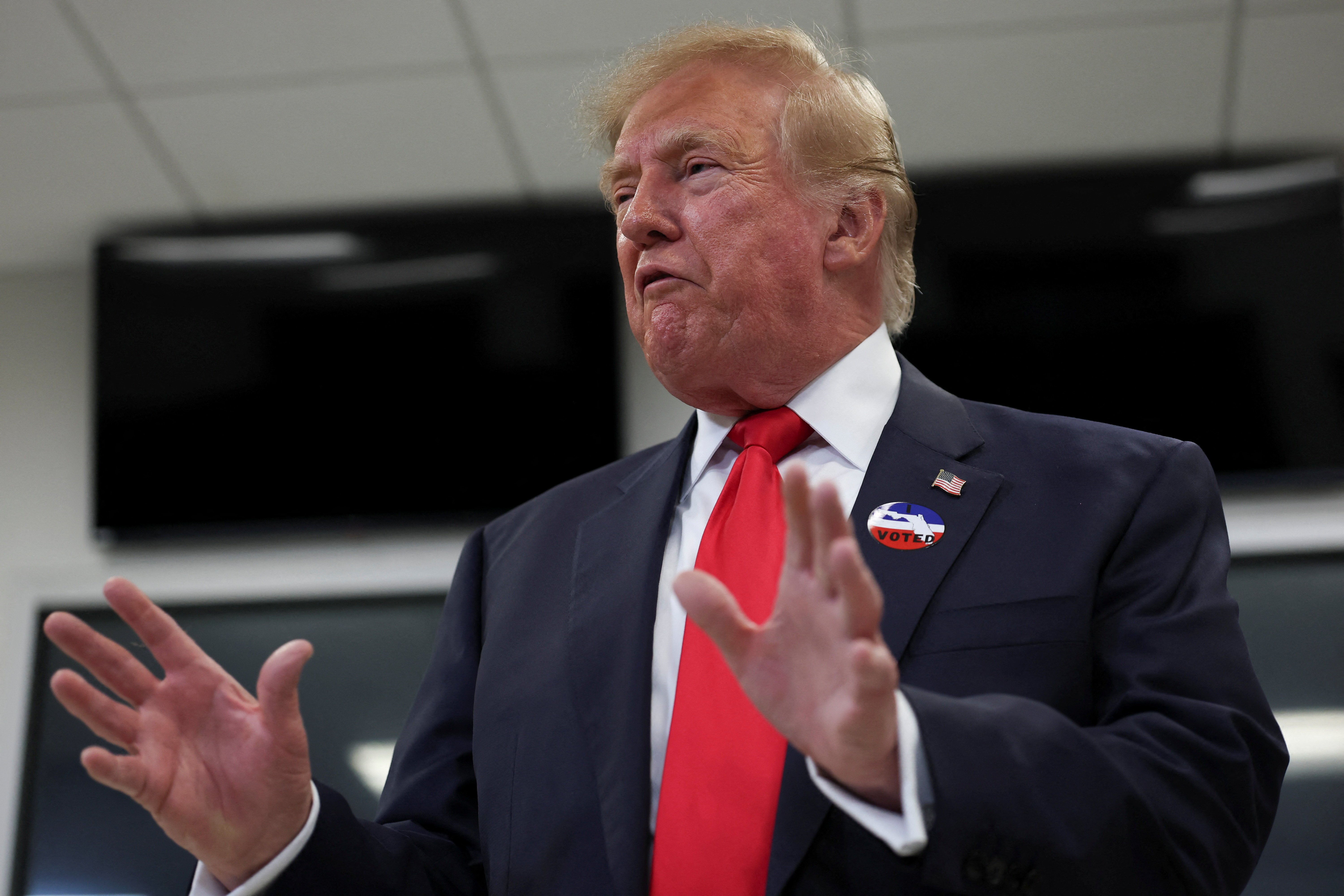
- Midterm Countdown Reaches Single Digits: The November 3, 2026 federal midterm elections are exactly 9 days away, with all 435 House seats, 35 Senate seats (including special elections in Florida and Ohio), and 36 governorships on the ballot. President Donald Trump cast his midterm ballot early in Florida on Saturday.
- Alaska Senate Lawsuit Draws Legal Challenge: Common Cause and the American Civil Liberties Union filed a motion to intervene against the Department of Justice after federal prosecutors sued Alaska over ballot design. The Justice Department is seeking to halt certification if incumbent Republican Senator Dan Sullivan loses, alleging voter confusion caused by independent candidate Dan Sullivan, a retired schoolteacher running on the same ballot, as reported by PBS NewsHour.
- Texas Senate Battleground Focus: Texas Republican nominee Ken Paxton is campaigning in South Texas against Democratic candidate James Talarico, working to protect Republican margins among Latino voters following a Fox News poll released Wednesday that showed a narrowing contest.
Ukraine War & Frontline Watch
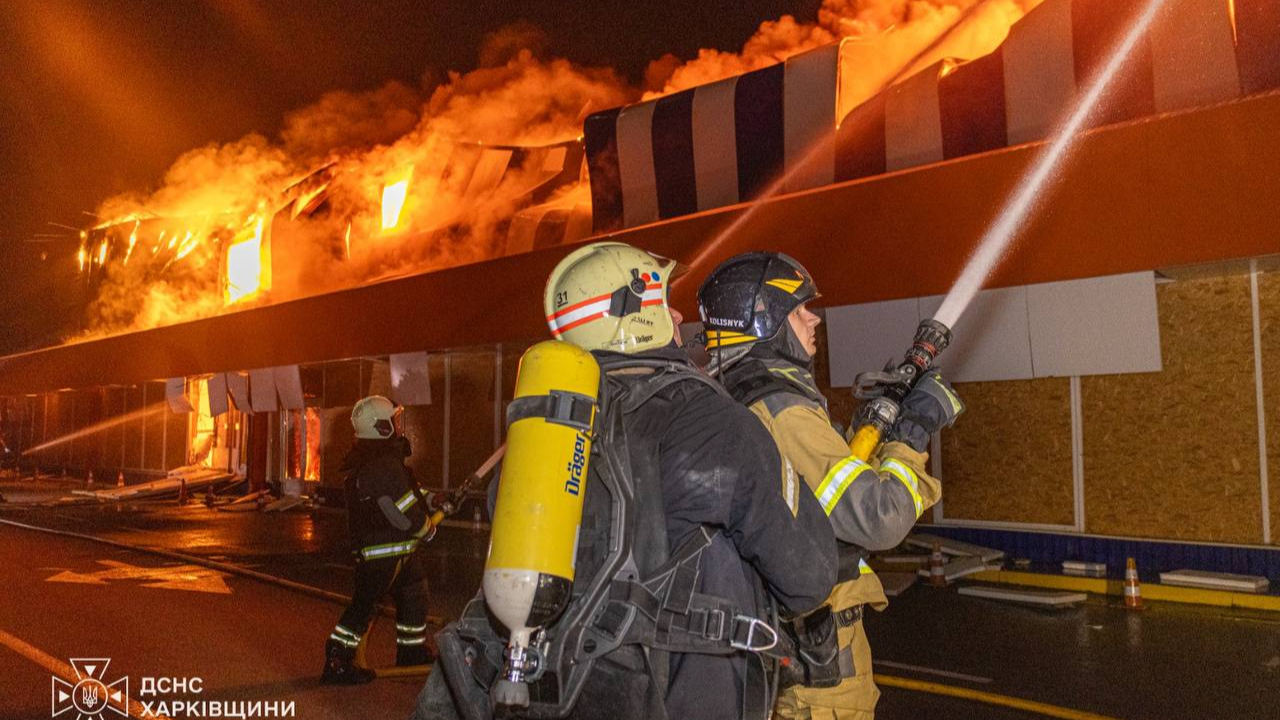
 Russian Strikes Pound Ukrainian Energy and Logistics: Ukrainian President Volodymyr Zelenskyy reported that overnight Russian missile and drone attacks struck a thermal power plant, electrical substations, coal mines, and a postal hub, prompting renewed appeals for Western air defense interceptors. Regional officials confirmed strikes killed four people and injured 14 in Dnipropetrovsk Oblast, while drone strikes in Kharkiv wounded four people, including three emergency responders.
- Deep Drone Operations Target Russian Fuel and Radars: Ukrainian defense forces targeted Russian early-warning installations, striking radar stations near Gostishchevo and Kurgannoye in Belgorod Oblast, according to the General Staff of the Armed Forces of Ukraine. Analysis from CyberBoroshno and NoelReports indicates that an earlier strike on the Tolyattikauchuk petrochemical plant in Samara hit two MTBE production units holding 335,000 tonnes of annual capacity used for high-octane gasoline and fuel additives.
- Diplomatic Signals from Moscow: Kremlin aide Yuri Ushakov stated that Moscow is prepared to resume trilateral discussions with the United States and Ukraine after November 4, though he emphasized that any initial talks would be preliminary and that European powers must participate.
 Iran, Hormuz & Middle East Conflict Watch
- Intelligence Warns of Regional Targeting: Director of National Intelligence Jay Clayton warned that Iran has reached advanced operational stages for strikes against American diplomatic and military personnel across the Middle East. Two Iranian officials speaking to The New York Times, cited by the Times of Israel, corroborated the posture, stating American assets are viewed as targets following joint US-
 Israeli strikes.
 Riyadh Airport Restarts as Air Defenses Engage: Commercial aviation resumed at King Khalid International Airport in Riyadh after a two-week suspension, following successful interceptions of Houthi ballistic missiles and drones launched from
 Yemen over the Saudi capital and southern border provinces.
- Tanker Costs and Fuel Spills Disrupt Maritime Lanes: Supertanker freight charges on the U.S. Gulf Coast to
 China trade route surged to unprecedented levels of up to $80 million per voyage due to war-risk insurance premiums and vessel diversions around the Persian Gulf. Concurrently, authorities in Ras Al Khaimah closed all public beaches following an offshore marine oil spill along the
 UAE coast.
 Macro & Monetary Policy
- Debt Expansion Ahead of FOMC Meeting: The U.S. national debt reached $40.44 trillion ($40,444,342,709,389.15) following a single-day increase of $30.70 billion, according to the latest figures from Treasury's Debt to the Penny dataset. The Federal Reserve's target rate sits at 3.75% to 4.00% (EFFR at 3.88% and SOFR at 3.90%), with the Federal Open Market Committee scheduled to deliver its policy rate decision on October 28, three days away.
- Yield Curve and Energy Price Pressures: The 10-year Treasury yield rose 3 basis points to 4.99%, while the 30-year yield reached 5.32%, leaving the 10Y/30Y yield curve spread at +33 basis points, according to official U.S. Treasury interest rate data. Elevated borrowing costs align with energy market strain: Brent crude trades at $111.70 per barrel and WTI crude at $103.27, reflecting ongoing supply risks in Middle Eastern transit corridors, while spot gold settled at $4,007.90 per ounce following a 4.14% weekly decline.
- Mortgage Rates Dip as Starts Stagnate: Freddie Mac's 30-year fixed mortgage rate decreased by 8 basis points to 7.32%, while the 15-year fixed rate settled at 6.68%, according to St. Louis Fed series data. St. Louis Fed housing data shows annualized housing starts fell 7.4% year-over-year to 1,221,000 units, alongside an 8.5-month inventory backlog of unsold new single-family homes.
 White House Watch: Trump, the Cabinet & Family Business
- Administration Confronts Alaska Election Process: President Donald Trump directed the Department of Justice to file suit against Alaska's state election division, seeking to preemptively block certification of the Senate race should incumbent Dan Sullivan fall behind, as reported by Politico. On Saturday, Trump publicly criticized Senator Lisa Murkowski over the dispute, asserting that the second candidate on the ballot is designed to siphon Republican votes.
- Hegseth Surrogacy Meets Procurement Questions: Secretary of War Pete Hegseth made cross-country campaign stops in Ohio and Wisconsin on his official "Arsenal of Freedom" tour to back Republican congressional candidates. Concurrently, budget reporting from Defense One reveals that Hegseth's newly announced autonomous warfare command, AUTOWARCOM, faces funding shortfalls due to stalled reconciliation legislation in Congress.
- White House Dismisses Inquiries on Iran Targets: During a press pool briefing, President Trump mocked a reporter asking about imminent military strikes on Iranian installations, rejecting claims from Tehran that American actions have derailed regional stabilization talks.
 Global Dynamics

- Mass Demonstrations Sweep
 France: Police in France arrested nearly 1,000 demonstrators during nationwide street clashes and strikes involving hundreds of thousands of participants protesting government economic policy.
 Brazil Runoff Decides Presidential Power: Brazilian voters head to the polls today in a tight presidential runoff contest between leftist incumbent Luiz Inácio Lula da Silva and right-wing challenger Flávio Bolsonaro, as covered by The New York Times. In the first round, Bolsonaro led with 47.03% of the vote against Lula's 45.1%, according to Latin America Reports.
 West Bank Crossings Closed for Israeli Vote: The Israel Defense Forces announced the closure of all West Bank crossings for Palestinian workers ahead of Tuesday's national election, while security forces in Hebron evicted residents and converted civilian structures into military posts, as documented by Al Jazeera.
 Markets & Strategy
- Bond Market Pauses Ahead of Policy Climax: The 10-year Treasury yield hovered near 4.99% while the 30-year yield held at 5.32%, keeping the curve spread at +33 bps as markets prepare for Wednesday's FOMC decision. Market strategists noted that major technology firms have largely front-loaded their corporate bond sales, granting the Treasury market temporary breathing room from private issuance competition.
- Oil Risk Premium and Currency Friction: Front-month Brent futures traded at $111.70 per barrel, driven by an elevated geopolitical risk premium tied to Middle East tanker bottlenecks, according to analysis on Econbrowser. In currency markets, the
 Japanese yen traded at ¥156.81 per dollar, gaining 0.63% over the past seven days as carry trades continue to unwind under high global interest rates.
 Weather Desk: Today's Forecast Against the Record

 Churchill, Canada
Forecast: the windiest day for this time of year in 30 years
 High 2.6°C (37°F) / Low -4.5°C (24°F) •
 Slight Snow Showers • Precip Risk: 100%
Today's forecast peak wind gust is 103.7 km/h, against a typical 43.4 km/h for this time of year.
 NASA VIIRS, 24 October 2026
 Edinburgh, UK
Forecast: the windiest day for this time of year in 30 years
High 9.8°C (50°F) / Low 7.6°C (46°F) •  Moderate Rain • Precip Risk: 100%
Today's forecast peak wind gust is 101.2 km/h, against a typical 48.4 km/h for this time of year.
NASA MODIS Terra, 25 October 2026  Aswan, Egypt
Forecast: the windiest day for this time of year in 30 years
High 35.2°C (95°F) / Low 24.2°C (76°F) • Mainly Clear • Precip Risk: 8%Today's forecast peak wind gust is 64.1 km/h, against a typical 32.0 km/h for this time of year.
NASA MODIS Terra, 25 October 2026 On This Day: October 25, 2026
 Observances:
 Romania celebrates Armed Forces Day to commemorate the 1944 liberation of the country's northwest territory during World War II.
 Notable Birthdays: Dominican baseball outfielder Juan Soto (1998), American Olympic figure skater Vincent Zhou (2000), and
 Hungarian footballer Dominik Szoboszlai (2000).
 History: In 1944, the celebrated submarine USS Tang sank in the Formosa Strait after being struck by its own malfunctioning circular-running torpedo; in 2001, Microsoft officially launched Windows XP for retail sale; and in 2022, Liz Truss concluded the shortest tenure in British history as prime minister after 49 days in office.
 The American Experience: Did You Know?
The 1952 Ad Campaign That Engineered the "Coffee Break"While Buffalo's Barcolo Manufacturing Company first gave factory mechanics paid pauses with free coffee in 1902, the routine became standard office doctrine through Madison Avenue marketing. In 1952, the Pan-American Coffee Bureau invested $2 million across radio, newspaper, and magazine spreads urging desk workers to "Give yourself a coffee break—and get what coffee gives to you." The slogan cemented the habit so rapidly that a 1956 National Office Management Association survey found 75% of American employers had written scheduled coffee intervals directly into corporate employment handbooks.
 The History Desk:
 The Islamic World & the Middle East
The Hejaz Railway and Desert Logistics Damascus to Medina, Ottoman Empire · 1900–1908
In May 1900, Ottoman Sultan Abdul Hamid II decreed the construction of the Hejaz Railway to connect Damascus with the holy cities of Medina and Mecca. Designed to bypass the British-patrolled Suez Canal and Red Sea maritime chokepoints, the 1,300-kilometer desert line was financed without foreign European loans through worldwide Islamic donations and stamp taxes. Overseen by  German chief engineer Heinrich August Meissner, workers laid narrow-gauge track across arid basalt plateaus, completing the link to Medina by September 1908. The railroad collapsed a grueling 40-day camel caravan into a four-day train voyage, dramatically tightening imperial administrative grip over the Arabian Peninsula until local Bedouin raids and World War I skirmishes severed the line.
Damascus with the holy cities of Medina and Mecca. Designed to bypass the British-patrolled Suez Canal and Red Sea maritime chokepoints, the 1,300-kilometer desert line was financed without foreign European loans through worldwide Islamic donations and stamp taxes. Overseen by German chief engineer Heinrich August Meissner, workers laid narrow-gauge track across arid basalt plateaus, completing the link to Medina by September 1908. The railroad collapsed a grueling 40-day camel caravan into a four-day train voyage, dramatically tightening imperial administrative grip over the Arabian Peninsula until local Bedouin raids and World War I skirmishes severed the line. Why today: As missile strikes from Yemen shut down Riyadh's civil aviation and push crude freight rates to record highs, the vulnerability of Arabian Peninsula transport infrastructure mirrors the century-old struggle to secure inland desert logistics against regional disruption.