Four-Point Play: Lula Clinches Fourth Term as Bolsonaro Challenges Narrow Loss
About this newsletterBeta
Radical Relay is a daily brief on markets, geopolitics, and Washington, sent every morning before the open. Subscribe free.
Radical Relay is in beta: sections and formatting are still changing, and a reply saying what looks wrong is the most useful thing a reader can send. Already a reader? Forward this to someone who would use it.
 The Big Picture

 Brazilian President Luiz Inácio Lula da Silva secured a historic fourth presidential term with 51.78% of Sunday's runoff vote, prompting conservative challenger Flávio Bolsonaro to demand the result be annulled over voting hour extensions.
 In Eastern Europe, Serbian President Aleksandar Vucic conceded defeat to a student-led anti-corruption coalition in Sunday's parliamentary election, concluding twelve years of nationalist rule. Across global commodity markets, European natural gas prices touched a four-year high as winter withdrawals began without
 Qatari liquefied natural gas shipments, while U.S. Central Command confirmed naval assets have escorted over 1.5 billion barrels of crude through the contested Strait of Hormuz.
Key Markets & Economy · Conflict & Security · Washington & Politics · Tech & Science — link colours follow these themes throughout
 MACRO PULSE & PRICE TRACKER |
$40.44T
$118,954 per citizen • $299,588 per taxpayer
|
3.75% – 4.00%
EFFR: 3.88% • Standard Policy Decision
|
||||||||
Safe Haven & Central Bank Reserves
|
▬ 10Y ▬ 30Y • Spread +33 bps • flattening 1 bp on the day • was +29 bps on 23 Sep
|
||||||||
WTI: $101.20 • Brent 30D range $100–$117
|
Global Carry Trade & FX Liquidity
|
 US National Debt
 Gold (XAU/USD)
 Crude Oil & Hormuz
 USD / JPY (Yen)
 Trending Cycles
María Corina Machado Returns to  Venezuela After Months of Exile

- Clandestine re-entry: Venezuelan opposition leader María Corina Machado returned to Caracas after ten months abroad and seven aborted entry attempts, appearing publicly during Mass at the Divina Pastora sanctuary in Lara state before entering the capital to challenge the interim government led by President Delcy Rodríguez.
- Mass street reception: Thousands of supporters assembled along Caracas thoroughfares to greet Machado, who had fled the country on a speedboat earlier this year, as documented by Al Jazeera and the BBC.
European Natural Gas Hits Four-Year Peak on Winter Supply Deficits
- Storage depletion fears: The
 Dutch Title Transfer Facility front-month contract rose 2% at the open in Amsterdam on Monday, extending a 7% weekly advance as heating withdrawals commenced without resume dates for Qatari LNG deliveries.
- Geopolitical transit premiums: Sustained naval conflicts across Persian Gulf and Red Sea chokepoints continue to redirect tanker traffic, compounding European inventory shortfalls tracked by energy analyst Rachel Ziemba in Weaponized Economy.
 The Radar
This Week in Congress & Capitol Hill Watch
- Chamber voting hiatus: The House is not currently voting, with its last recorded roll call occurring 40 days ago on September 16, when members cleared S. 2403, the Retire through Ownership Act, under a suspension of the rules.
- House member attendance: House floor participation averaged 97.6% across its last 14 roll calls on September 15–16, with an average of 10 empty seats per vote, according to the House Clerk. Dunn (R-FL), Garamendi (D-CA), Mills (R-FL), Tiffany (R-WI), and Womack (R-AR) missed 14 of 14 votes (100% missed share); the official roll call record does not show reasons for their absences.
- Senate legislative status: The Senate is not currently voting, with no recent roll call recorded and no committee business scheduled in the current window.
 US Politics & Election Watch
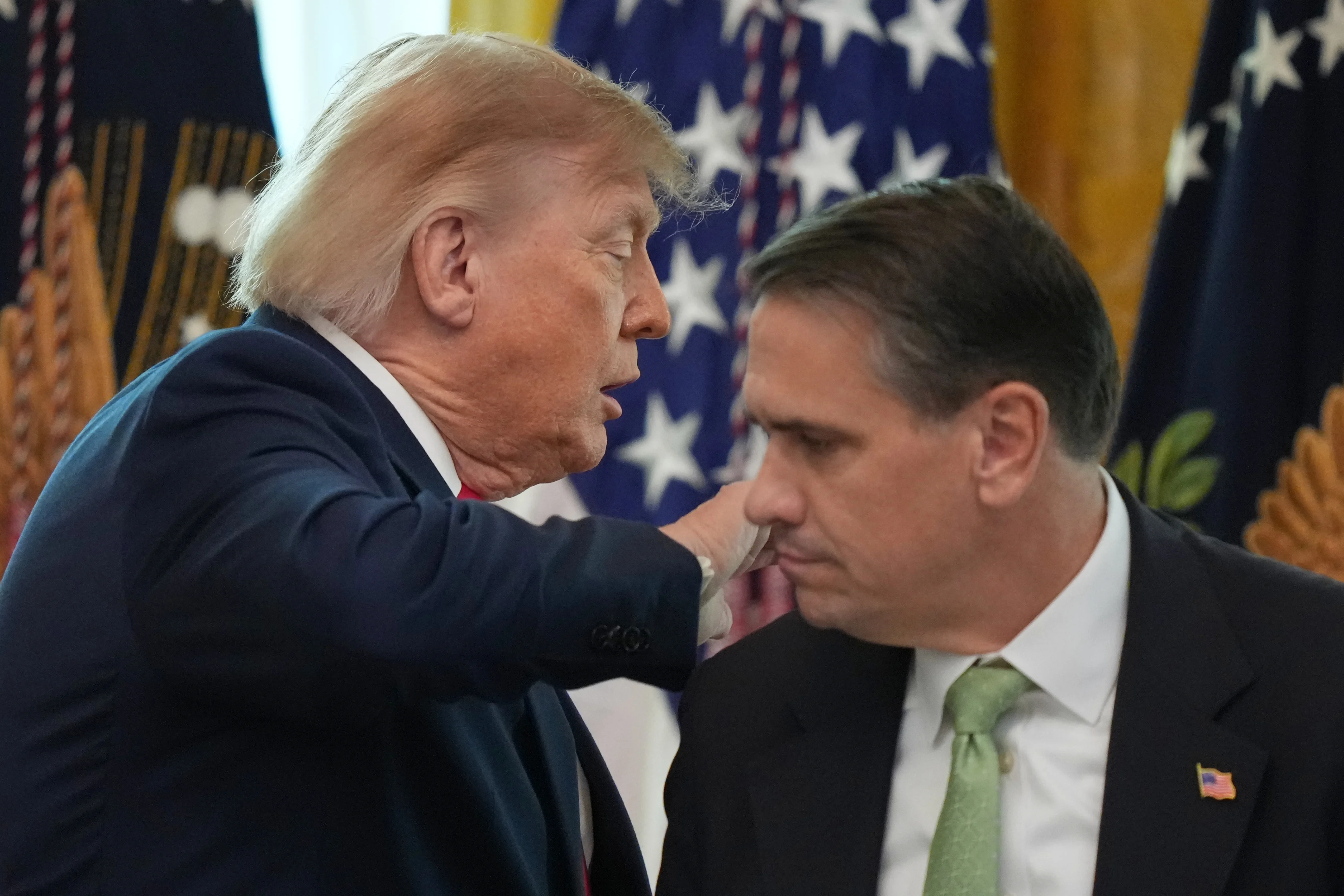
- Midterm calendar countdown: The November 3, 2026 midterm election stands exactly eight days away, with all 435 House seats, 35 Senate seats, and 36 governorships on the national ballot.
- Ninth Circuit mail-in ballot hearing: A Ninth Circuit federal appeals panel voiced jurisdictional skepticism during emergency Sunday oral arguments regarding the Justice Department’s request to sequester 20,000 mail-in ballots in California, as detailed by Law Dork and legal reporter Ricky Parloff.
- Alaska legal dispute and candidate crash: Attorney General Todd Blanche defended a federal lawsuit seeking to block Alaska Senate election certification during a televised interview with NPR, while Democratic nominee Mary Peltola and her family received medical treatment for minor injuries sustained in an Anchorage car crash, according to PBS NewsHour.
 Ukraine War & Frontline Watch
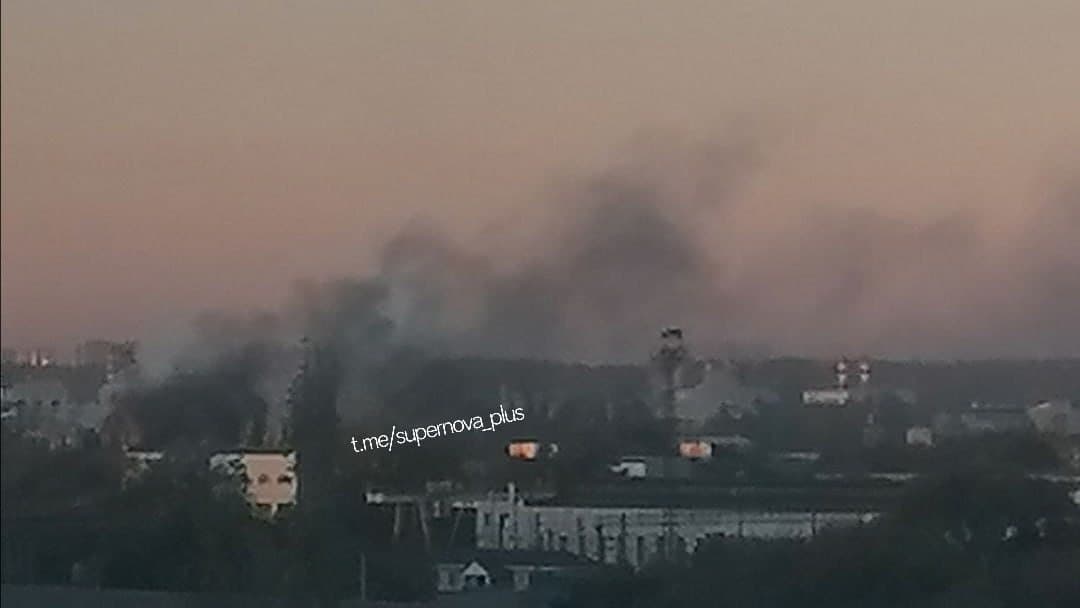
- Industrial drone strike on Voronezh: Ukrainian long-range drones struck the Voronezh Aircraft Production Association plant and the Voronezhsintezkauchuk synthetic rubber plant overnight, killing two people and injuring 17, according to The Moscow Times and Militarnyi.
- Rolling grid outages: Ukrenergo enforced emergency power outage schedules across six oblasts following
 Russian missile and drone barrages against electrical substations, reported Ukrainska Pravda.
- Trilateral talk prerequisites: President Volodymyr Zelensky stated Ukraine will demand mutual cessations of strikes on energy infrastructure and commercial Black Sea shipping during proposed November trilateral talks, rejecting any Russian demands for military restrictions, per WarTranslated.
 Iran, Hormuz & Middle East Conflict Watch
- Naval tanker convoys: U.S. Central Command Commander Adm. Brad Cooper announced that U.S. forces have assisted more than 3,000 commercial vessels in moving 1.5 billion barrels of oil through the Strait of Hormuz since the onset of the conflict, as reported by OilPrice.com.
- Houthi missile barrage: Houthi forces launched 12 ballistic missiles and two drones targeting
 Saudi Arabia's East-West pipeline pumping stations and Riyadh airport, according to operational summaries from Al-Monitor and the Institute for the Study of War.
- Persian Gulf oil spill:
 European Union Copernicus satellite imagery confirmed an expanding crude slick from a struck tanker off the
 United Arab Emirates coastline, forcing municipal authorities to close commercial beaches, per Al-Monitor.
 Macro & Monetary Policy
- Debt trajectory and yield shifts: Total U.S. national debt expanded by $30.70 billion in 24 hours to reach $40.44 trillion ($299,588 per taxpayer), according to the U.S. Treasury, while 10-year Treasury yields rose 3 bps to 4.99% and 30-year yields reached 5.32%, leaving the curve spread at +33 bps (U.S. Treasury).
- FOMC countdown and FX carry trade: The Federal Reserve convenes its policy meeting in two days on October 28 with the target range set at 3.75%–4.00% and the effective Fed Funds rate at 3.88% (Federal Reserve), as spot USD/JPY traded at ¥157.35 amid ongoing currency carry trade unwinding.
- Commodities and mortgage rates: Spot gold traded at $4,028.20 per ounce, Brent crude held at $110.12 per barrel, and Freddie Mac 30-year fixed mortgage rates slipped 8 bps to 7.32%, while September housing starts registered an annualized 1,221,000 units, according to FRED.
 White House Watch: Trump, the Cabinet & Family Business
- Michigan campaign rhetoric: President Donald Trump escalated attacks against Michigan Democratic Senate nominee Abdul El-Sayed at weekend rallies, questioning his national loyalty and security record, reported NPR and PBS NewsHour.
- Balkans venture backlash: Street demonstrations that contributed to Serbian President Aleksandar Vucic's election concession were initially catalyzed by public opposition to a luxury hotel development planned in Belgrade by Jared Kushner's Affinity Partners, noted investigative reporter Eric Lipton.
- Kennedy Center records filing: A federal court filing concerning proposed operational changes at the Kennedy Center disclosed that Trump has maintained near-constant communication with center management directly and through Commerce nominee Howard Lutnick, according to PBS NewsHour.
 Global Dynamics

- Lula wins fourth presidential term: Incumbent Brazilian President Luiz Inácio Lula da Silva secured 51.78% of the runoff vote over conservative opponent Flávio Bolsonaro (48.22%), who announced he will seek to annul the result due to judicial extensions of polling hours, as reported by MercoPress.
- Serbian president concedes defeat: Aleksandar Vucic conceded defeat in Serbia's parliamentary elections, extending congratulations to a student-led opposition movement and ending twelve years of governing power, reported the BBC.
 Algerian military deployment: Algeria began deploying troops into
 neighboring Niger, marking the nation's first foreign military deployment in 50 years and shifting its regional security posture, per Al Jazeera.
 Tech & Trade Rivalries
- Apache helicopter drone interception: The U.S. Army began training AH-64 Apache helicopter crews to intercept and shoot down one-way attack drones using 30mm onboard chain guns, according to The New York Times.
- Naval laser trials: The
 French Navy conducted live flight deck trials of the HELMA-P counter-drone laser weapon aboard the aircraft carrier Charles de Gaulle during mission La Fayette 26, reported Militarnyi.
- Bunker data infrastructure mandate: Russia's Ministry of Digital Development issued official directives instructing domestic operators to construct strategically vital data centers inside reinforced underground bunkers to defend against aerial drone strikes, as reported by Kommersant via Meduza.
 Weather Desk: Today's Forecast Against the Record
 Manaus, Brazil
Forecast: the windiest day for this time of year in 30 years
 High 31.3°C (88°F) / Low 24.8°C (77°F) • Slight Rain Showers
 • Precip Risk: 82%
Today's forecast peak wind gust is 59.8 km/h, compared to a typical 29.2 km/h for this time of year.
 NASA VIIRS, 25 October 2026 Oymyakon, Russia (EXTREME)
Forecast: a low of -25.3C (-14F)
High -17.5°C (0°F) / Low -25.3°C (-14F) • Foggy  • Precip Risk: 0%
Today's forecast low in Oymyakon is -25.3°C, accompanied by peak wind gusts of 5 km/h.
NASA MODIS Terra, 26 October 2026  Dallol, Ethiopia
Forecast: matching the warmest night for this time of year in 30 years
High 41.8°C (107°F) / Low 32.2°C (90°F) • Light Drizzle • Precip Risk: 25%Today's forecast low is 32.2°C, matching the local record against a typical 27.0°C for this time of year.
NASA MODIS Terra, 26 October 2026Weather data: Open-Meteo.com (CC BY 4.0).
 On This Day: October 26, 2026
 Notable Birthdays:
- 1984: Sasha Cohen, American figure skater and Olympic silver medalist.
- 1985: Monta Ellis, American professional basketball player.
- 1986: Schoolboy Q, American rapper and songwriter.
 History:
- 1977:
 Somali hospital worker Ali Maow Maalin developed smallpox symptoms, marking the last person known to contract the disease naturally.
- 1994:
 Israel and Jordan signed a bilateral peace treaty, settling mutual borders and establishing diplomatic relations.
- 2001: President George W. Bush signed the Patriot Act into law, significantly widening federal domestic surveillance and law enforcement powers.
- 1977:
 The American Experience: Did You Know?
 The April Afternoon Wrigley Field Put an Organ Behind Home Plate
On April 26, 1941, the Chicago Cubs became the first team in Major League Baseball history to accompany a game with live stadium organ music, hiring musician Roy Nelson to play a Hammond organ during a home contest against the St. Louis Cardinals. Although unseasonably cold Chicago weather forced the electronic console out of tune and prompted the Cubs to abandon the stunt after two games, the rival Brooklyn Dodgers permanently installed their own organist at Ebbets Field the following season. By the late 1960s, live organ accompaniment had become an engineered standard across American sports venues to orchestrate fan noise and fill half-inning downtime.
 The History Desk: Mediterranean & Near Eastern Antiquity
The Silver Treaty of KadeshFollowing decades of indecisive border conflicts across the Orontes River valley,  Egyptian Pharaoh Ramesses II and Hittite King Hattusili III concluded the earliest surviving international peace agreement. Inscribed on silver tablets and recorded in both Egyptian hieroglyphs at Karnak and Akkadian cuneiform at the Hittite capital of Hattusa, the pact established mutual non-aggression, a defensive alliance against regional rivals, and reciprocal extradition of political refugees. Confronting domestic unrest and the rising military threat of Assyria, neither empire possessed the logistical power to secure a decisive victory in
 Syria. The negotiated boundary line held for nearly a half-century, remaining intact until the broader disruptions of the Late Bronze Age collapse dismantled the Hittite state.
Egyptian Pharaoh Ramesses II and Hittite King Hattusili III concluded the earliest surviving international peace agreement. Inscribed on silver tablets and recorded in both Egyptian hieroglyphs at Karnak and Akkadian cuneiform at the Hittite capital of Hattusa, the pact established mutual non-aggression, a defensive alliance against regional rivals, and reciprocal extradition of political refugees. Confronting domestic unrest and the rising military threat of Assyria, neither empire possessed the logistical power to secure a decisive victory in Syria. The negotiated boundary line held for nearly a half-century, remaining intact until the broader disruptions of the Late Bronze Age collapse dismantled the Hittite state. Why today: As Ukrainian and Russian delegations prepare opening positions for proposed trilateral security talks over energy and maritime transit, the Kadesh accord demonstrates how protracted military stalemates compel warring empires to formalize non-aggression pacts.