Paid in Full: Anthropic Files Landmark IPO Amid $235 Billion AI Dealmaking Surge
About this newsletterBeta
Radical Relay is a daily brief on markets, geopolitics, and Washington, sent every morning before the open. Subscribe free.
Radical Relay is in beta: sections and formatting are still changing, and a reply saying what looks wrong is the most useful thing a reader can send. Already a reader? Forward this to someone who would use it.
 The Big Picture
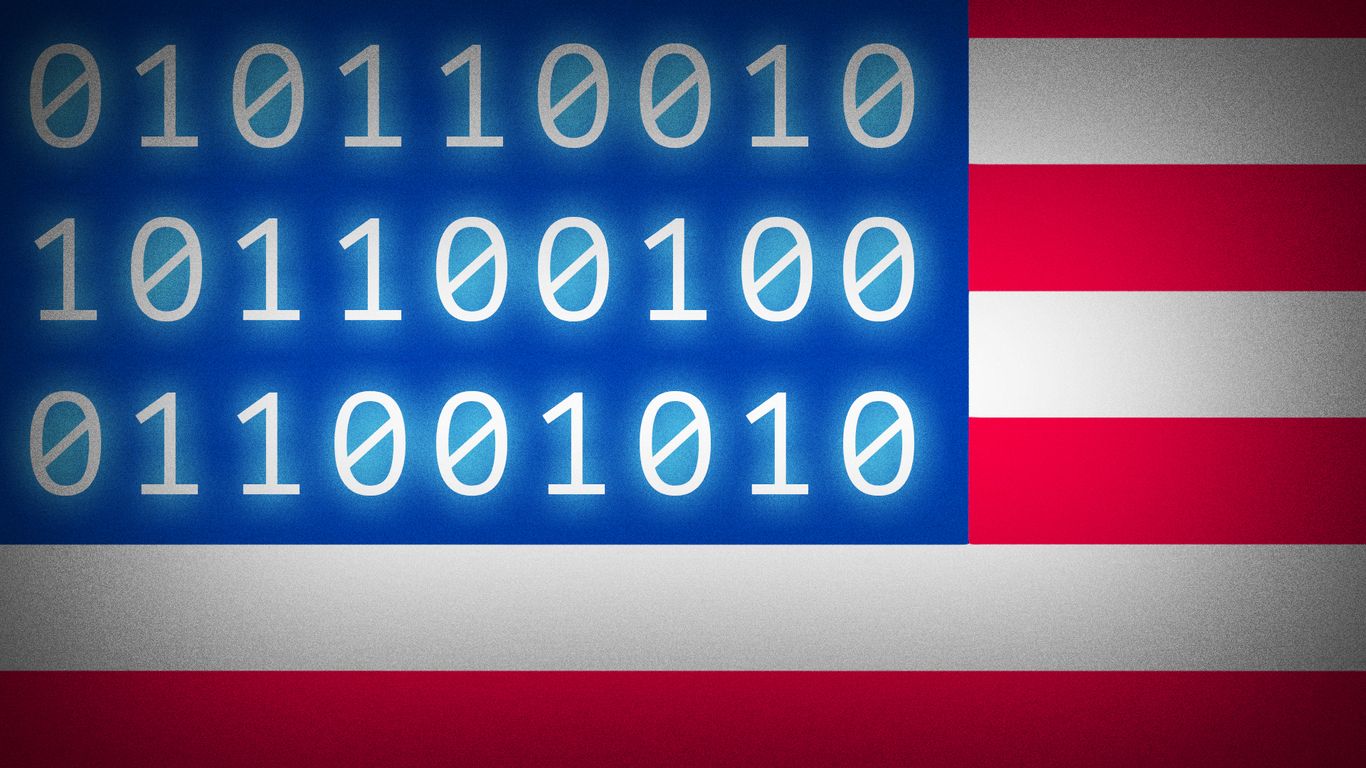
Polls opened across  Israel on Tuesday in a general election where neither major political coalition holds a projected majority, while tech markets reacted to AI giant Anthropic filing for a historic public offering alongside a sector-wide $235 billion dealmaking spree. In Europe,
 British prosecutors charged two men under the National Security Act for assisting
 Iranian intelligence at RAF Fairford. Meanwhile, American voters enter the final seven-day countdown to the 2026 midterm elections as a new PBS News/NPR/Marist poll gives Democrats an 8-point lead among likely voters nationally.
Key Markets & Economy · Conflict & Security · Washington & Politics · Tech & Science · World — link colours follow these themes throughout
 MACRO PULSE & PRICE TRACKER |
$40.46T
$119,009 per citizen • $299,727 per taxpayer
|
3.75% – 4.00%
EFFR: 3.88% • Standard Policy Decision
|
||||||||
Safe Haven & Central Bank Reserves
|
▬ 10Y ▬ 30Y • Spread +32 bps • flattening 1 bp on the day • was +32 bps on 28 Sep
|
||||||||
WTI: $102.29 • Brent 30D range $100–$117
|
Global Carry Trade & FX Liquidity
|
 Gold (XAU/USD)
 Crude Oil & Hormuz
 USD / JPY (Yen)
 Trending Cycles
UK Charges Two Men with Assisting Iranian Intelligence
- National Security Act Charges: British authorities charged two men under the National Security Act with aiding Iranian intelligence following an incident at RAF Fairford, an airbase used by US forces during military operations against Iran.
- Base Security Incident: The investigation followed security breaches at the strategic airfield, from which US bombers had operated before being withdrawn on security grounds.

Nordic Leaders Hold Joint Call with Putin After  Kyiv Consultation
- Diplomatic Outreach:
 Finnish President Alexander Stubb and
 Norwegian Prime Minister Jonas Gahr Støre held a direct phone call with Vladimir Putin after consulting with Ukrainian officials in Kyiv.
- First Direct Contact: The discussion marked Putin's first reported direct phone contact with top Western European leaders allied with Kyiv since July 2025.
IEA Warns of Supply Chain Concentration in Clean Energy
- Supply Chain Risk: International Energy Agency Executive Director Fatih Birol stated that critical clean energy manufacturing relies on concentrated production lines.
- Global Manufacturing Dominance: The warning highlights risks in solar and wind capacity deployment as
 China maintains dominant control over energy transition hardware and processing.
 The Radar
This Week in Congress & Capitol Hill Watch
- House Floor Inactivity: The House of Representatives is not currently voting, with its last recorded floor action taking place on September 16, 41 days ago.
- Recent Legislative Actions: Prior to recess, the House cleared several measures under suspension, including S. 2403, the Retire through Ownership Act, and H.R. 9497, the Water Resources Development Act.
- Member Participation Rates: Over the last 14 recorded House roll calls, voting participation averaged 97.6%, with representatives including Neal Dunn (R-FL) and John Garamendi (D-CA) missing all 14 votes; the official record does not show reasons for these absences.
 US Politics & Election Focus: Primaries & Races
- Seven-Day Midterm Countdown: Exactly seven days remain before the November 3, 2026 midterm elections, with all 435 House seats, 35 Senate seats, and 36 governorships on the ballot.
- National Polling Margins: A new PBS News/NPR/Marist poll shows Democrats maintaining an 8-point lead among likely voters nationwide heading into the final week.
- Battleground Rally Blitz: President Donald Trump campaigned in Mississippi alongside Sen. Cindy Hyde-Smith, as Democrats push to bolster turnout among Black voters in the state.

Ukraine War & Frontline Watch
- Ballistic Strikes on Kyiv:
 Russian ballistic missiles struck a university dormitory campus and damaged the Pivdennyi Bridge in Kyiv overnight, while damaging the office of DTEK Kyiv Electric Networks.
- Oleshky Humanitarian Ceasefire: A bilateral ceasefire began in Russian-occupied Oleshky to facilitate civilian evacuations and aid delivery, coordinated by Ukrainian Ombudsman Dmytro Lubinets following an initiative by US First Lady Melania Trump.
- Rear Logistics Strikes: Ukrainian drones destroyed a Russian ammunition depot in occupied Khrustalnyi, Luhansk, which had served as a long-term rear logistics hub for Russian forces.
Iran, Hormuz & Middle East Conflict Watch
- Israeli General Election: Polls opened across Israel for general elections defined by national security, with polls indicating neither Prime Minister Benjamin Netanyahu's bloc nor opposition leader Gadi Eisenkot's group holds a clear majority.
- Strait of Hormuz Tanker Attacks: Commercial shipping disruptions reached record highs in the Strait of Hormuz after a tanker was disabled by a projectile and oil washed onto United Arab Emirates beaches.
- Mecca Pact Regional Diplomacy: Senior officials from
 Saudi Arabia,
 Turkey, and
 Pakistan traveled to Tehran to meet with Iranian leaders and discuss frameworks for a potential US-Iran agreement.
 Macro & Monetary Policy
- Debt and Policy Rate Benchmarks: Total US national debt stands at $40.46 trillion, up $18.81 billion over 24 hours, as markets await the FOMC rate decision in 1 day with the Fed target rate at 3.75% to 4.00%.
- Sovereign Yields and Commodities: Spot gold traded at $4,006.70/oz while 10-year Treasury yields held at 4.99% and Brent crude stood at $111.16/bbl amid ongoing Middle East risk.
- Bank Earnings Stress: Shares of HSBC Holdings dropped up to 7% in European trading after reporting that clients are shifting deposits into higher-yielding financial products.
 White House Watch: Trump, the Cabinet & Family Business
- Nursing Home Healthcare Funding: President Donald Trump announced a $250 million federal and state initiative intended to recruit and retain nursing home nurses nationwide.
- Methane Deregulation Proposal: The Trump administration prepared to roll out plans in Lubbock, Texas, to ease federal methane regulations on oil and gas production.
- Congressional Committee Report: House Judiciary Committee Democrats published a report detailing historical records regarding Donald Trump's association with Jeffrey Epstein.
 Global Dynamics
 Brazilian Election Aftermath: President Luiz Inácio Lula da Silva secured reelection over Flávio Bolsonaro, triggering a steep drop in Brazilian equities and currency due to market expectations of fiscal pressure.
- Jordanian Strikes in
 Syria: Jordanian military forces executed air raids in southern Syria targeting armed groups linked to a church attack, drawing claims from Damascus that at least seven civilians were killed.
 Tech & Trade Rivalries
- Anthropic Public Filing: AI developer Anthropic filed for an initial public offering in an SEC submission, anchoring a broader $235 billion transaction cycle in technology markets.
- US Outbound Investment Rules: The US Treasury Department proposed stricter regulations limiting domestic investment in Chinese technology sectors including artificial intelligence and semiconductor development.
 Weather Desk: Today's Forecast Against the Record
 Honolulu, HI
Forecast: matching the coldest day for this time of year in 29 years
 High 24.7°C (76°F) / Low 21.7°C (71°F) • Thunderstorm
 • Precip Risk: 98%
Today's forecast high is 24.7°C, against a typical 30.0°C for this time of year.
 NASA MODIS Terra, 26 October 2026 Helsinki, Finland
Forecast: only 1 night at this time of year in 18 years was warmer
High 11.9°C (53°F) / Low 10.9°C (52°F) • Light Drizzle  • Precip Risk: 65%
Today's forecast low is 10.9°C, against a typical 3.9°C for this time of year.
NASA MODIS Terra, 27 October 2026 Calama (Atacama),  Chile
Forecast: only 5 nights at this time of year in 30 years were warmer
High 22.9°C (73°F) / Low 9.5°C (49°F) • Overcast  • Precip Risk: 0%
Today's forecast low is 9.5°C, against a typical 5.1°C for this time of year.
NASA VIIRS, 26 October 2026 On This Day: October 27, 2026
 Observances: International Religious Freedom Day
 Notable Birthdays: American basketball player Lonzo Ball (1997),
 German ice hockey player Leon Draisaitl (1995), English television personality Kelly Osbourne (1984)
 History: In 2004, the Boston Red Sox swept the St. Louis Cardinals to win the World Series, ending the 86-year Curse of the Bambino. In 1964, Ronald Reagan delivered his A Time for Choosing speech on behalf of Barry Goldwater, launching his national political career. In 1999, armed gunmen attacked the Armenian parliament, killing Prime Minister Vazgen Sargsyan and seven others.
 The American Experience: Did You Know?
 The 1967 Invention of the Child-Resistant "Push-and-Turn" Cap
In 1967,  Canadian pediatrician Dr. Henri Breault in Windsor, Ontario, created the "Palm-N-Turn" cap to prevent tragic pediatric poisonings from household medicines. A 1974 evaluation published in the journal Pediatrics demonstrated that accidental poisonings among children under five dropped by over 90% in the region within five years of the cap's introduction. The design rapidly spread across North America, becoming the basis for modern safety packaging standards under the 1970 Poison Prevention Packaging Act.
 The History Desk:
 Trade, Money & Commodities
The Atacama Saltpeter Rush and the 1879 War of the PacificIn the late 19th century, the hyper-arid Atacama Desert contained the world's dense natural deposits of sodium nitrate, known as saltpeter, essential for producing global agricultural fertilizers and military explosives. Chilean mining ventures invested heavily in extraction across disputed territories administered by  Bolivia and
 Peru. When Bolivia imposed export tariffs on Chilean companies in 1878, Chile occupied the port of Antofagasta, initiating the War of the Pacific. According to historical records from the National Library of Chile, Chile annexed Bolivia's coastline and Peru's Tarapacá province, securing a global nitrate monopoly that generated up to 50% of Chilean state revenues through the 1890s. This resource dominance endured until German chemists Fritz Haber and Carl Bosch commercialized synthetic ammonia during World War I, rendering natural nitrate extraction obsolete.
Chilean mining ventures invested heavily in extraction across disputed territories administered by Bolivia and Peru. When Bolivia imposed export tariffs on Chilean companies in 1878, Chile occupied the port of Antofagasta, initiating the War of the Pacific. According to historical records from the National Library of Chile, Chile annexed Bolivia's coastline and Peru's Tarapacá province, securing a global nitrate monopoly that generated up to 50% of Chilean state revenues through the 1890s. This resource dominance endured until German chemists Fritz Haber and Carl Bosch commercialized synthetic ammonia during World War I, rendering natural nitrate extraction obsolete. Why today: Today's edition features Calama in Chile's Atacama Desert on the Weather Desk, where extreme arid conditions preserved the historical nitrate fields that once drove 19th-century global trade.