Somebody Told Me: Joint Staff Fires Senior US General Over Classified War Leaks
About this newsletterBeta
Radical Relay is a daily brief on markets, geopolitics, and Washington, sent every morning before the open. Subscribe free.
Radical Relay is in beta: sections and formatting are still changing, and a reply saying what looks wrong is the most useful thing a reader can send. Already a reader? Forward this to someone who would use it.
 The Big Picture
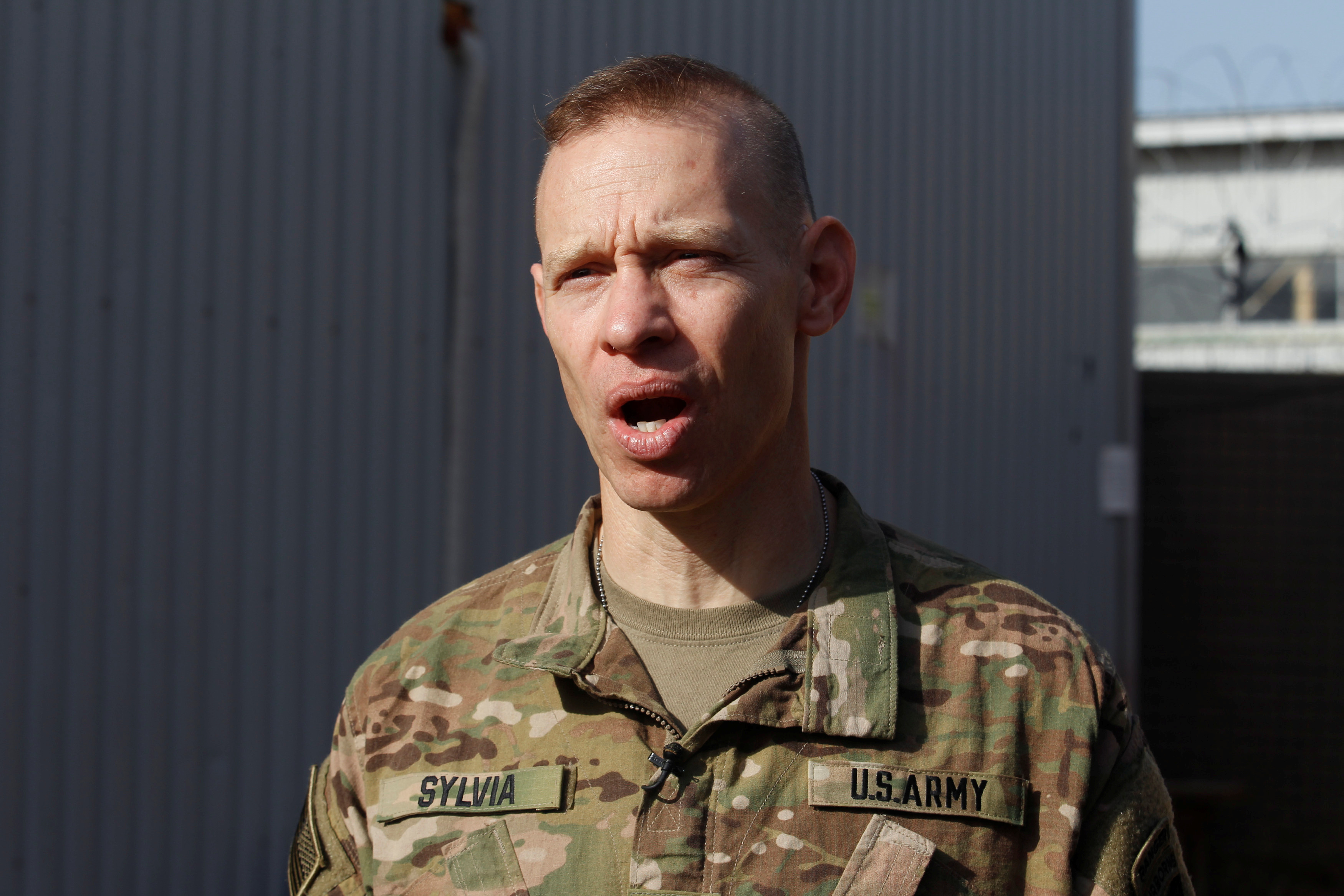
The Pentagon's Joint Staff removed senior military planner Lieutenant General Brett Sylvia from his post following allegations that he disclosed classified operational assessments to journalists. Cryptocurrency markets took a hit after a record $6.3 billion cyber theft against Binance forced stablecoin issuers to freeze billions in liquid assets. Middle East energy infrastructure faced renewed disruption as Houthi forces targeted Saudi Aramco refineries, coinciding with Qatari mediators landing in Tehran with a draft peace proposal. Across  southern Ukraine, an 80-hour ceasefire held as officials began an operation to evacuate 527 civilians from Russian-occupied Oleshky.
Key Markets & Economy · Conflict & Security · Washington & Politics · Energy & Climate · World — link colours follow these themes throughout
 MACRO PULSE & PRICE TRACKER |
Futures -1.06% since the close • 30D +0.90%
|
This morning, before the open • 30D range 14.8–20.0
|
||||||||
$40.55T
$119,268 per citizen • $300,378 per taxpayer
|
3.75% – 4.00%
EFFR: 3.88% • SEP / Dot Plot & Press Conf
|
||||||||
Safe Haven & Central Bank Reserves
|
▬ 10Y ▬ 30Y • Spread +34 bps • steepening 2 bps on the day • was +34 bps on 29 Sep
|
||||||||
WTI: $104.21 • Brent 30D range $100–$117
|
Global Carry Trade & FX Liquidity
|
 S&P 500
 VIX Volatility
 US National Debt
 Gold (XAU/USD)
 Crude Oil & Hormuz
 USD / JPY (Yen)
 ELECTION MARKETS |
Senate races closest to even, change since yesterday in points
| Kansas | Roger Marshall (R) 53% −8 · Adam Hamilton (D) 49% +9 |
| Iowa | Ashley Hinson (R) 54% ±0 · Josh Turek (D) 47% ±0 |
| Maine | Troy Jackson (D) 64% +3 · Susan Collins (R) 37% −2 |
| Alaska | Democratic party (D) 68% ±0 · Republican party (R) 31% −1 |
Biggest moves since yesterday
| MT-01 | Sam Forstag (D) 56%, up from 45% |
| PA-01 | Bob Harvie (D) 53%, up from 43% |
| SC-01 | Jenny Costa Honeycutt (R) 54%, down from 63% |
Traders' prices, not polls or forecasts: what a contract paying $1 if it happens costs, read by Know Your Candidate at 06:34 UTC on 30 October. Every race and candidate is there.
 Trending Cycles
Pentagon Relieves Joint Staff General for Leaking Classified Files
- Pentagon planner ousted: Lieutenant General Brett Sylvia was relieved of his Joint Staff duties following internal investigations that found he shared sensitive war intelligence directly with media outlets, according to reports confirmed by Defense News.
- Joint Staff internal review: Senior defense officials referred the case to military justice authorities as investigators trace unauthorized disclosures of tactical briefings on Ukraine, as detailed by Militarnyi.
- Command vacancy impacts: Sylvia's abrupt removal vacates a pivotal strategic planning seat on the Joint Staff during deliberations over global force posture and weapons distribution, reported by FDD.
 Russia's Oldest Independent Newspaper Ceases Operations
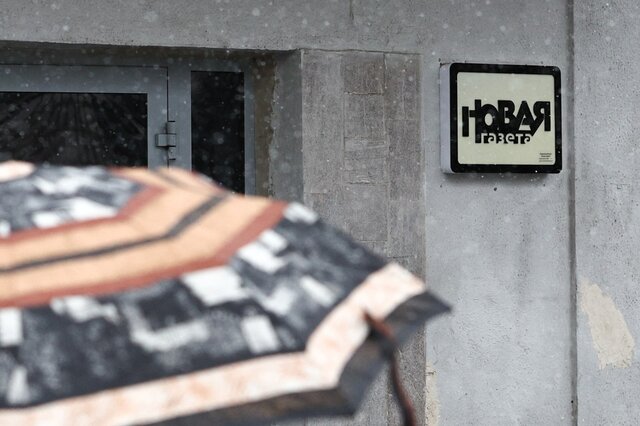
- Potapovsky Lane eviction: Novaya Gazeta announced the permanent shutdown of its Russian operations after state authorities forced the editorial board out of its central Moscow offices of 29 years, according to Meduza.
- Three decades of reporting ended: The closure ends 33 years of investigative journalism that saw six of its reporters murdered for their work, as documented by The Moscow Times.
- Museum shuttered: The eviction dismantled the preserved memorial office of assassinated investigative reporter Anna Politkovskaya, which had served as an archive of state human rights abuses.
African Soccer Authority Reverses Four-Year Tournament Cycle
- Biennial schedule restored: The Confederation of African Football reversed its earlier policy change to keep the Africa Cup of Nations on a two-year rotation rather than switching to a quadrennial model, as reported by Al Jazeera.
- Host tournament calendar set:
 Kenya, Tanzania, and
 Uganda remain slated to cohost the 2027 edition, with confirmed subsequent competitions scheduled for 2028, 2031, and 2033, according to AllAfrica.
- Commercial broadcast pressures: Member associations successfully lobbied against the four-year format, citing revenue dependencies on continental broadcasting rights and gate receipts.
 The Radar
This Week in Congress & Capitol Hill Watch
- Floor voting recess continues: The House has not held a roll call vote in 44 days since September 16, while the Senate has not recorded a floor vote in 30 days since September 30, with neither chamber posting active committee hearings during this period.
- September legislative records: Prior to departing Washington, the House passed S. 2403, the Retire through Ownership Act, under suspension of the rules (Roll Call 314), while the Senate voted to confirm Keith Sonderling as Secretary of Labor (PN1129) and rejected cloture on proceeding to H.R. 7008 to limit congressional stock ownership (Roll Call 253).
- Attendance ledger: Across the final 14 House roll calls, five members—Reps. Dunn, Garamendi, Mills, Tiffany, and Womack—missed 100% of the votes, with the clerk's record showing no explanation (House Clerk); in the Senate, Sen. Dan Sullivan missed 8 of 14 votes (a 57% missed rate) with no reason recorded (Voteview).
- Defense authorization fight: A bipartisan group of 119 lawmakers petitioned leadership to integrate the SHIPS for America Act into the FY2027 NDAA (gCaptain), as negotiations on the $1.15 trillion defense package stall over policy amendments (The Hill).
US Politics & Election Watch
- Midterm election countdown: Exactly four days remain until the November 3, 2026 midterm election, with all 435 House seats, 35 Senate seats (including special elections in Florida and Ohio), and 36 governorships on the ballot.
- California ballot injunction rejected: Federal Judge David O. Carter denied the Justice Department's emergency request to segregate up to 20,000 California ballots over alleged noncitizen registrations, concluding the demand would cause disruption (PBS NewsHour), prompting the DOJ to petition the Ninth Circuit (Chris Geidner).
- Alaska ballot stacking investigation: House Oversight Committee Chairman James Comer opened an inquiry into allegations that former Rep. Mary Peltola’s campaign recruited third-party spoiler candidates to draw votes away from incumbent Sen. Dan Sullivan (The Hill), while Rep. Robert Garcia urged waiting for state authorities to conclude their review (The Hill).
- Generational fraud perception gap: A CBS/YouGov survey recorded that 4% of Gen Z voters cite election fraud as a primary concern ahead of Tuesday, compared with 14% of millennials, 21% of Gen X, and 23% of baby boomers (The Hill).
Ukraine War & Frontline Watch

- Deep-strike artillery intercepts: Ukrainian forces hit a Russian Iskander-M ballistic missile launcher near Fatezh in Kursk Oblast while it was being reloaded over 100 kilometers from the border (NoelReports), alongside strikes against the Novokuybyshevsk refinery's primary distillation units in Samara (Euromaidan Press).
- Ceasefire corridor holds at Oleshky: Ukrainian and Russian authorities maintained a localized humanitarian ceasefire across the Dnipro River for more than 80 hours, enabling a 25-bus convoy to begin the evacuation of 527 residents from occupied Oleshky (Ukrainska Pravda, Meduza).
- Black Sea merchant vessel sunk: An unidentified naval drone struck and sank the
 Greek-operated container ship CONTSHIP JET off the coast of
 Bulgaria (gCaptain, Militarnyi), as the Ukrainian Navy reported destroying more than 1,000 Russian patrol vessels and boats via drones during 2026 (Ukrainska Pravda).
 Iran, Hormuz & Middle East Conflict Watch
- Refinery attacks in
 Saudi Arabia: Houthi military spokesperson Yahya Saree claimed responsibility for drone and missile attacks on Aramco facilities in Ras Tanura, Rabigh, and Abqaiq (OilPrice.com), while Saudi defenses reported intercepting a drone over the Mecca region that the Houthis denied launching (Al Jazeera, Al-Monitor).
- Tehran mediation push:
 Qatari officials returned to Tehran for US-coordinated peace talks with Iranian Supreme National Security Council member Mohsen Rezaei (Times of Israel), while NATO Secretary General Mark Rutte conferred with Saudi Defense Minister Khalid bin Salman regarding Red Sea freedom of navigation (Middle East Eye).
- Hormuz supply hedging: QatarEnergy contracted multi-year US LNG purchase agreements as a hedge against future export blockades in the Strait of Hormuz (gCaptain), as international dockworkers in 22 nations prepared walkouts to protest regional munitions shipments (Mother Jones).
 Macro & Monetary Policy
- Sovereign debt and borrowing costs: Total US national debt stands at $40.55 trillion ($40,551,054,852,362.41), down $31.22 billion over 24 hours to represent a taxpayer burden of $300,378 (US Treasury); the 10-year Treasury yield dropped 6 bps to 4.99% (Yahoo Finance 10Y) while the 30-year yield fell 3 bps to 5.33% (Yahoo Finance 30Y), steepening the curve spread to +34 bps.
- Policy rates and gold: The Federal Reserve maintains its target range at 3.75%–4.00% with the Effective Fed Funds Rate at 3.88% (NY Fed) 40 days ahead of the December 9 FOMC decision (Nick Timiraos), while spot gold dipped 0.94% to $3,993.40/oz on steady central bank accumulation.
- Energy benchmarks and currency tailwinds: Brent crude settled at $113.49/bbl and WTI at $104.21/bbl as ANZ raised its year-end Brent projection to $105 citing Hormuz transit constraints (OilPrice.com); USD/JPY held near ¥157.26 as the Bank of
 Japan kept policy rates unchanged (Mohamed El-Erian), while 30-year mortgage rates edged down 8 bps to 7.24% (FRED).
 White House Watch: Trump, the Cabinet & Family Business
- Campaign appearances scrapped: President Donald Trump canceled a scheduled weekend rally in Kansas for Republican Sen. Roger Marshall, reacting angrily when questioned by reporters regarding his campaign travel decisions (PBS NewsHour, Aaron Rupar).
- Corporate subpoenas planned: House Democrats assembled plans to issue subpoenas to corporate leaders who allied with administration initiatives should party leadership regain the majority next week (Axios), while Trump cautioned against efforts to impeach Defense Secretary Pete Hegseth (Talking Points Memo).
- Foreign policy and associate coordination: Trump spoke by phone with
 Salvadoran President Nayib Bukele to approve a 2,000-troop deployment into
 Haiti (Axios), while White House adviser Jason Miller coordinated charter flights transporting
 Brazilian politician Flávio Bolsonaro to Miami (Letters from an American).
 Global Dynamics

 French political center collapses: Persistent street violence and economic protests across France reduced polling support for centrist candidate Édouard Philippe, shifting voters toward far-right and far-left parties (New York Times, The Dispatch).
 Israeli coalition stalemate: Certified returns from the October 27 Knesset elections left Benjamin Netanyahu’s Likud down by one-sixth of its seats and short of a majority, prompting opposition head Yair Lapid to declare victory while coalition negotiations stall (Times of Israel, War on the Rocks).
- Brazilian defense allocations: Brazil presented a 147.68 billion reais ($27 billion) 2027 defense budget dedicating 73% of funding to military personnel salaries and pensions, leaving only 8.6% for equipment and procurement (MercoPress).
 Tech & Trade Rivalries

- Grid security appeals upheld: The Fifth Circuit Court of Appeals ruled that Texas maintains authority to block
 Chinese-owned solar facilities from connecting to the ERCOT power grid (Utility Dive), while American Electric Power expanded capital spending 30% to support a 10.4-GW data center development in Ohio (Utility Dive).
- Hardware supply chain compromise: Hardware wallet manufacturer Trezor warned customers of physical implants identified in Safe 5 devices distributed by third-party reseller CryptoBilis (The Block), while Intel tumbled as high memory-chip costs reduced enterprise laptop demand (MarketWatch).
- Cross-border tariff actions: The White House implemented expanded tariff duties against
 Canadian motor vehicles and related industrial parts (Federal Register), while
 German Chancellor Friedrich Merz pledged to address Asian trade partner concerns over European industrial protectionism (Al-Monitor).
 On This Day: October 30, 2026
 Notable Birthdays:
- 1981: Ivanka Trump, American businesswoman and former White House adviser.
- 1993: Marcus Mariota, American NFL quarterback and Heisman Trophy recipient.
- 1996: Devin Booker, American NBA All-Star guard.
 History:
- 1983:
 Argentina held its first democratic national election in a decade following the collapse of the military junta, electing Raúl Alfonsín as president.
- 1991: The Madrid Conference opened in
 Spain, bringing Israeli,
 Syrian,
 Lebanese, and joint Jordanian-
 Palestinian delegations together for direct negotiations.
- 2020: A magnitude-7.0 earthquake struck the Aegean Sea between Greece and
 Turkey, triggering a localized tsunami and causing 119 fatalities.
- 1983:
 The American Experience: Did You Know?
 The Wallpaper Cleaner That Became Play-Doh
In 1933, Cleo McVicker of Cincinnati soap manufacturer Kutol Products invented a pliable, non-toxic compound designed to scrub soot and coal dust off residential wallpaper. When post-war furnaces transitioned from coal to cleaner natural gas, sales plummeted until nursery school teacher Kay Zufall discovered children were using the dough to mold craft figures in classrooms. Kutol removed the cleaning chemicals, added almond fragrance and vibrant dyes, and rereleased the compound in 1956 as Play-Doh, eventually selling more than 3 billion cans worldwide.
 The History Desk:
 Science, Medicine & Disease in History
Wu Lien-teh and the Manchurian Anti-Plague CampaignIn the winter of 1910, an aggressive outbreak of pneumonic plague swept across the railway networks of northern Manchuria, killing an estimated 60,000 people with a near-100% case fatality rate. Dispatched by the Qing imperial court to the rail hub of Harbin, Cambridge-educated physician Wu Lien-teh conducted China's first modern post-mortem autopsy and proved the pathogen spread via airborne respiratory droplets rather than rodent fleas. Wu designed multilayer gauze face coverings—the direct design ancestor of the modern N95 respirator—established strict cordon sanitaires along the Trans-Siberian lines, and converted empty freight cars into mobile quarantine wards. Facing frozen ground that prevented burials, Wu secured imperial sanction in January 1911 to cremate several thousand corpses across mass pyres, halting transmission and extinguishing the epidemic within four months.
China's first modern post-mortem autopsy and proved the pathogen spread via airborne respiratory droplets rather than rodent fleas. Wu designed multilayer gauze face coverings—the direct design ancestor of the modern N95 respirator—established strict cordon sanitaires along the Trans-Siberian lines, and converted empty freight cars into mobile quarantine wards. Facing frozen ground that prevented burials, Wu secured imperial sanction in January 1911 to cremate several thousand corpses across mass pyres, halting transmission and extinguishing the epidemic within four months. Why today: This early enforcement of airborne infection control and quarantine protocols mirrors the public health protection challenges highlighted by the killing of an Ebola response nurse in the
 Democratic Republic of the Congo.