Stoppage Time: Democrats Complete Late-Night Comeback to Seize Control of Both Congressional Chambers
About this newsletterBeta
Radical Relay is a daily brief on markets, geopolitics, and Washington, sent every morning before the open. Subscribe free.
Radical Relay is in beta: sections and formatting are still changing, and a reply saying what looks wrong is the most useful thing a reader can send. Already a reader? Forward this to someone who would use it.
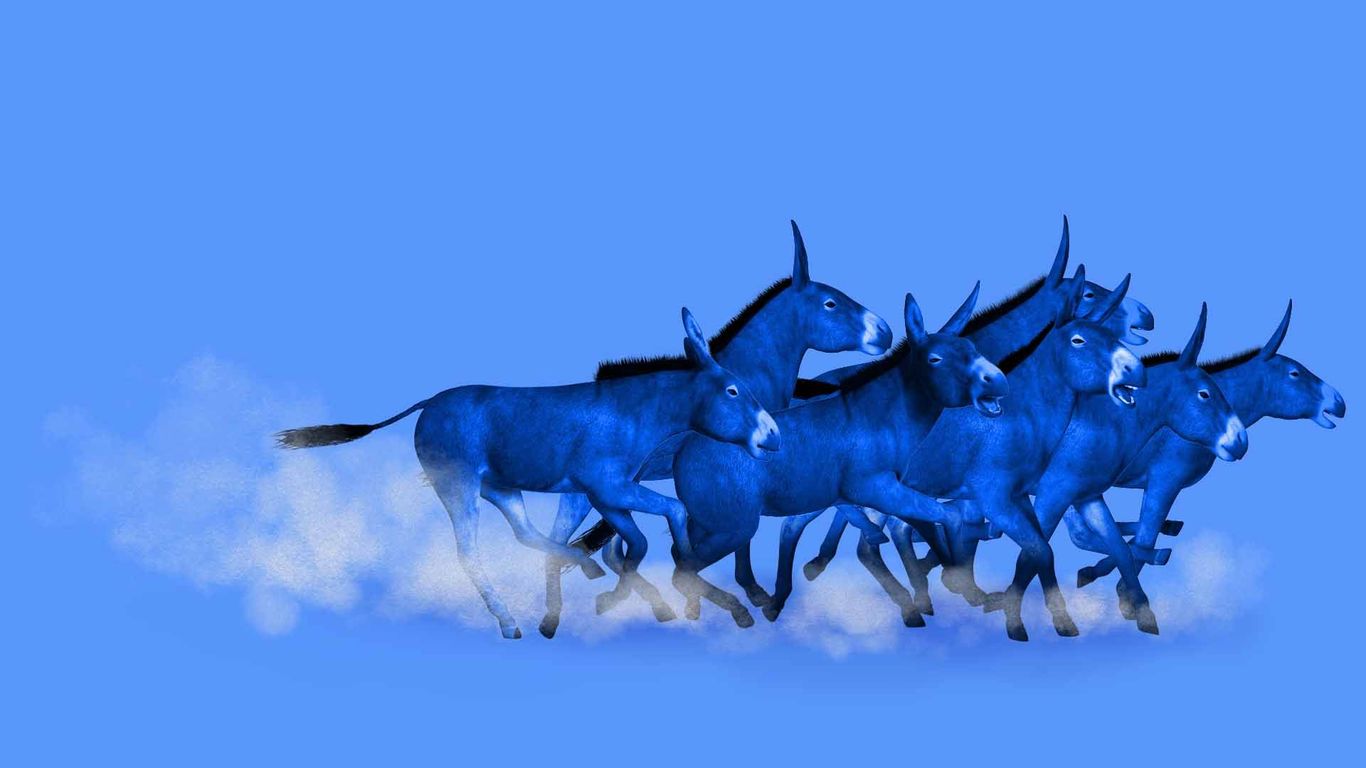
Voters delivered an emphatic repudiation of the sitting administration in Tuesday's midterm elections, handing Democrats control of both the House of Representatives and the Senate in what Axios described as a historic political realignment. Markets reacted swiftly to the sudden legislative shift, with bond yields tumbling as investors sought shelter while gold surged past $4,000 an ounce, according to MercoPress. President Trump acknowledged the outcome while asserting to the Financial Times that his administration had no immediate plans to strike  Iran despite ongoing regional tensions in the Middle East.
Key Markets & Economy · Conflict & Security · Washington & Politics · Energy & Climate · Tech & Science · World — link colours follow these themes throughout
 MACRO PULSE & PRICE TRACKER |
Futures +1.05% since the close • 30D -2.64%
|
This morning, before the open • 30D range 14.8–21.1
|
||||||||
$40.50T
$119,124 per citizen • $300,015 per taxpayer
|
3.75% – 4.00%
EFFR: 3.88% • SEP / Dot Plot & Press Conf
|
||||||||
Safe Haven & Central Bank Reserves
|
▬ 10Y ▬ 30Y • Spread +37 bps • unchanged on the day • was +35 bps on 5 Oct
|
||||||||
WTI: $95.34 • Brent 30D range $100–$118
|
Global Carry Trade & FX Liquidity
|
 S&P 500
 VIX Volatility
 US National Debt
 Gold (XAU/USD)
 Crude Oil & Hormuz
 USD / JPY (Yen)
 Trending Cycles
The 'Blue Tsunami' That Reshaped Capitol Hill
- Electoral wave: Democratic candidates swept battleground races across the country, securing decisive majorities in both the House and the Senate in what G. Elliott Morris noted was the largest incumbent-party defeat since Watergate.
- Leadership transition: Rep. Hakeem Jeffries (D-N.Y.) is poised to become the next speaker of the House, presiding over a commanding majority after his party flipped critical districts, as reported by NPR.
- Market impact: Renewable energy equities surged at market open across Asian and European exchanges following the electoral shift, according to OilPrice.com.
Global Observers Weighing Post-Midterm Realities

- Foreign policy recalibration: Diplomatic capitals abroad began assessing how the legislative shift will constrain executive authority on trade and foreign engagements, according to the New York Times.
- Middle East diplomacy: Iranian negotiators responded to the election results by publicly declaring that American voters delivered a message rejecting further military conflict, as detailed by Al Jazeera.
 The Radar
This Week in Congress & Capitol Hill Watch
- House floor activity: The House is not currently voting, with its last recorded roll call occurring on September 16, 2026, according to the Clerk of the House.
- Senate confirmations: The Senate confirmed Keith Sonderling to be Secretary of Labor by a vote on September 30, 2026, based on the Senate legislative record.
- Upcoming hearings: The Senate Foreign Relations Committee has scheduled an open hearing to examine pending nominations on Tuesday, November 10, 2026, according to Congress.gov.
 US Politics & Election Watch

- Senate flips: Democrats secured landmark victories in several red-leaning states, including Abdul El-Sayed’s victory in the Michigan Senate race over Republican Mike Rogers, reported The Hill.
- Gubernatorial upsets: Nevada Attorney General Aaron Ford defeated Republican incumbent Gov. Joe Lombardo to become the state's first Black governor, according to NPR.
 Ukraine War & Frontline Watch

- Civilian casualties: The death toll from a
 Russian three-ton bomb strike on an aid queue in Komyshuvakha, Zaporizhzhia Oblast, rose to 37 as rescue operations continued, reported Euromaidan Press.
- Energy grid attacks: Emergency power cuts remain in effect across Kyiv and Kyiv Oblast following Russian missile strikes targeting critical substation infrastructure, according to Ukrainska Pravda.
Iran, Hormuz & Middle East Conflict Watch

- Maritime incidents: Iran’s Islamic Revolutionary Guard Corps reported that four oil tankers were destroyed after striking naval mines south of the Strait of Hormuz, according to OilPrice.com.
- Leadership reactions: Iranian Supreme Leader Mojtaba Khamenei stated through state media that the U.S. election outcome will not alter Washington’s fundamental confrontation with Tehran, reported Middle East Eye.
 Macro & Monetary Policy
- Treasury yield shift: The 10-year Treasury yield rose 6 basis points to 4.95%, while the 30-year yield climbed 5 basis points to 5.32%, according to Yahoo Finance.
- Safe-haven gold: Gold spot prices climbed 2.86% over the session to $4,053.10 per ounce amid safe-haven demand following the election, as tracked by market data.
 White House Watch: Trump, the Cabinet & Family Business

- Executive response: President Trump accepted the midterm results while assigning blame for the Republican losses and asserting that the outcome would have differed had he been personally on the ballot, reported MercoPress.
- Foreign policy stance: In an interview with the Financial Times, Trump maintained that the U.S. is satisfied with its current posture regarding the standoff with Iran and holds no immediate plans to initiate strikes.
 Global Dynamics

 South African municipal elections: Veteran politician Helen Zille, 75, campaigned heavily on public service delivery as South Africans headed to local government polls, noted the New York Times.
- Athletic sanctions:
 Canadian Prime Minister Mark Carney announced that Russian national teams will be barred from competing in the upcoming World Junior Hockey Championship in Alberta, reported Meduza.
 Tech & Trade Rivalries

- Industrial decarbonization: A report by the Mission Possible Partnership revealed that
 China now hosts 49% of the world's clean industrial manufacturing plants, according to OilPrice.com.
- Asset tokenization: Morgan Stanley became one of the first major banking institutions to tokenize U.S. equities and Treasurys utilizing the DTCC digital infrastructure service, reported The Block.
 Weather Desk: Storms and Weather in Progress
Tropical Cyclone Murasu
Ended since yesterday.
No longer active across regional monitoring basins.
No longer active: Tropical Cyclone Murasu.
Sources: NHC Atlantic Outlook
 On This Day: November 04, 2026

2016: United Nations Framework Convention on Climate Change. Image: Vicente G. Cajilig, Jr. / Living Laudato Si' Philippines, CC BY-SA 4.0, via Wikimedia Commons

- 2016: The Paris Agreement under the United Nations Framework Convention on Climate Change officially entered into force.
- 2008: Barack Obama became the first person of African-American descent to be elected President of the United States.
- 1995:
 Israeli Prime Minister Yitzhak Rabin was assassinated by a right-wing extremist at a peace rally in Tel Aviv.
- Notable Birthdays: Basketball star Tyrese Maxey (2000), table tennis champion Sun Yingsha (2000), and
 Moroccan footballer Achraf Hakimi (1998).
 The American Experience: Did You Know?
 The Seven-Second Live Broadcast Safety Buffer
The familiar electronic beep or instantaneous audio mute button used during live American television broadcasts was engineered in response to a 1960 incident on NBC's The Tonight Show hosted by Jack Paar. Federal Communications Commission regulations and network standards committees subsequently codified the seven-second tape-delay buffer, allowing broadcast engineers a precise window to intercept profanity before it reaches home viewers.
 The History Desk:
 South Asia
The Grand Trunk Road and Mughal LogisticsNorthern  India and
 Pakistan · 16th Century
India and Pakistan · 16th Century
Image: Lucas(CA2), CC BY-SA 4.0, via Wikimedia Commons

During the sixteenth century, the Suri dynasty and subsequent Mughal emperors systematically transformed the ancient trade route into the Grand Trunk Road, establishing an imperial artery connecting Sonargaon in modern  Bangladesh to Peshawar in Pakistan. Spanning over 2,500 kilometers, the highway was engineered with tree-lined avenues, walled sarais (inns) at regular intervals, and regular postal relays that enabled both commercial exchange and rapid administrative control across the subcontinent. Historians note that this vast infrastructural project reduced travel times for merchants and facilitated the collection of standardized agrarian revenue data under reformers like Todar Mal.
 Why today: This historical focus on infrastructure and supply lines mirrors India's current logistical mobilization to triple its coal stockpiles ahead of summer peak demand.